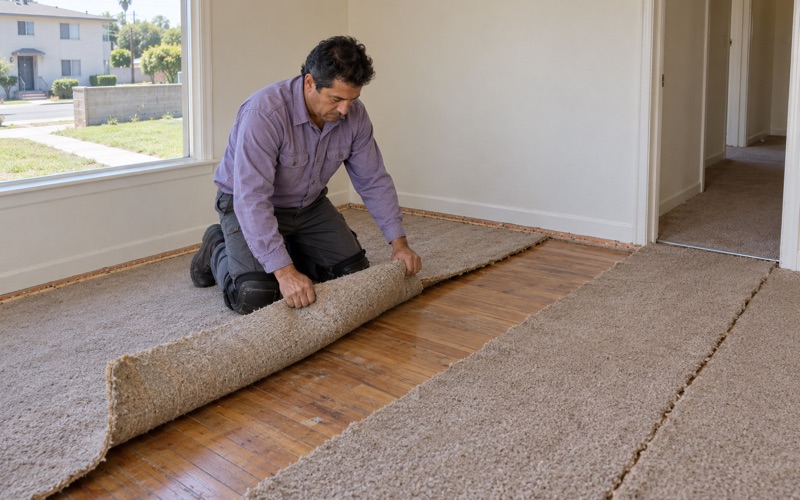
Gardena Wood Flooring has spent more than 20 years on wood flooring in West Athens and the neighborhoods around our shop, and a good share of that work starts with a question that is not really about wood. An owner has a repair coming, or just finished one, and wants to know what happens to the floor next. We answer that with a plan, not a sales pitch.
Most of the floors we see here belong to people who have lived with them for a long time. Our first move is to find out whether a floor can be repaired or refinished before anyone mentions tearing it out, and we open and check the subfloor before we put a price on a finish floor. Soft decking, a swollen panel or a tired joist found now is cheaper than a callback later.
This page is about timing. Repair money, when a household has access to it, tends to arrive on its own schedule and cover its own list. The floor is usually the owner’s job. Getting the two to line up is where a little planning saves a second round of disruption.
County Repair Programs and What They Actually Fund
West Athens is unincorporated. There is no city hall here; the Los Angeles County Board of Supervisors governs it, and it sits in Supervisorial District 2. That matters for home repair because the programs open to an owner are County programs, and several of them are drawn by district. Knowing the map is the first step in planning any floor job around them.
The Second District Program Map
The Los Angeles County Development Authority, LACDA, runs the repair programs we get asked about most. Its Senior Grant Program page lists Supervisorial Districts 1, 2, 4 and 5 in unincorporated Los Angeles County, so the Second District is on it. The LACDA Handyworker Program page, by contrast, lists only the First, Fourth and Fifth Districts. An owner here reading about County help should check which district a program names before building a plan around it.
The County also reports its work by community. In its fiscal 2023-24 annual report, West Athens is counted inside Athens-Westmont, a combined County community that is larger than the census place itself. That report counted 15 CDBG projects serving Athens-Westmont that year. Those figures describe the combined area, not this neighborhood alone, and we read them that way.
Health and Safety Repair Grants
Among the LACDA projects listed for Athens-Westmont in fiscal 2023-24 were grants for single-unit residences to correct health and safety code violations. That is a narrow and useful description. The grant targets a code problem in a house, and the work it pays for is shaped by that problem, whether it sits in a wall, a roof or a system.
We read the published description carefully, because it is easy to overstate. The report does not say what a given grant includes, who receives one, or whether applications are being taken. We do not answer those questions for anyone. What we can do is look at a house after that kind of repair and tell the owner what it means for the floor underneath.
The Senior Grant and Non-Slip Floor Covering
The LACDA Senior Grant Program serves owners 62 or older, with a maximum of $20,000, on a single-family house, condominium or townhome. Its income limit for one person is $93,300, effective June 1, 2026. Its list of mobility items includes wheelchair ramps, grab bars, widened doorways, conversions from tubs to roll-in showers and non-slip floor covering.
That last item is the only mention of flooring we found in any of these programs. None of the County program pages we read names wood floor refinishing or wood floor installation. We say so plainly so no one budgets on an assumption. The program page itself is the authority on what it pays for, and the owner confirms eligibility with LACDA directly.
Looking for wood-flooring closer to West Rancho Dominguez? See West Rancho Dominguez Wood-Flooring.
Where the Floor Fits After Funded Work
West Athens is overwhelmingly a place of houses for the people who own them. Of owner households here, 95.7 percent live in detached houses, and 29.0 percent carry no mortgage. That profile means the floor under a repair is usually the owner’s own floor in the owner’s own house, and the decision about what to do with it is theirs alone.
What a Repair Leaves Behind
A code repair rarely stops at the wall or pipe it was meant to fix. Plumbing work can mean a cut in the floor decking, and an electrical run can mean a section of boards lifted and relaid. A roof leak that prompted the repair may have left cupping, board gaps or a gray stain in the room below. When the repair crew leaves, the floor is often the last thing still showing the damage.
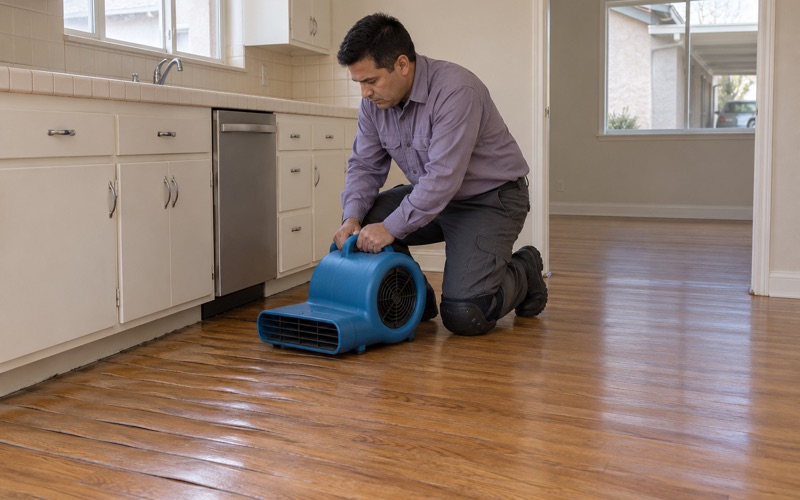
We look at those areas with a wood moisture meter and a hand on every soft spot. If water was part of the story, we trace it back to its source and write down the readings, because a floor refinished over wet wood or damp decking will cup or crown again. The goal is a floor that finishes the repair rather than hiding what is left of the problem.
Patches, Weave-Ins and Matching Boards
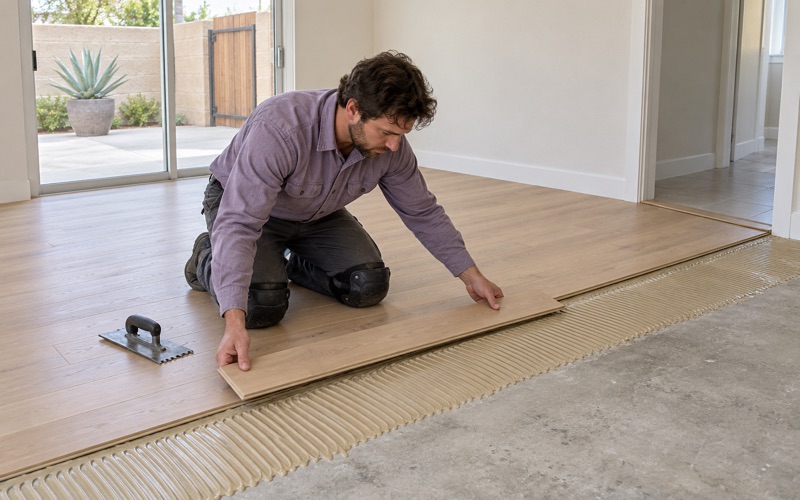
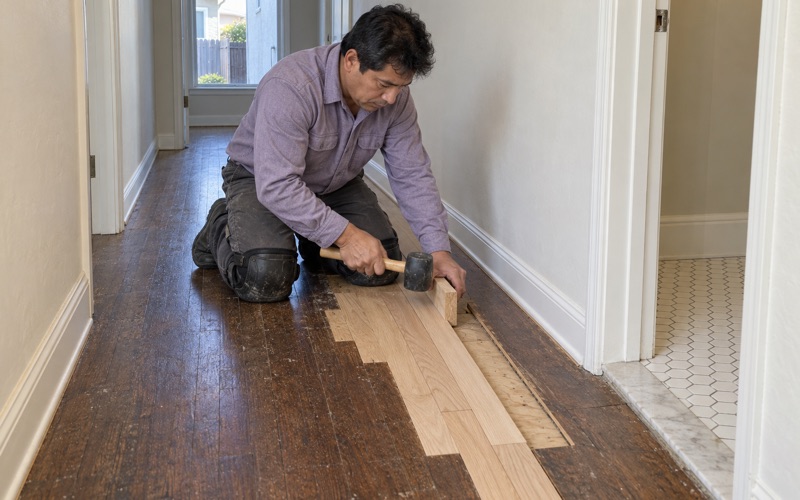
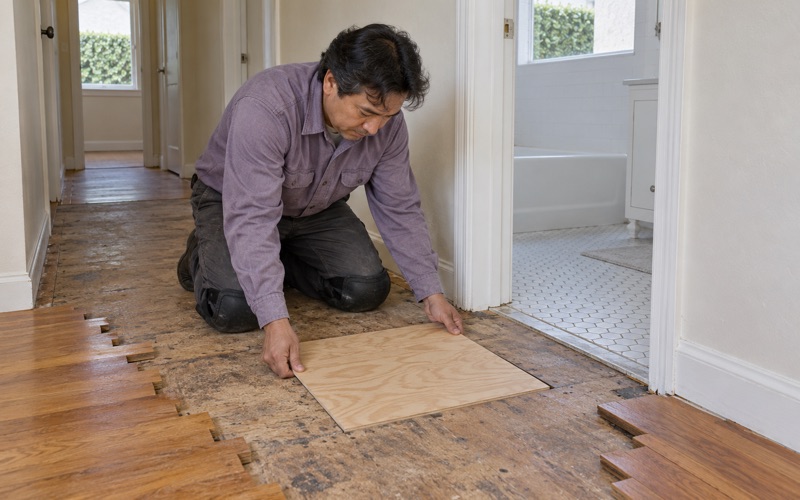
Where boards were cut or lifted, a weave-in repair is usually the right answer. We remove damaged boards in a staggered pattern and lace new ones in, so the patch follows the grain and joint rhythm of the existing floor instead of reading as a square. Species, width and thickness have to match before any sanding starts, and we confirm them from the floor itself rather than guessing.
Around a new doorway or a changed threshold, the transition matters as much as the patch. A reducer strip or a T-molding may need to move. New shoe molding may need to follow new trim. We price that detail up front, so the owner knows what the finished room will look like where the repair crew’s work meets the floor.
Non-Slip Surfaces and Wood Floor Finishes
Because the Senior Grant lists non-slip floor covering, owners often ask whether a wood floor can be part of a safer house. The honest answer is that wood and slip resistance are a conversation about finish, sheen and maintenance, not a single product. We walk through the choices without putting numbers on slip resistance that we cannot source.
Finish, Sheen and Everyday Traction
A high-gloss polyurethane looks sharp and shows every scuff, and on a polished surface in socks it can feel slick. Lower sheen levels and some hardwax oil finishes feel different underfoot, and they hide wear better. We show sample boards in the room’s own light, so the owner can feel the surface as well as see it before choosing.
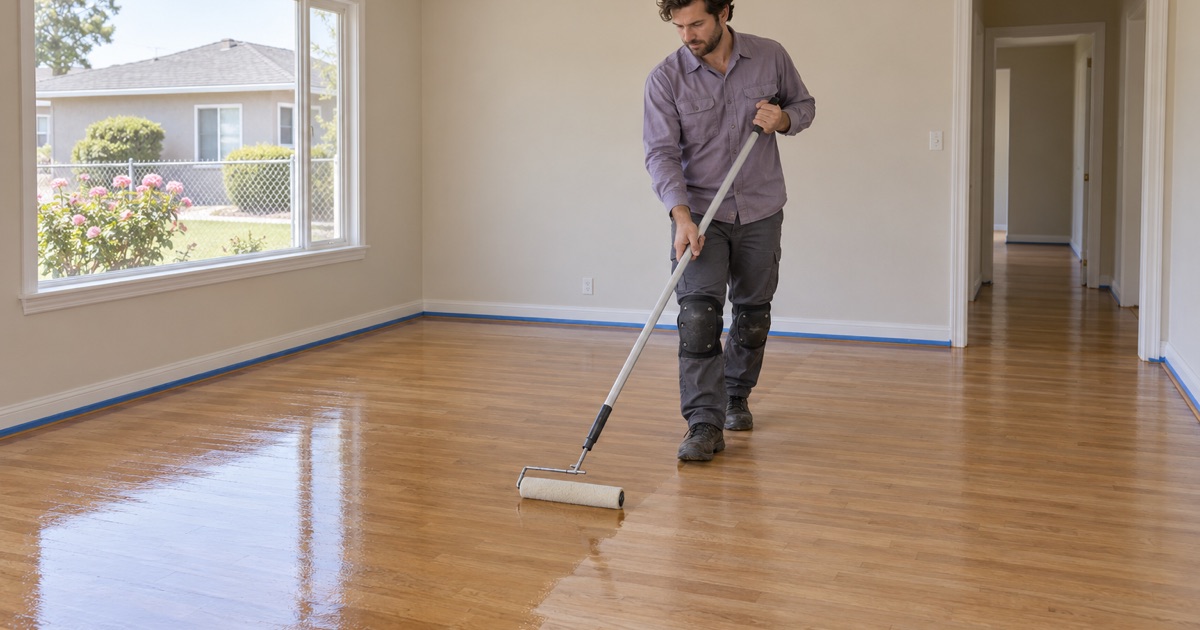
Every finish we apply is legal in the South Coast air basin under SCAQMD Rule 1113 and its 275 g/L wood-coating limit. Waterborne polyurethane dries quickly and stays clear. Oil-modified polyurethane ambers over time and takes longer to cure. Either can be done with lower sheen, and we give the household a written cure schedule so they know when each room can be walked on and furnished.
Rooms Where Wood and Another Surface Meet
A grant-funded bathroom or entry change can put a non-slip surface right beside a wood floor. Where the two meet, the height, the edge and the transition piece are what a person actually steps on. We plan that seam so it sits flush or steps down cleanly, with no lip at the doorway and no raw board edge left to catch a heel or a cane tip.
Sometimes the right answer for one room is not wood at all. If a program is changing the floor surface in a bathroom or a hall, we fit our work around theirs. We would rather finish the rooms that suit wood well than argue for boards where another covering serves the household better.
Planning the Owner’s Own Floor Project
With County work on one list and floor work on the owner’s list, order is everything. Sanding before a plumber cuts a hole wastes a finish coat. Waiting until after means one clean pass over the whole floor. We help owners lay the two schedules side by side and pick a sequence that disturbs the house once.
Sequencing Around Funded Repairs
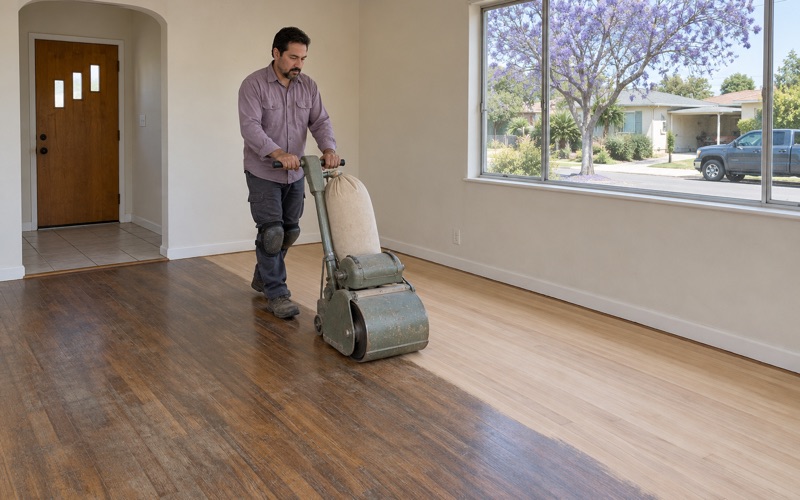
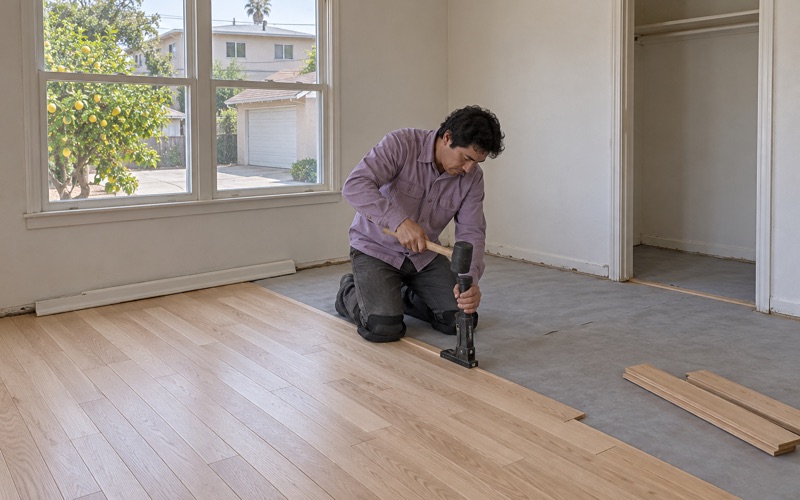
Our usual advice is simple. Let structural, plumbing and electrical repairs finish first, then do board replacement and patching, then sand and finish the floor as a whole. That order keeps dust, water and heavy tools away from new finish. If a repair is still pending, we can often do an inspection and a written estimate now and hold the sanding until the other crew is done.
Questions about permits for any repair or floor job belong with the County. For Athens-Westmont, the County’s report names the Southwest Building and Safety Office at 1320 W. Imperial Hwy. as the local Public Works field office. We point owners there rather than guessing, and we build our schedule around whatever their answer turns out to be.
Older Houses, Lead and Old Tile
Housing here runs old. The 1950s are the peak building decade, at 32.6 percent of units, and 74.2 percent of units went up before 1980. On pre-1978 houses we follow lead-safe work practices under the EPA Renovation, Repair and Painting rule, because sanding old finish can raise lead dust in a room people are living in.
Old 9x9 floor tile and black mastic under a floor get the same caution. We treat them as a possible asbestos question before anything is scraped or sanded, and an asbestos survey comes first when the layer in question could contain it. Dust containment goes up before the machines come in, whether we are running a drum sander, an edger or a dustless sanding system.
Stairs, Estimates and What to Expect
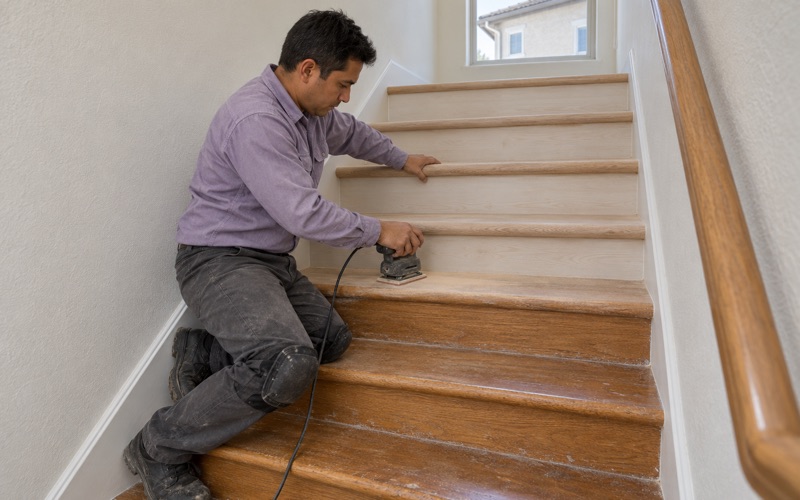
Stairs are priced per tread and riser, not folded into a square-foot number, so an owner can see exactly what the stair work adds. Our written estimate lists each room, each repair and each finish choice separately. If the owner wants to do the living room now and the bedrooms after a County repair is finished, the estimate already splits that way.
Near Los Angeles Southwest College and along the residential streets between Vermont Avenue and Western Avenue, the houses we work in are lived in every day. We plan each job around that, one room at a time where needed, with a clear date for when the furniture can go back.
- 20+ Years in Business
- Written Moisture Readings
- Lead-Safe Work Practices