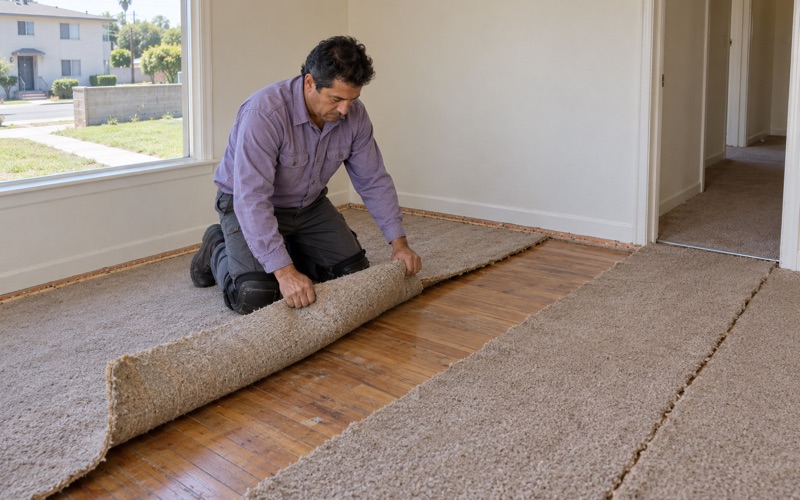
Gardena Wood Flooring has handled wood-flooring in Torrance for more than 20 years, and the jobs we think about longest are in the city’s oldest houses. A floor that has served a family for decades gets a repair-or-refinish answer from us first, well before anyone starts talking about tearing it out.
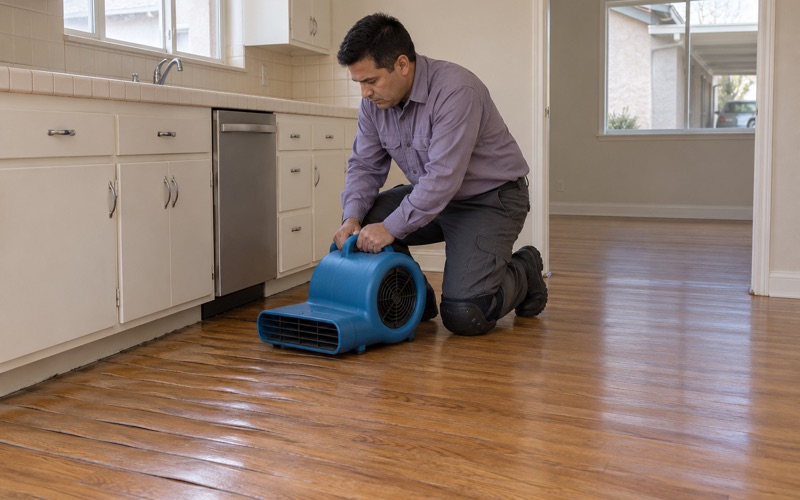
Every job starts under the finish floor. We open and check the subfloor before we price anything, so soft decking, water swelling or a tired floor joist is found on the first visit rather than as a callback. We read moisture content in the boards with a wood moisture meter and write the numbers down before any material is ordered.
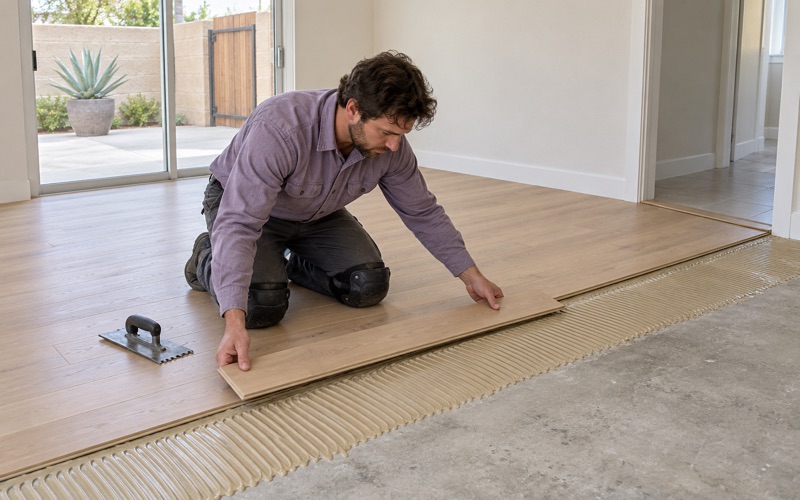
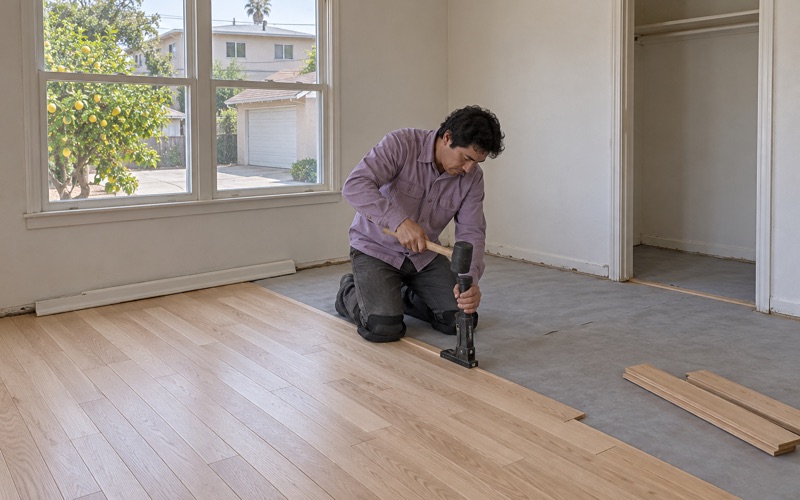
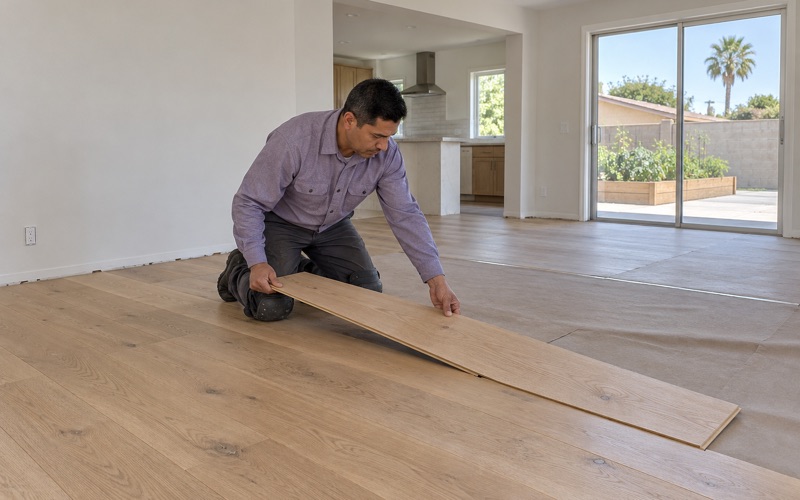
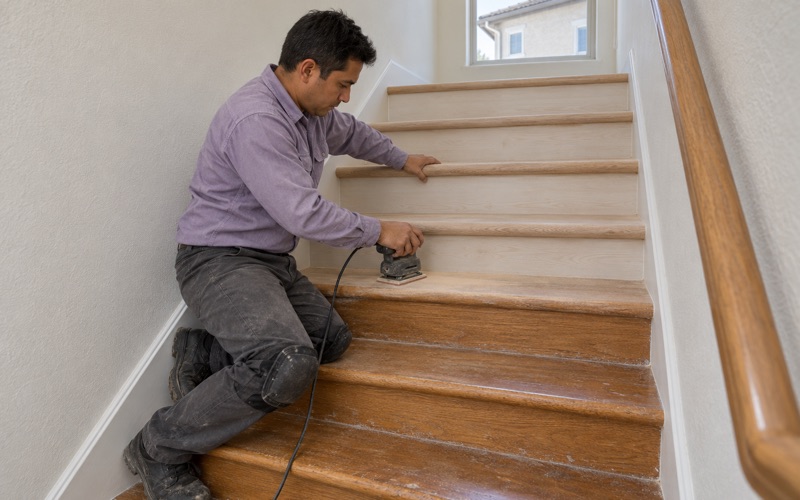
We sand and refinish, replace damaged boards, weave in repairs, lay new floors and price stairs per tread and riser rather than by the square foot. When a floor turns out to be past saving, we say so plainly and quote replacement in wood suited to the house.
The Town Olmsted and Gill Designed
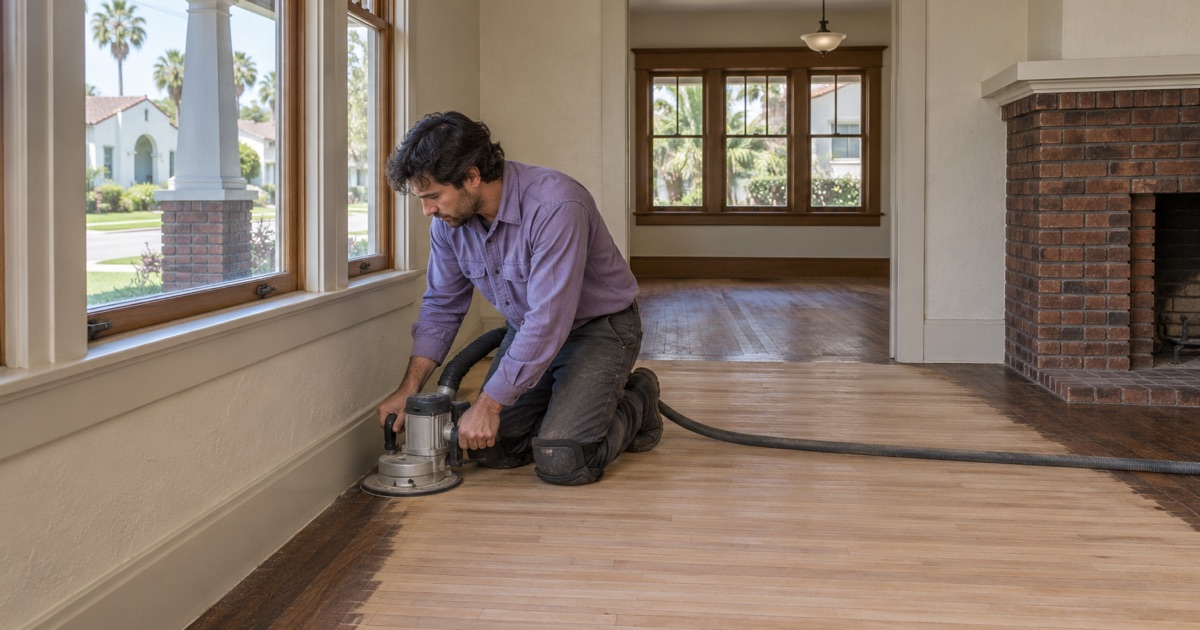
Torrance was founded in October 1912 by Jared Sidney Torrance and incorporated on May 12, 1921, and it was drawn on paper before it was built. That origin is why the oldest houses here sit together, and why the city tracks them so closely.
A 109-Block Plan
Frederick Law Olmsted Jr. planned the original tract at 109 city blocks, split into residential, commercial and industrial sub-districts. El Prado Avenue was laid out as a landscaped parkway aimed at views of Mount San Antonio, and the Pacific Electric Railway El Prado Bridge is now on the National Register alongside Torrance High School and Fern Avenue School.
For floor work, that history sets the scale. Only 7.9 percent of the city’s homes were built before 1950, and the 1950s were the peak building decade, so a 1920s house is the exception in Torrance rather than the rule. The ones in the original tract call for a slower, more careful approach than a postwar house.
Irving Gill and the Worker Houses
Around 1912 Irving Gill became chief architect for the new town, then being developed by the Dominguez Land Company. He planned 100 model homes for factory workers, and a 1912 Los Angeles Herald account put the whole secret down to privacy and cleanliness. About ten were built, on the 1800 and 1900 blocks of Gramercy Avenue.
The city lists buildings by Gill among the key historic resources of the Olmsted Tract, the original train depot among them. We don’t attribute any particular house to him, and we don’t assume what a 1912 floor was made of. When we open up an old floor, we identify the species and the milling from the boards themselves, then plan the repair around what is actually there.
What the 2011-2013 Survey Graded
From 2011 to 2013, the Torrance Historical Society surveyed historic resources across the 109 blocks of the Olmsted Tract. The resulting list, revised in September 2025, records each parcel by block, street, year built, property type, architectural style, significance and condition, with the surveyor’s comments and the survey date.
Significance is graded Contributor, Altered-contributor or Non-contributor. The entries describe exteriors rather than floors, but a row still tells us a lot before we arrive: the year a house went up, its style, and whether earlier owners already changed it. We treat that row as a record to check against what we find inside.
Looking for wood-flooring closer to Hermosa Beach? See Wood-Flooring in Hermosa Beach.
Craftsman and Mission Revival Houses of the 1920s
Two Styles on the Same Blocks
The contributors on the survey list include Craftsman and Mission Revival houses built between 1923 and 1930. On 218th Street, a 1928 Mission Revival house and a 1925 Craftsman are both graded Contributor, and a pair of 1925 Mission Revival houses on 222nd Street are recorded in excellent condition.
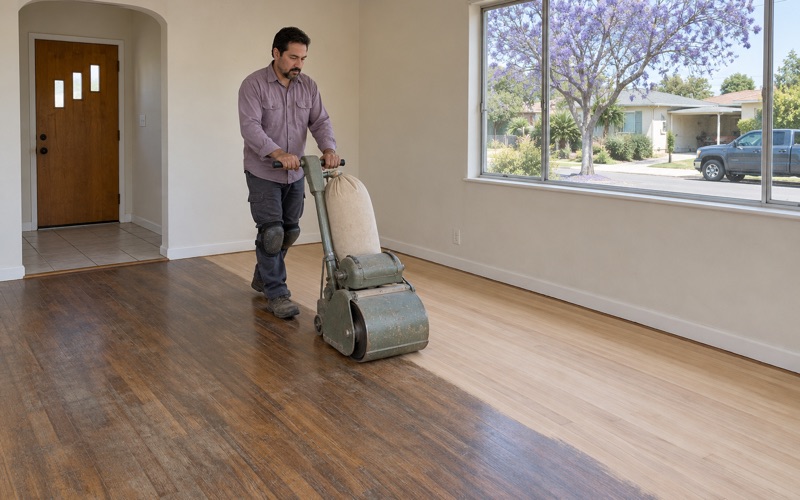
Nearly a century of use can leave a floor in a house like this with worn traffic lanes, board gaps where seasonal movement has opened the joints, and several layers of finish that may not agree with each other. We start by learning what each layer is. A floor that has been refinished many times has less wood left above the tongue, so we check that before a drum sander ever touches it.
Contributor, Altered-Contributor and What Changed
Altered-contributors carry notes on what is no longer original. A 1923 Mission Revival house on 220th Street is marked for windows that are not original, and a 1924 Craftsman on the same street for stucco and windows that are not original and a modified porch. A 1932 Craftsman on 222nd Street had a major addition in 1975, built to match.
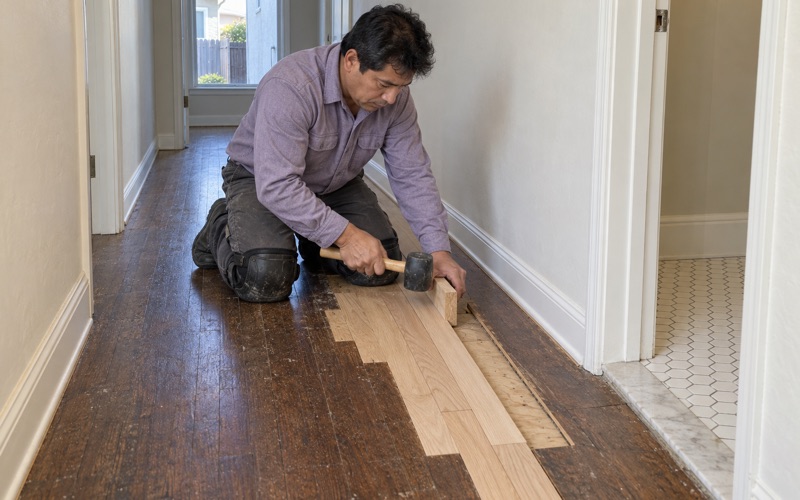
Additions like that are a common place for floors to part ways. The newer room may have different boards, a different height or a different subfloor, and the seam between old and new is where cupping, a ridge or a squeak tends to show up. We weave boards across the transition where the wood allows it, or set a reducer strip or T-molding where it does not, and we explain which before starting.
Matching Old Wood
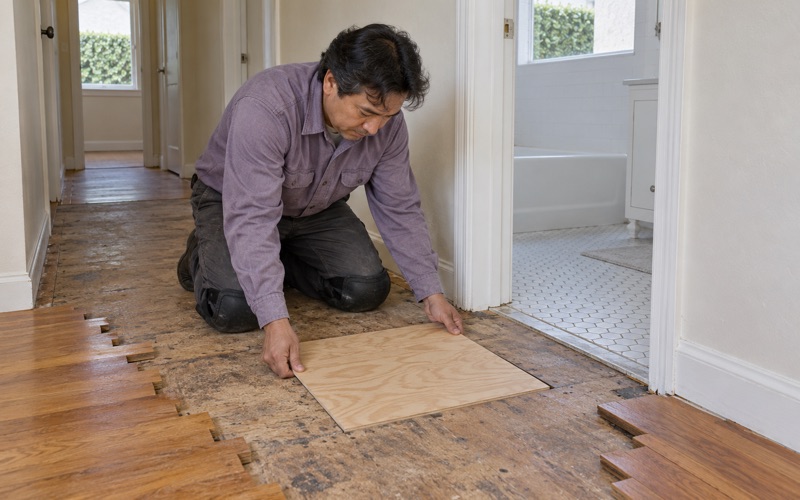
When a board has split, rotted from a leak or been cut for old plumbing, we replace it rather than the room. That means matching width, thickness and species, and sometimes pulling boards from inside a closet to use in the open floor. Termite frass, powderpost beetle holes and soft decking get a look before any board goes back down.
Moisture decides whether new wood can go in yet. We let replacement stock acclimate until its moisture content sits close to the existing floor’s, and we record both readings. Rushing that step is how a careful patch turns into a visible gap a season later.
Landmarks, the Mills Act and Interior Work
A Preservation Plan for the Torrance Tract
In 2017 the City of Torrance adopted its Historic Preservation Plan and Ordinance for residential properties in the Torrance Tract, with the stated purpose of encouraging landmarks and districts to be listed on the Torrance Register of Historic Resources. The city is now updating the plan to take in commercial properties downtown as well.
Old Torrance is still under review for classification as a historic district, so we don’t describe any block as part of one. What a homeowner can check is simpler: whether the house appears in the survey, how it is graded, and whether it has been landmarked. Those three answers shape how much of the original fabric is worth protecting during floor work.
Ten Landmarks Since 2022
Between October 20, 2022 and June 18, 2026, the city designated ten Torrance Tract houses as Torrance Register landmarks. The first was 2114 Arlington Avenue; the list since includes three houses on Acacia Avenue, two on Andreo Avenue, and addresses on Sonoma Street, Post Avenue, Gramercy Avenue and El Prado Avenue.
A house on that list, or a graded contributor, is one where we lean hardest toward keeping what is there. Sound boards stay in place, damaged ones are replaced in kind where the wood allows, and we sand no deeper than the finish requires, because every pass takes wood that cannot be put back.
What the Mills Act Leaves Out
Torrance’s Mills Act program is open to contributors and altered contributors from the survey that are landmarked or inside a historic district, and to properties on the National or California Register. All work on a property under contract must meet the Secretary of the Interior’s Standards. Eligible items include seismic retrofitting, re-roofing, plumbing, electrical, mechanical upgrades and window repair or painting.
The city’s Mills Act page states that cosmetic improvements to the interior of historic buildings, such as kitchen or bathroom renovations, are not eligible work items. We don’t tell an owner that a floor refinish will count toward a contract. If the question matters to your budget, the city’s preservation staff are the ones to answer it, and we will give you a written estimate to take to them.
Refinishing Floors in an Old Torrance House
Refinishing a floor in the original tract follows the same steps as anywhere else, but the order and the caution change. These are the three places where an old Torrance house tends to change the plan.
Old Tile, Old Paint and Dust
A house from the 1920s predates 1978 by half a century, so we follow the work practices of the EPA Renovation, Repair and Painting rule whenever sanding could raise lead dust from old paint on baseboards, thresholds or a previously painted floor. That means containment, HEPA vacuuming and a careful cleanup before anyone walks back in.
Rooms that were covered over in later decades bring their own question. If we lift carpet or vinyl and find 9x9 floor tile or black mastic, we stop and treat it as a possible asbestos question, arranging an asbestos survey before anything is sanded or scraped. If it tests positive, removal follows SCAQMD Rule 1403, not a floor crew’s guess.
Subfloor, Moisture and Water
Where a floor feels soft or bounces, we open it up and look at the decking and each floor joist before quoting anything. A tired joist can often be sistered, and a spongy patch of decking can be cut out and replaced, so the finish floor goes back over something that holds.
Water is the other thing old floors keep a record of. When we find dark boards near a kitchen, a water heater or a bathroom, we trace the source before touching the stain, then document it with photos and meter readings an insurance adjuster can use. Replacing boards over a leak that is still running only buys a second repair.
Finishes and Moving Back In
Every finish we apply is legal in the South Coast air basin, where SCAQMD Rule 1113 caps wood coatings at 275 g/L of VOC. For a Craftsman or Mission Revival interior, we often suggest a low sheen, in a waterborne polyurethane or a hardwax oil finish, so the grain reads as wood rather than plastic, and we lay samples on the actual boards.
When a family stays in the house during the job, we seal off the rooms being sanded and run a dustless sanding system. Each household gets a written cure schedule showing when a room can take socks, then shoes, then rugs and furniture, so nobody has to guess when the dining room is theirs again.
- 20+ Years in Business
- Written Moisture Readings
- Lead-Safe Work Practices