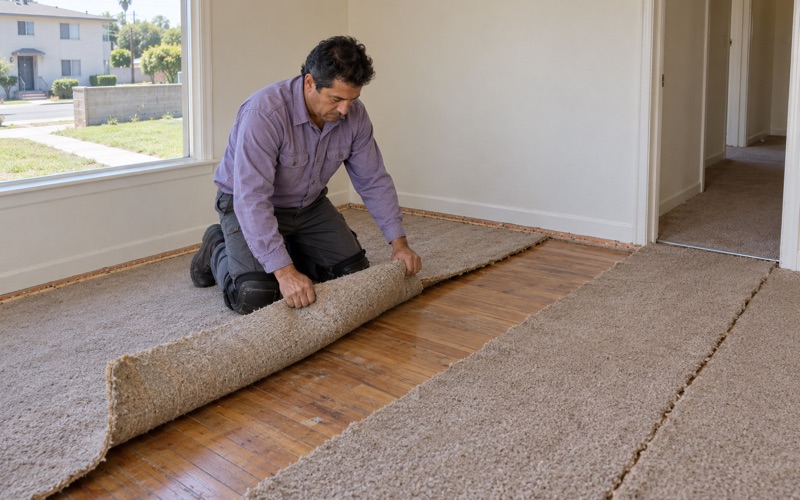
Gardena Wood Flooring brings more than 20 years of work to wood flooring in Sierra Madre, where the job is often an older floor rather than a new one. We refinish, repair and install hardwood, and we start every estimate by finding out what is already down, what sits beneath it and whether it can be saved before anyone prices a replacement.
Houses that have stood for sixty or ninety years tend to hide their history under carpet, tile and earlier refinishing. We open the subfloor and check it before pricing a finish floor, and we take moisture readings in the wood with a moisture meter and in any concrete with an ASTM F2170 in-situ relative humidity test. The readings are written down, so the numbers behind a recommendation stay with the homeowner.
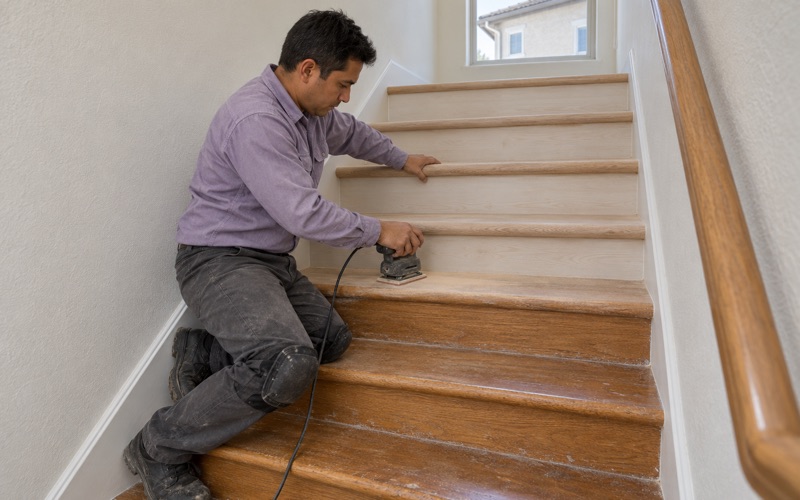
Occupied homes get dust containment and a written cure schedule that says when each room can take foot traffic and when furniture can go back. Finishes come from products legal to apply in the South Coast air basin under the 275 g/L wood-coating limit, and stairs are priced per tread and riser instead of being buried in a square-foot rate.
Sierra Madre’s Twentieth-Century Landmarks
A Register Built Across a Century
Sierra Madre’s landmark list is often pictured as a collection of the town’s earliest houses, but the city’s July 2024 list carries twentieth-century homes as well. It includes the Willis Residence of 1941 at 650 Baldwin Court along with the Pickard-Hoover Residence and the Becker House, both covered below. Of the 59 entries on that list, 27 carry the Mills Act mark.
Designation is decided under Municipal Code Section 17.82.050, which allows a property to become a landmark if it meets prescribed historic or architectural criteria, and it requires the owner’s consent. For floor work, that usually means an owner who already cares about the house’s original fabric, and we plan the job with that in mind.
What the Housing Numbers Show
Sierra Madre’s housing stock leans heavily on the middle of the last century. Census survey figures count 1,068 units built in the 1950s and 908 in the 1960s, which together make up 39.7 percent of the city’s 4,977 housing units. Add the older stock and 79.8 percent of homes predate 1980.
New construction is the exception here. Only 5.9 percent of Sierra Madre’s homes were built in 2000 or later, so a floor in this city has often been sanded, covered, patched or refinished before we arrive. We plan for hardwood hiding under old carpet or vinyl, and we look for earlier board replacement before quoting a sand and finish.
Houses Between the Landmarks
Most of the city’s housing is detached. Of 4,977 units, 2,985 are detached houses, and 55.8 percent of occupied homes are owner-occupied. That mix means many jobs here are for owners living in the house during the work, and some are rental turnovers where a landlord needs an itemized estimate and invoice under California deposit law.
The houses that are not on any list deserve the same care. A 1950s house with its first floor still under the carpet can be worth more to its owner saved than replaced, and we give a repair-or-refinish answer before anyone talks about tearing boards out. Floors that have been in a family for decades are usually worth that conversation.
Looking for wood-flooring closer to Malibu? See Wood-Flooring Services in Malibu.
The Becker Residence and the Pickard-Hoover Residence
A Mid-Century Late Modern Landmark
On August 2, 2018, the Planning Commission scheduled a public hearing on a request to designate the Becker Residence at 500 Mariposa Avenue as a Historic Cultural Landmark. The agenda described it as a mid-20th Century concrete block Modernist home, representing one of the few Mid-Century Late Modern homes in Sierra Madre. The July 2024 landmark list dates the Becker House to 1961 and marks it for the Mills Act.
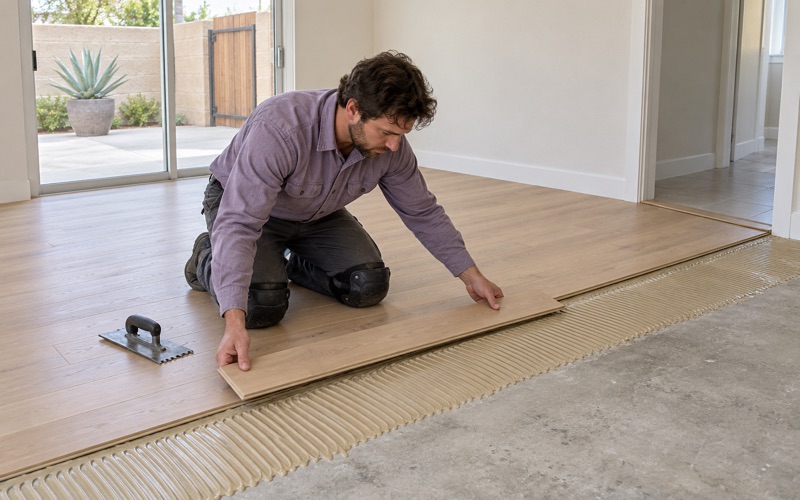
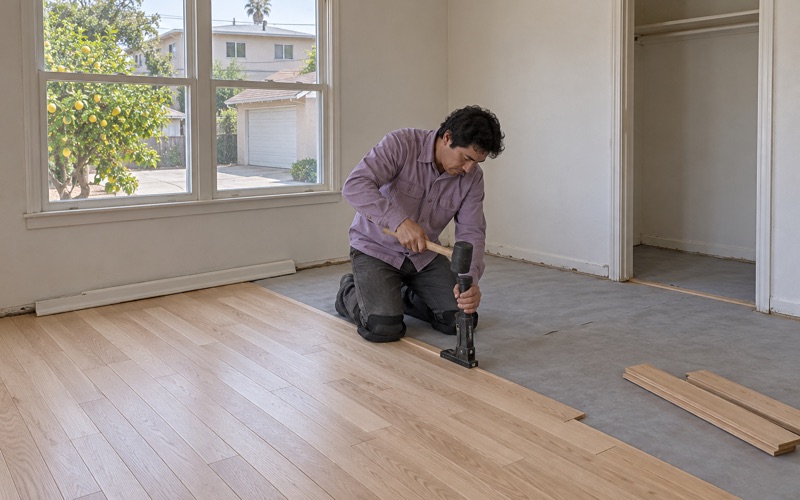
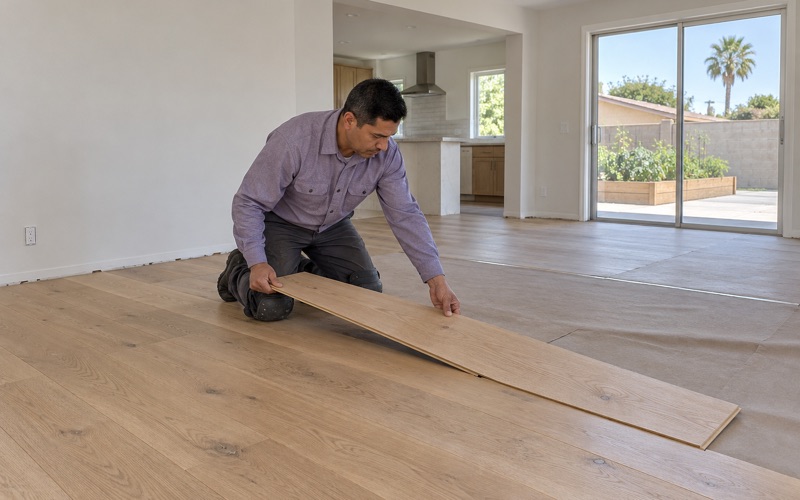
A house like this changes the floor conversation. Mid-century houses in the region often paired wood with tile, carpet or exposed concrete, and we do not assume what any particular room holds until we have looked. Where a later owner wants wood in a house of this type, we measure moisture in whatever it will sit on and choose an installation method to suit, whether glue-down, floating or nail-down.
The 1928 Pickard-Hoover Residence
The January 10, 2023 City Council agenda paired two items for the Pickard-Hoover Residence at 500 North Michillinda Avenue: historic landmark designation and a Mills Act contract for its restoration and rehabilitation, with a recommendation to adopt Resolution 23-03. The July 2024 list dates the house to 1928 and carries it with the Mills Act mark.
Brokerage listings describe the house as an early California hacienda built on almost six acres, with a children’s wing added in 1932 after Herbert Hoover Jr. moved in. A house that grew in stages like that can carry different floor systems in different wings, so we check each area on its own before we match boards or plan a continuous finish.
Care Around Designated Fabric
On a landmark house, the least invasive fix usually wins. A light abrasion and fresh topcoat can refresh a sound finish without removing wood, spot repairs can address a damaged area without sanding the whole room, and a sample patch lets the owner judge color before we commit. We keep removed boards and trim labeled when anything has to come up.
Removed shoe molding and stair nosing go back in their original spots, and reducer strips at doorways are matched to what the house already has rather than swapped for stock profiles. Small decisions like these are what keep a restored floor looking like it belongs to the house.
Floors in Sierra Madre’s 1950s and 1960s Houses
Hardwood Under Later Coverings
Many postwar houses in Southern California were built with strip hardwood, and plenty were later covered with wall-to-wall carpet, sheet vinyl or tile as tastes changed. When we pull back a covering in a Sierra Madre house of this era, we look for tack strip damage, staple holes, pet urine stains and adhesive residue before we promise a refinish. We also check for termite frass and powderpost beetle exit holes, which older wood can hide under a covering for years.
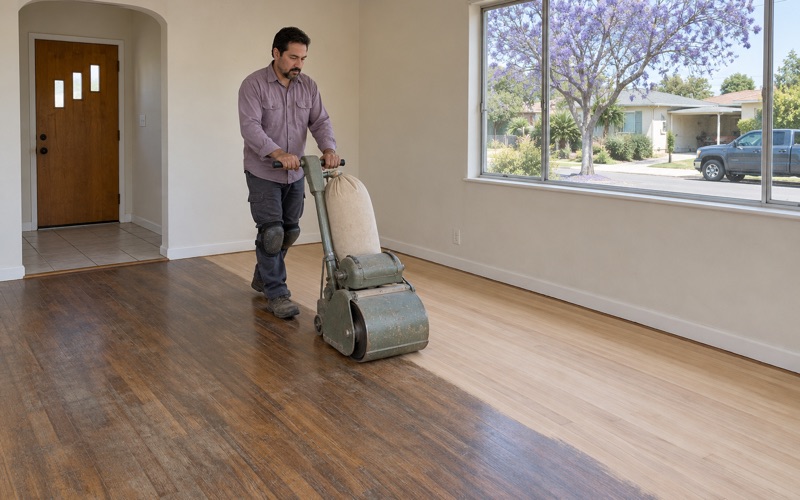
A floor that has been sanded several times may have little wood left above the tongue, and a drum sander in the wrong hands can go through it. We check thickness at a vent or threshold first. If there is room for one more sanding, we run a measured grit sequence; if not, a screen and recoat or targeted board replacement may be the better answer.
Tile, Mastic and Lead in Pre-1978 Houses
The 1950s and 1960s were decades when 9x9 floor tile and black mastic went into many houses, and either can still sit under carpet or a later floating floor. We treat old tile and dark adhesive as a possible asbestos question and arrange an asbestos survey before anything is sanded, scraped or ground. Where the survey finds asbestos, removal follows SCAQMD Rule 1403 requirements rather than going through a sander.
Any house built in these decades predates 1978, so old finishes and painted trim can carry lead. We follow EPA Renovation, Repair and Painting rule work practices on pre-1978 housing, contain the room, and control lead dust from sanding with a dustless sanding system and careful cleanup at the edges and shoe molding.
Foothill Seasons and Wood Movement
Sierra Madre sits in National Weather Service forecast zone CAZ548, Los Angeles County San Gabriel Valley. Wood responds to the swing between dry stretches and damper months, which shows up as board gaps in one season and cupping or crowning in another. We record moisture content in the boards and in the subfloor before choosing a repair. Readings, not the calendar, decide when sanding starts.
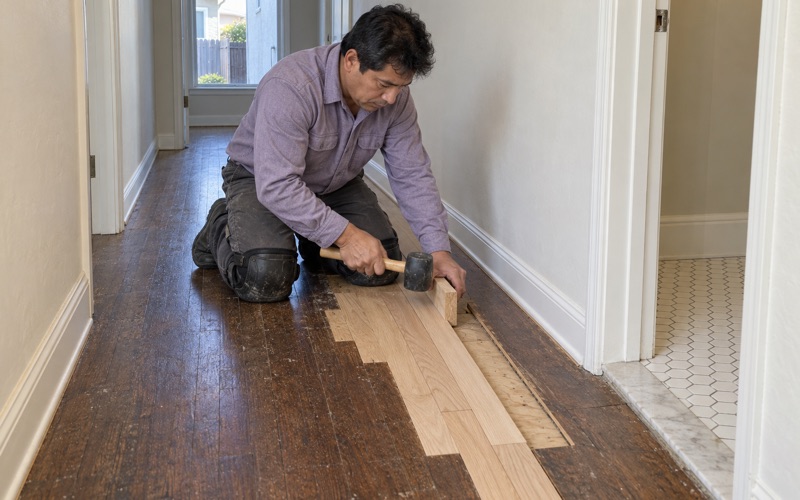
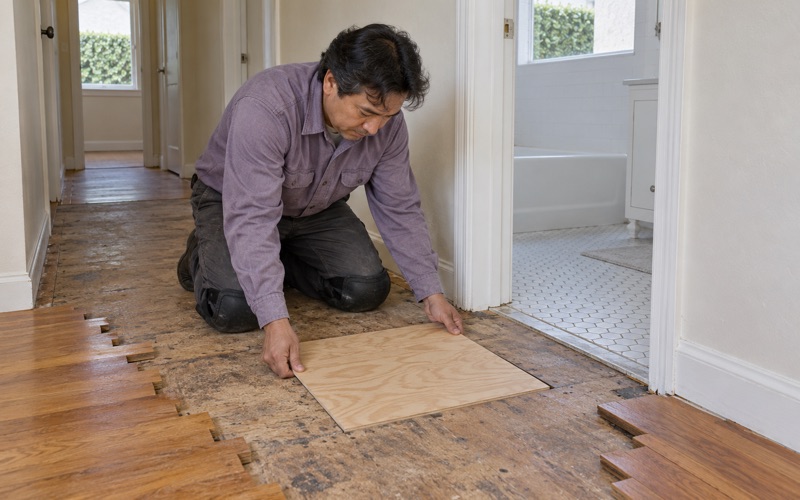
New boards woven into an old floor need acclimation to the house before they go down, or the patch will move differently from its neighbors. We cut weave-in repairs board by board, match species and width by sample, and blend the new wood into the surrounding finish so the repair reads as part of the original floor.
Planning Floor Work in a Designated or Older Home
Before Work Starts on a Landmark
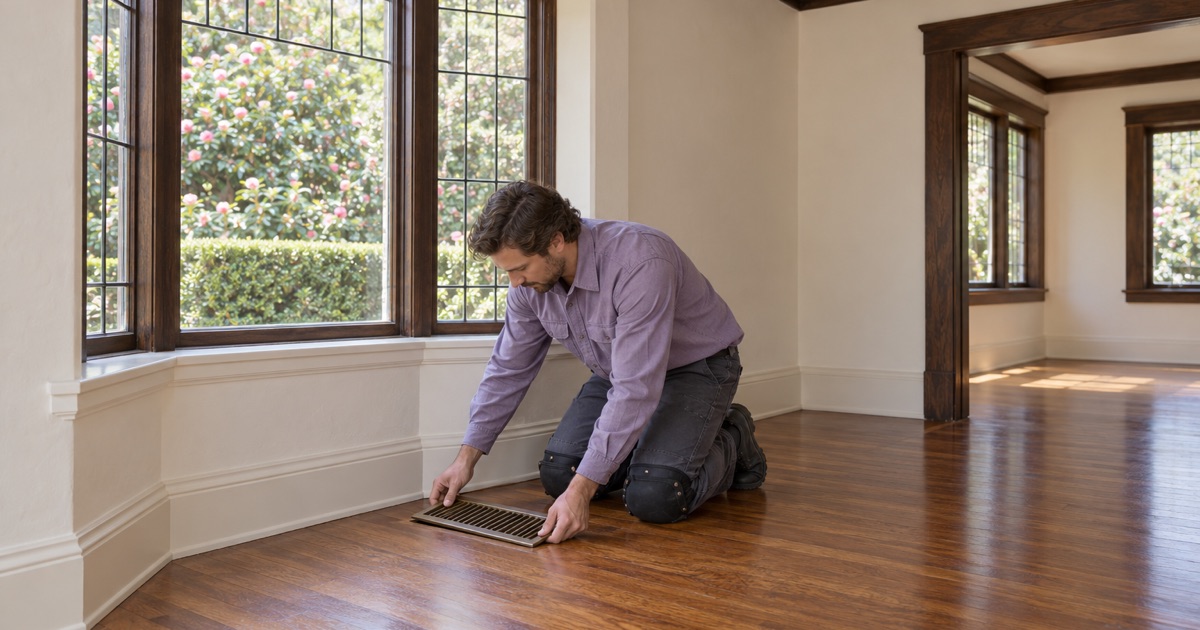
A designation tells us a house matters; it does not tell us what the floors are made of or how they were laid. We never guess a species from a house’s age or style. We lift a register cover, check a closet edge or look under a threshold, identify what is really there, and then decide between repair, refinishing or replacement.
Mills Act contracts on these houses carry restoration obligations under Office of Historic Preservation rules, and the city’s own incentives for local landmarks include a waiver of city permit and plan check fees. Owners of a listed house should confirm with the city how any interior work is treated before we schedule it. We keep the moisture readings and photos from the estimate with the job file, which gives the owner a record of the floor’s condition before we touched it.
Scope, Estimates and Cure Schedules
The city’s Building and Safety Division, part of the Planning and Community Preservation Department, takes plan check and building applications through the Accela Citizen Portal. We scope the floor first, then write an estimate that separates subfloor repair, board replacement, sanding, finish coats and stair treads and risers, so an owner can see each part of the job before deciding.
Finish choice follows the house. Waterborne polyurethane stays clearer on light woods, oil-modified polyurethane warms the tone, and a hardwax oil finish suits owners who prefer spot repairs over full recoats. Every option we use complies with SCAQMD Rule 1113, and we agree on sheen level with a sample board first. Janka hardness matters when a new section has to live beside an old one, so a softer replacement species is flagged before it is ordered.
Retrofits, Leaks and Timing
Sierra Madre’s ZIP code, 91024, is on the 2025 California Earthquake Brace + Bolt Southern California ZIP list. When an owner is planning a seismic retrofit and floor work together, we suggest sequencing the retrofit first, so structural work is finished before new finish goes down.
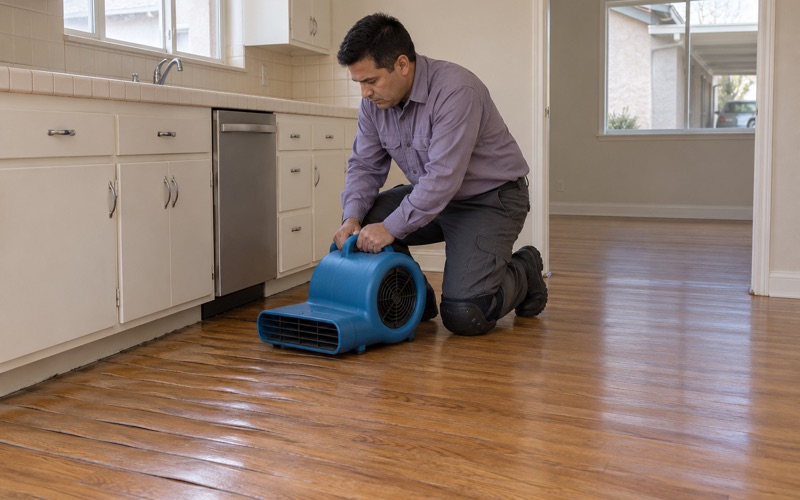
If a floor has water damage, we trace it to its source, whether a dishwasher line or a water heater, and document it with photos and readings an insurance adjuster can use. Finding the cause first keeps a new board from cupping over an old leak.
- 20+ Years in Business
- Written Moisture Readings
- Lead-Safe Work Practices