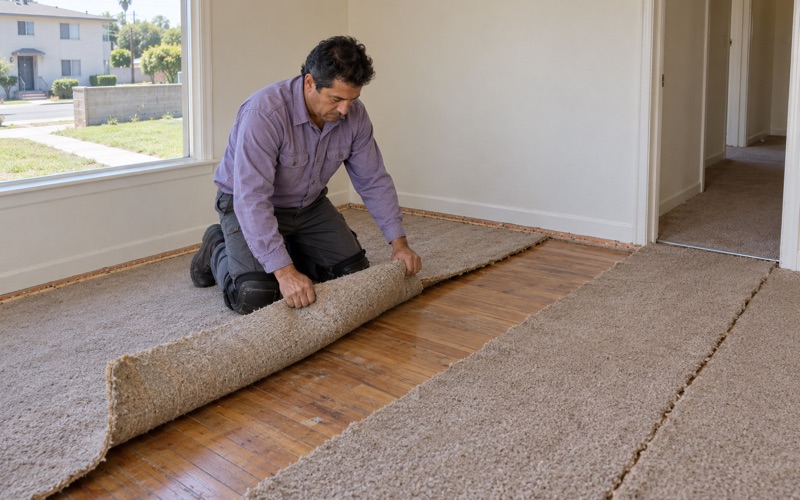
Gardena Wood Flooring has handled wood flooring in San Marino and across the region for more than 20 years, and the houses here ask for a particular kind of care. Many were drawn by an architect as a whole, with floors, stairs, paneling and trim planned to read together. When one of those elements is sanded, stained or patched without regard for the others, the room stops making sense.
Our work starts below the finish. We open and check the subfloor before any new boards are priced, so soft spots, swollen decking or tired joists turn up before they become callbacks. And when a floor has served a family for decades, we answer whether it can be repaired or refinished before anyone mentions replacing it.
The sections below explain how that approach fits San Marino’s period houses, beginning with one house whose architecture earned national recognition, and ending with what a refinishing job looks like from first visit to final coat.
The Katherine Emery Estate and Its National Register Listing
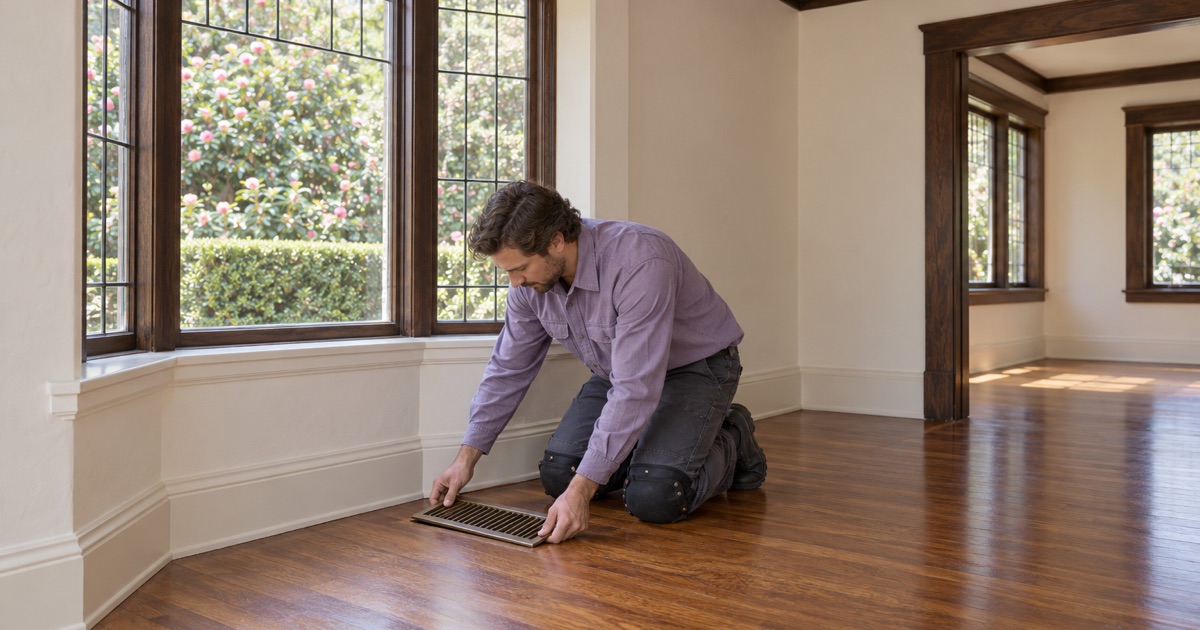
A 1928 Tudor Revival House by Myron Hunt
At 1155 Oak Grove Avenue stands the Katherine Emery Estate, a Tudor Revival residence built in 1928 together with a designed landscape. The architect was Myron Hunt, and the grounds were the work of landscape architects Florence Yoch, Lucille Council and Katherine Bashford. The house was built for Katherine Sinclair Emery, the widow of Frank Emery, on about 9 acres.
Descriptions of the house mention a Tudor great hall with a staircase, tracery windows and oak woodwork. In a house of this kind, the hall, the stair and the paneling are meant to be read as one room. We have no connection to the estate and mention it only as a documented example of the kind of interior this page is about.
Recommended in 2010, Listed in 2011
On November 5, 2010, the State Historical Resources Commission took up the Emery Estate and recommended it for the National Register of Historic Places. The commission described it as a prominent Southern California residential example of Myron Hunt’s 1920s work and of the three landscape architects who shaped its grounds. The listing followed on January 10, 2011.
The point worth noticing is the reason for the listing. The house was recognized for its architecture, meaning the designed whole of building and landscape. For anyone living in a San Marino house of similar age, that is a useful reminder that a floor is one part of a planned composition, and work on it should leave the rest of that composition intact.
What a National Register Listing Means in San Marino
San Marino adopted its historic preservation chapter, Municipal Code Chapter 23.18, on April 11, 2018. Under that chapter, a property listed in the National Register or the California Register is treated as a San Marino historic landmark. The Planning Commission acts as the preservation commission, and a Certificate of Appropriateness is required before a historic landmark is altered.
We don’t decide which work that review reaches, and we won’t guess at it for an owner. If your house is a landmark, or you think it may be, we ask you to check with the City of San Marino Community Development Department before a date is set. The answer shapes the schedule, so it belongs at the start of the job.
Looking for wood-flooring closer to La Cañada Flintridge? See La Cañada Flintridge Wood-Flooring.
Floors in San Marino’s 1920s Period Revival Interiors
How Old San Marino’s Houses Are
Census estimates for San Marino count 4,439 housing units, and 1,811 of them were built in 1939 or earlier. That is 40.8 percent of the city’s homes. Add the 1940s and the share built before 1950 reaches 69.0 percent, while only 3.2 percent date from 2000 or later. Nearly all of those units, 98.6 percent, are detached houses.
The city’s draft historic context statement says the great majority of houses from the 1920s building boom were Period Revival designs, with Tudor Revival, Mediterranean Revival and Spanish Colonial Revival particularly common. Many were custom houses drawn by named architects rather than built on speculation. A floor in one of those houses may have been refinished several times already, which affects how much wood is left to work with.
Rooms That Were Planned Together
In an architect-built Period Revival house, the floor was rarely an afterthought. Board direction often follows the long axis of a hall, borders may frame a living room, and the flooring meets stair treads, door thresholds and paneling at lines someone drew on purpose. We map those lines before we sand so that the finished floor still lines up with them.
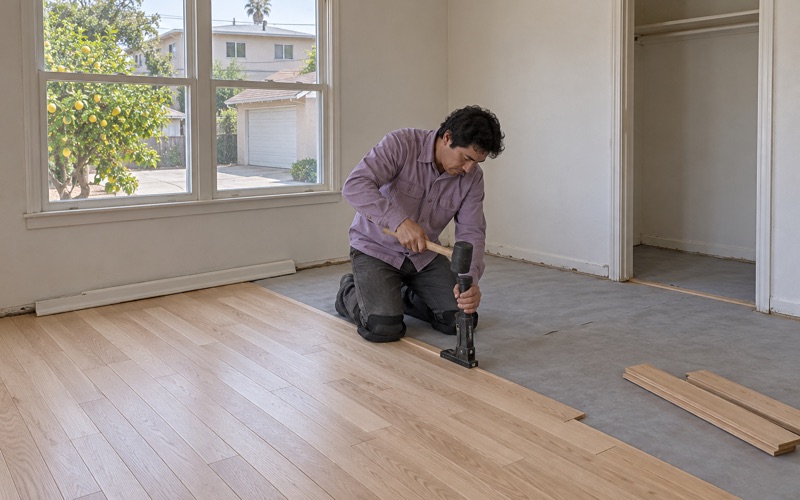
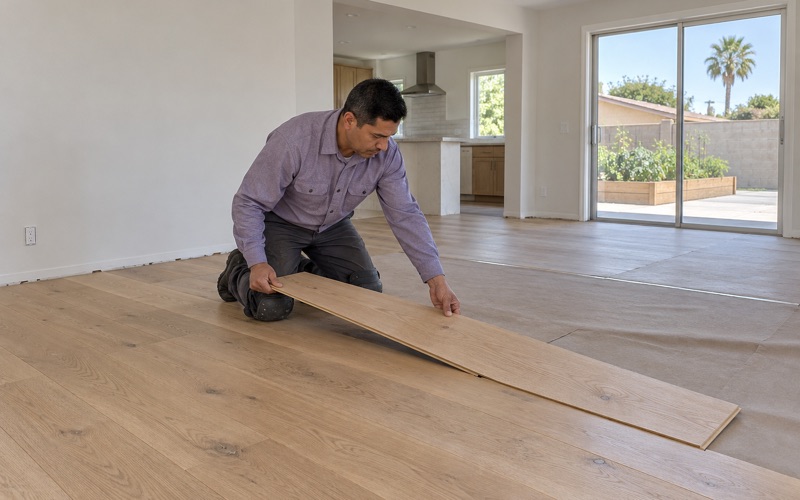
That planning matters most when a family wants to change something. Opening a wall, adding a room or replacing a damaged section can break a pattern that ran through the whole ground floor. We lay out new boards to continue the existing direction and width, and when a pattern such as herringbone is involved, we rebuild it piece by piece instead of patching around it.
Testing Before Any Sanding Starts
A house built before 1978 can carry lead in old finishes, and sanding is exactly the step that turns it into dust. On pre-1978 houses we work to the EPA Renovation, Repair and Painting rule’s lead-safe practices, with containment at doorways and cleanup verified before the family moves back into the room. We plan for this by default in San Marino rather than waiting to be asked.
Older rooms can also hide 9x9 floor tile or black mastic beneath carpet or a later floor, and both can contain asbestos. We stop and treat that as an asbestos survey question under SCAQMD Rule 1403 before anything is scraped or ground. We also take moisture content readings in the wood with a meter and record them, so any cupping or gaps are explained before material is ordered.
Working Around Stairs, Paneling and Built-In Woodwork
Stairs Priced by Tread and Riser
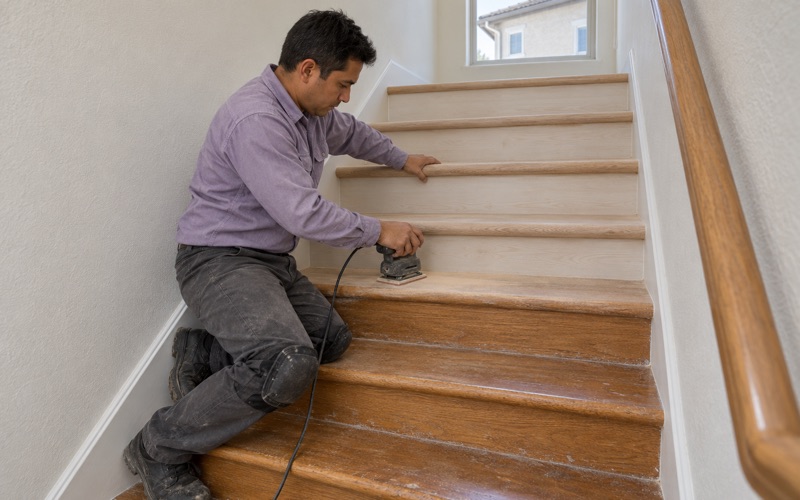
The stair is usually the most visible piece of flooring in a Period Revival hall, and it is also the slowest to refinish. Every tread, riser and nosing has to be worked largely by hand, around balusters and against a wall stringer. For that reason we price stairs per tread and riser rather than folding them into a square-foot number.
Pricing that way also keeps the conversation honest about choices. Some owners want the treads refinished to match new floors while the risers stay painted; others want a worn nosing replaced with one milled to the original profile. Each tread is a line on the estimate, so an owner can see exactly what each choice adds before deciding.
Protecting Paneling, Trim and Built-Ins
Sanding a floor next to original paneling or built-in cabinetry puts that woodwork at risk from the edger, from dust and from stray finish. We mask wainscot and cabinet bases before work begins, pull shoe molding only where it can come off cleanly and be numbered for reinstallation, and keep the edger off any surface that was never meant to be sanded.
Dust is the other threat. We use a dustless sanding system connected to the sanders and seal off the rooms we are working in, which protects carved and paneled surfaces as much as it protects the rest of the house. Where a finish has to be feathered up to existing woodwork, we test a small area first so the new sheen does not fight the old.
Matching Repairs to a Designed Room
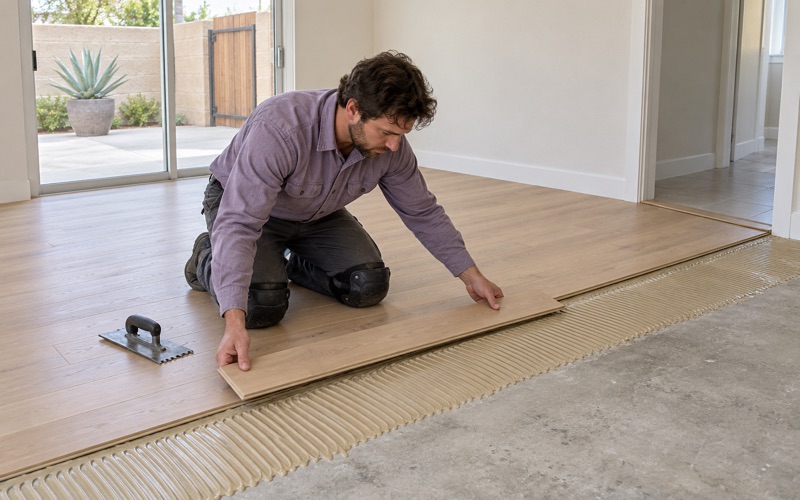
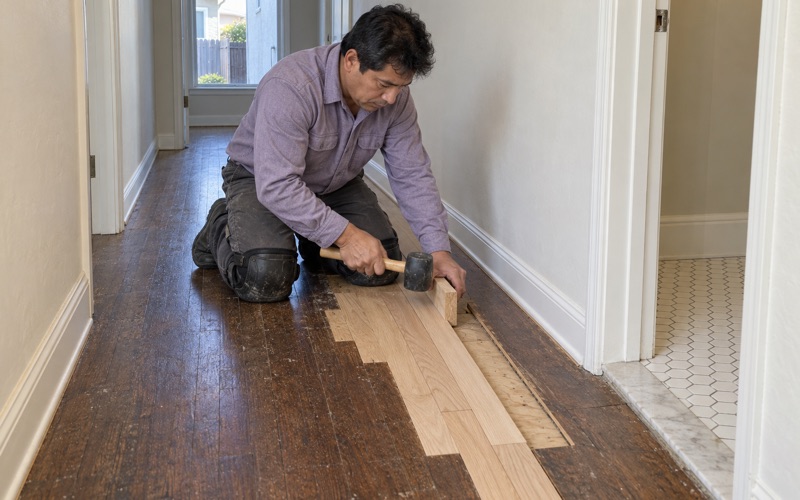
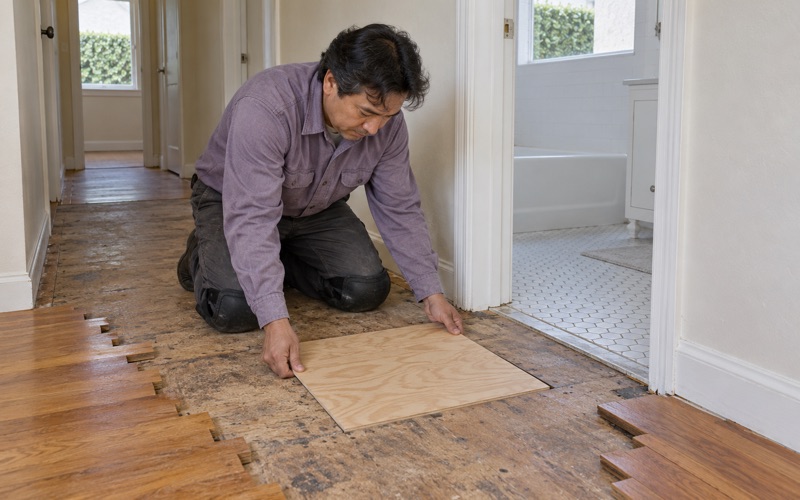
When boards are damaged by water, pets or old termite activity, the repair has to disappear into a floor that was laid as one field. We cut out the failed boards and weave in replacements staggered with the existing joints, rather than dropping in a rectangular patch that reads from across the room. Species, width and grain are matched as closely as the stock allows.
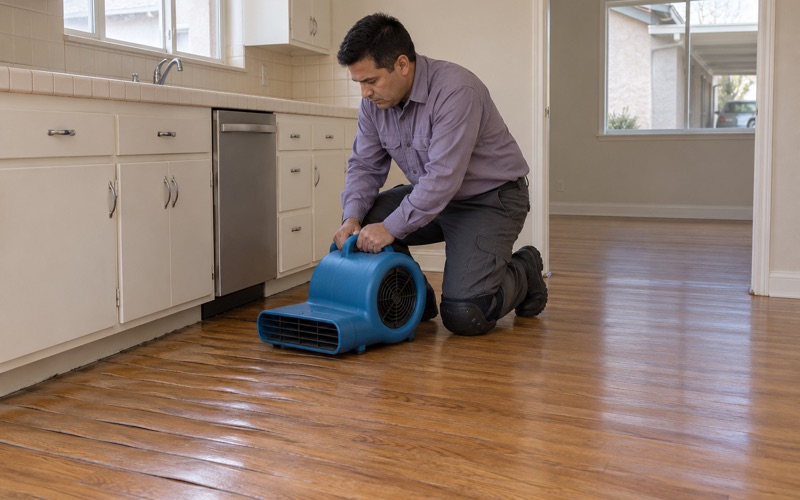
In an older house, water damage gets traced to its source before any board goes back, whether that is a dishwasher line, a water heater or a leaking fitting. We document what we find with photos and moisture readings an insurance adjuster can use. Repairing the floor without fixing the cause only schedules the same repair again.
Refinishing Floors in an Architect-Designed San Marino House
Screen and Recoat or Full Sanding
Not every tired floor needs to go back to bare wood. If the finish is dull and scratched but the stain and wood are intact, a screen and recoat abrades the top coat and adds fresh finish without cutting into the wood. That matters in an older house, where every full sanding takes wood that cannot be put back.
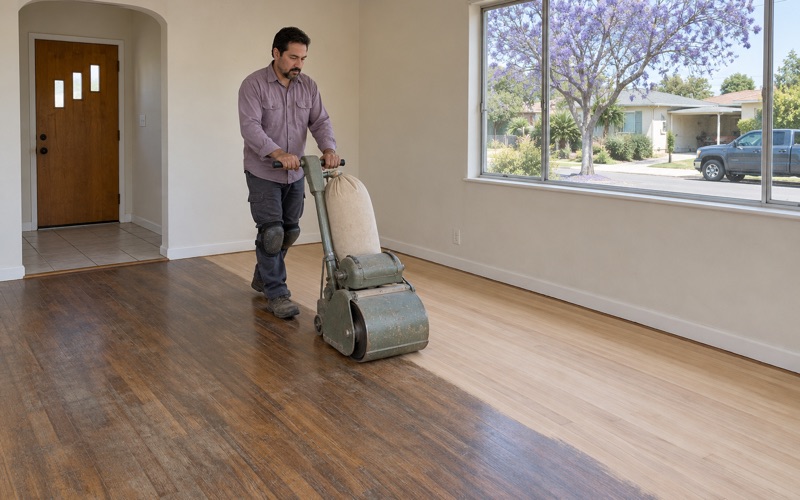
When the finish is peeling, the stain is blotchy or there are deep gouges and pet stains, a full sanding is the honest answer. We check board thickness first, then work through a measured grit sequence with the drum sander, edger and orbital sander so no sander marks show under the new finish. If a floor has too little wood left, we say so.
Finishes Legal in the South Coast Air Basin
San Marino falls under the South Coast Air Quality Management District, and SCAQMD Rule 1113 limits wood coatings to 275 grams of VOC per liter. We choose finishes from products legal under that limit. Within it there is still a real choice between waterborne polyurethane, oil-modified polyurethane and hardwax oil, each with its own look, durability and maintenance routine.
In a Period Revival interior, the finish should sit comfortably next to old paneling and trim. A lower sheen level often suits these rooms better than a high gloss, and an amber-toned finish can bring new boards closer to the warmth of aged woodwork. We lay sample boards in the room itself, under its own light, before the owner decides.
Scheduling Around a Household
The city’s draft housing element notes that multiple generations of a family commonly live together in San Marino. That makes scheduling as important as the finish, especially when an older family member needs a clear route to a bedroom. We sequence rooms so the household keeps a usable path through the house, and we contain dust at every doorway we are working behind.
Every job ends with a written cure schedule. It says when each room can take socks, when it can take shoes, and when rugs and furniture can go back, so no one has to guess. Rugs stay off longest, because a new finish keeps curing underneath them well after it feels dry to the touch.
- 20+ Years in Business
- Written Moisture Readings
- Lead-Safe Work Practices