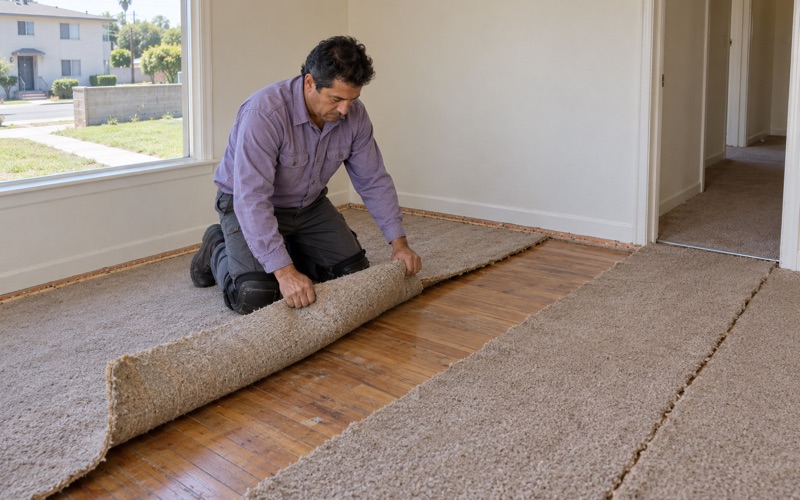
Gardena Wood Flooring has handled wood-flooring in Los Alamitos for homeowners and landlords with more than 20 years in the trade behind every estimate. We repair, refinish and install solid and engineered floors, and we start most jobs the same way: by measuring what the wood and the subfloor are actually doing before anyone picks a stain or a plank.
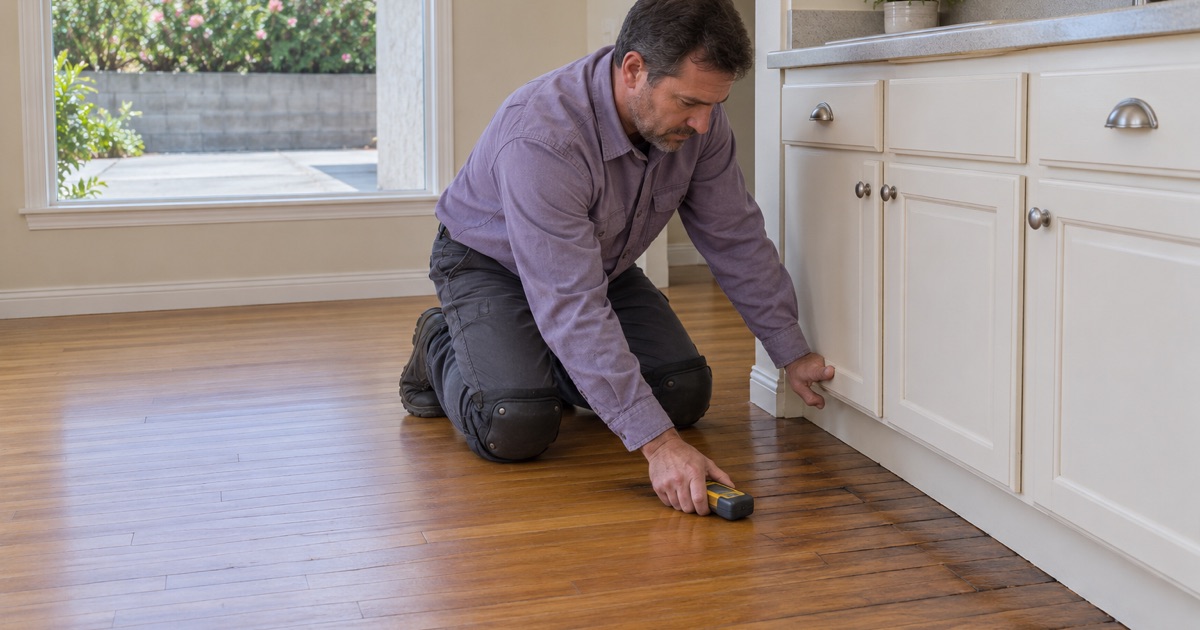
That habit matters more here than in many places. A flood map label tells you something about a neighborhood’s modeled risk, but it cannot tell you whether a dishwasher line leaked under your kitchen boards last winter. We read the floor itself, with a wood moisture meter, a check of the subfloor wherever it can be opened, and a written record of every reading.
Whether you own a house you plan to keep for decades or manage a unit between tenants, the goal is the same. We give you a repair-or-refinish answer first, and we only talk about replacement when the boards genuinely cannot be saved.
Wood Floors and What FEMA’s Current Map Shows
Four Points, Four Readings
When FEMA’s National Flood Hazard Layer was queried on September 28, 2026, at four points inside Los Alamitos, it gave more than one answer. At the city center and at a point to the south, the map returns Zone D, which means the flood hazard is undetermined. A point to the north returns Zone X with reduced flood risk credited to a levee, and a point to the east returns shaded Zone X, the 0.2 percent annual chance area.
None of the four points is a special flood hazard area. That sounds reassuring, yet two of the four answers are not a verdict at all. Zone D is FEMA’s way of saying the hazard has not been determined, which is a very different statement from saying there is no hazard. Four points are also a sample of a city, not a lookup for any one parcel.
Why the Check Can Be Trusted
A map query that returns nothing hazardous can mean the query failed. So the same map was also asked for special flood hazard areas in a box drawn around the city, and it returned them: Zone A areas, and Zone AE areas with a base flood elevation of 14 feet, along the channels near Los Alamitos.
That positive result is what makes the four readings meaningful. The map is working, it knows where mapped hazard lies, and at the four city points it still answers undetermined or reduced risk. FEMA’s 2019 flood study for Orange County lists Los Alamitos with zones A and X, so the zone vocabulary is not new here.
Where the Water Actually Runs
Coyote Creek and Carbon Creek run through concrete-lined channels in and beside the city, and the areas of potential flooding nearby are generally associated with them. Orange County began installing a debris boom in the Carbon Creek Channel at Los Alamitos Boulevard and Ball Road in February 2026, to catch trash before it reaches nearby waterways.
None of that is a statement about your house. Much of the water we trace under wood floors comes from inside the building: a supply line, an ice maker hookup, a shower pan or a window that has been weeping for years. The channel shapes the neighborhood’s mapped risk, while the plumbing often writes the floor’s actual history.
Looking for wood-flooring closer to South El Monte? See Wood-Flooring in South El Monte.
Zone D, Zone X and What a Levee Changes
Reading a Zone Label Correctly
A flood zone label describes modeled risk across an area, and each letter answers a narrower question than most people assume. Zone A and Zone AE mark special flood hazard areas, land subject to the 1 percent annual chance flood. Shaded Zone X is the 0.2 percent annual chance area, and unshaded Zone X is lower still.
Zone D is the odd one out. It carries no risk grade, because the flood hazard there has not been determined. We treat a Zone D reading as a missing answer and plan the floor around what the house itself shows, never as permission to skip a moisture check.
What Levee Credit Means for a Floor
The northern reading is Zone X with reduced flood risk due to a levee. That label means mapped risk is lower because a structure holds water back, not because the ground sits out of reach of water. Levee credit describes the ground, not your kitchen, and a floor can still be ruined by a single failed fitting upstairs.
Judging the levee itself is civil engineering, well outside what a floor inspection can see. What we can do is tell you what the label says in plain words, then measure moisture content in the boards and, where a house has a concrete slab, test the slab before any material is ordered.
What the Map Cannot Tell a Buyer or Seller
The Housing Element records most of the city’s housing inventory sites in Zone X and one site in Zone D, which shows the city itself reads these labels as planning facts. For a homeowner, the practical lesson is narrower. A zone label says nothing about whether the previous owner mopped up a leak and laid new boards over wet decking.
Before a sale or after a purchase, we can open a board or two where the evidence points, check the floor decking and joists for swelling or soft spots, and write down what we find. That gives you a record of the floor’s condition that stands on its own, whatever the map happens to say about the block.
Judging a Wood Floor After Water Gets In
Reading the Boards
Water leaves a pattern in solid wood. Cupping, where board edges rise above the centers, usually means moisture is coming from below, while crowning often shows up after a cupped floor was sanded flat too early. Buckling, where boards lift off the subfloor entirely, points to a larger or longer soaking. Dark staining around nail heads and at board ends is another tell.
We compare what we see against wood moisture meter readings taken across the room, not just at the worst spot. A gradient from wet to dry usually leads straight back to the source. Engineered floors behave differently, because the core can swell or delaminate while the wear layer still looks sound, so we check those at the edges and seams.
Tracing the Source Before the Repair
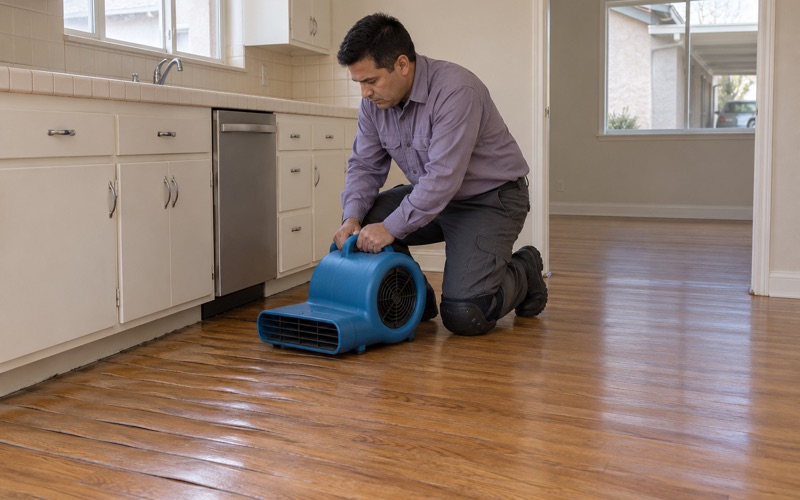
A floor that dries out and flattens can still fail again if the leak was never found. We trace water back to where it started, whether that is a dishwasher line, a water heater, a toilet seal or a slab leak, and we photograph the damage and log the readings as we go.
That record is useful to you, and to anyone else who has to make a decision about the damage. Once the source is fixed, the moisture content in the wood has to come back to a normal range before any sanding or board replacement starts, and we write down the day it gets there.
Repair, Refinish or Replace
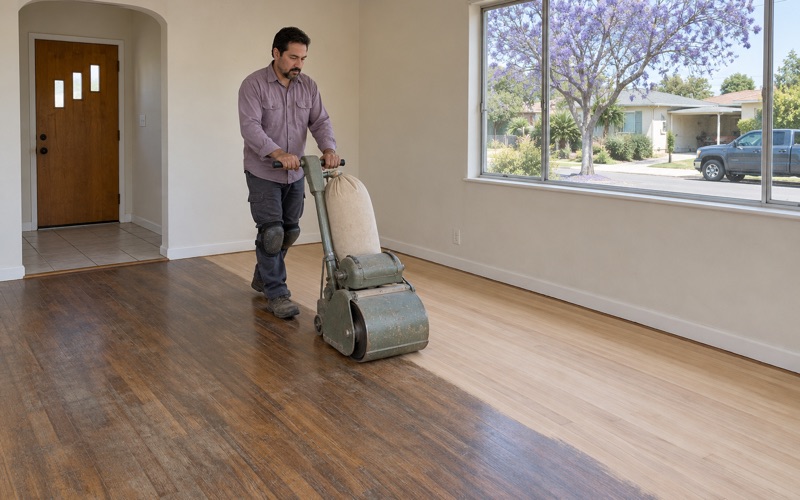
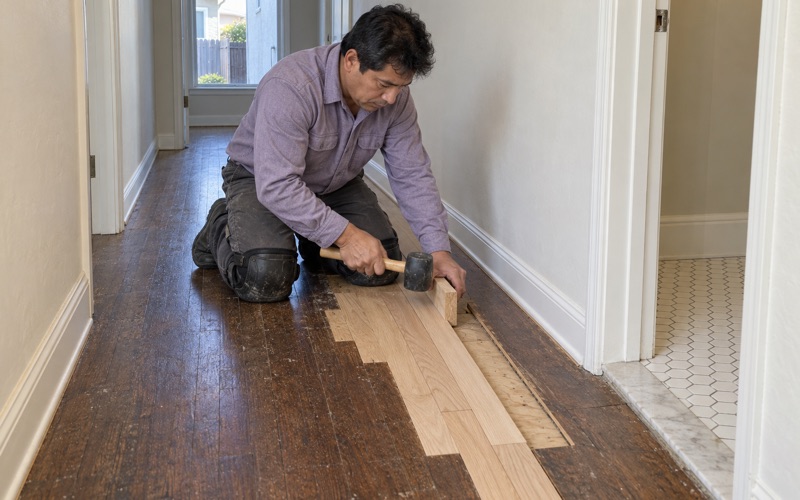
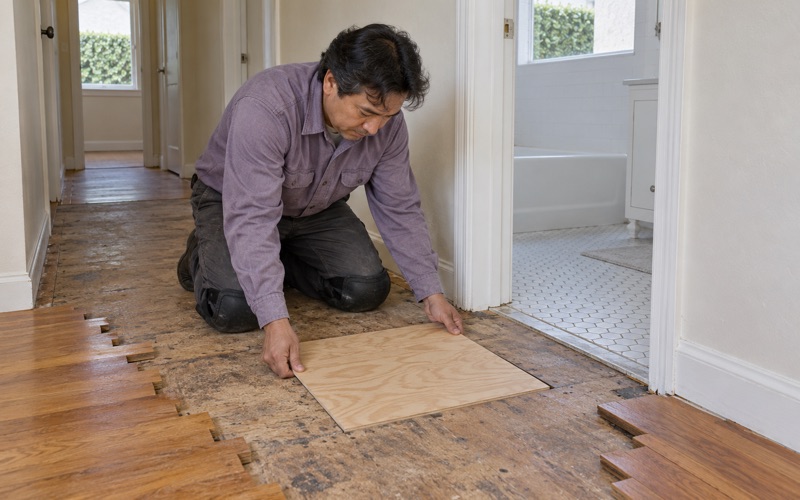
Many water-marked floors can be saved. A weave-in repair replaces damaged boards by interlacing new ones with the old, so the patch follows the grain rather than stopping at a straight seam. After that, a full sand with a drum sander and edger, a careful grit sequence and a fresh finish can bring the room back together.
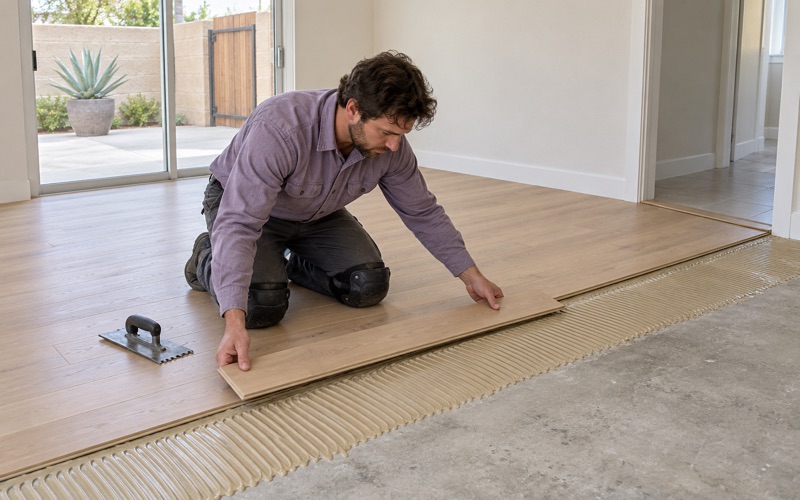
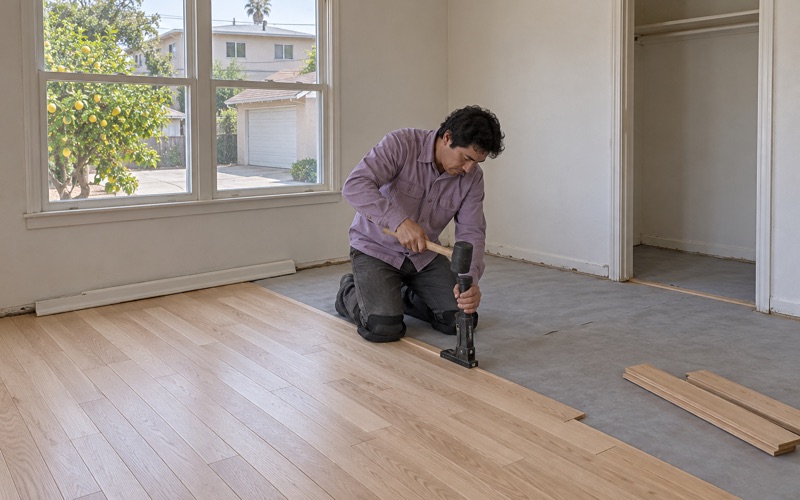
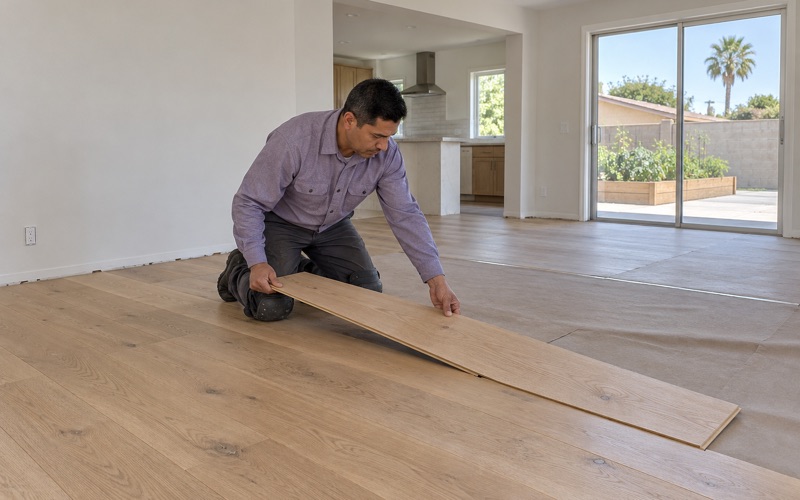
Replacement becomes the honest answer when the decking under the boards has delaminated, when joists have softened, or when engineered planks have separated at the core. Even then, we open the subfloor and price the structural repair first, so the new floor is not laid over the problem that ruined the last one.
Planning Floor Work in Los Alamitos
Houses From the City’s Biggest Building Decade
The 1960s are the largest building decade in Los Alamitos, with 1,302 of the city’s 4,623 housing units dating from those years, and 70.5 percent of units were built before 1980. That age matters for floors in two ways: finishes, adhesives and underlayments may have been changed more than once, and pre-1978 housing calls for lead-safe work.
We follow the EPA Renovation, Repair and Painting rule on houses of that age and contain the work area so lead dust from sanding does not travel through the home. Old 9x9 floor tile or black mastic under carpet is treated as a possible asbestos question, and we recommend an asbestos survey before anything is scraped or sanded.
Rentals and Turnovers
Renters make up 57.6 percent of households in Los Alamitos, so floor work here often happens between tenancies. We handle turnovers unit by unit, with written estimates and itemized invoices a landlord can attach when California Civil Code 1950.5 requires a deposit deduction to be itemized and backed by the contractor’s invoice.
The statute separates repair of damage from ordinary wear and tear, and a floor is often where that line gets argued. Our notes describe what we actually see: a pet urine stain that went through the finish into the wood, versus traffic wear that a screen and recoat can handle. We also leave time for the landlord’s own move-out photos, which the statute now expects before repairs begin.
Scheduling, Finishes and Paperwork
Finishes are chosen from products legal to apply under SCAQMD Rule 1113, which holds wood coatings to a VOC limit of 275 g/L across the South Coast air basin. We give every occupied home a written cure schedule, so you know which rooms can take foot traffic and which can take furniture on each day.
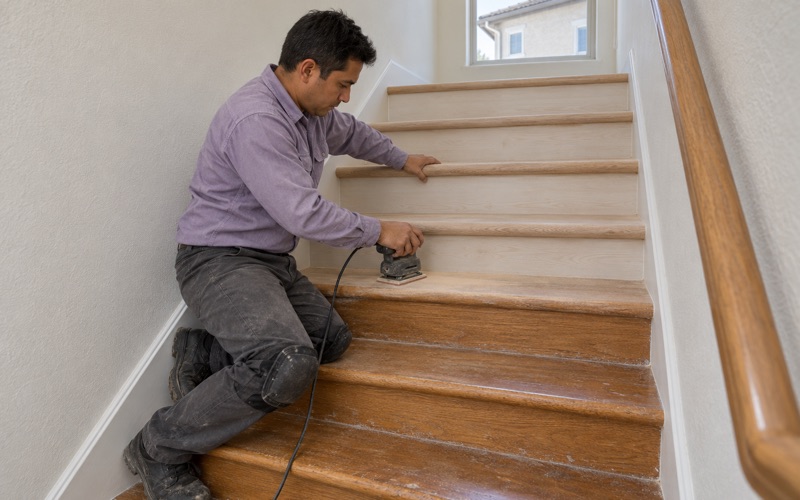
Construction permits in the city run through the Building and Safety Division of the Development Services Department, which has an online Building Permit Center, and contractors working in the city are required to hold a Los Alamitos Business License. Stairs are priced separately, per tread and riser, rather than folded into a square-foot number. Tell us what the house has been through with water, and we will start there.
- 20+ Years in Business
- Written Moisture Readings
- Lead-Safe Work Practices