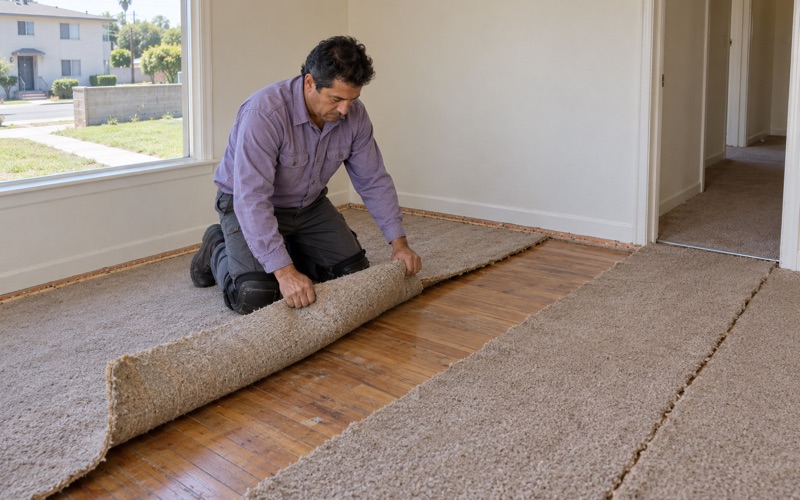
Gardena Wood Flooring brings more than 20 years of work to wood flooring in Lomita, and a large share of the calls we take here start with water. A supply line gives way, a water heater weeps for months, or a pipe under the house finally lets go, and the first sign is a floor that no longer lies flat. This page is about that kind of job: finding where the water came from, measuring what it did to the wood, and deciding what the floor actually needs.
We do not start with a price. We start with a moisture meter, a look under the edges of the damage, and a written record of what the readings say, because a floor priced before it is measured usually gets priced twice. When the answer is a handful of new boards woven into the old ones, we say so before anyone mentions tearing out a room.
Homeowners, landlords and tenants all end up standing on the same wet floor, and each needs something different from us. Owners want to know whether the floor can be saved. Landlords need itemized paperwork for an insurance claim or a turnover, and tenants need to know when a room can be walked on again.
What Lomita’s Capital Plan Says About Old Pipes
The Majority of the Plan Is Water Work
Lomita runs its own water system, and its 2022-2027 Capital Improvement Program Master Plan is direct about where the effort goes. The plan states that the majority of its projects, 51 percent, are focused on water system improvements, well ahead of streets at 22 percent. Water is allocated $25,403,416 across the five years.
The plan also adds something the earlier Water Master Plan did not include: annual rehabilitation and replacement, there to replace aged and leaking pipes. A city does not set aside money for leaking pipes every year unless it expects to keep finding them. For anyone with wood floors, that line is worth reading closely.
Two Main Replacements and the Reason Given
One project spells out the link between a pipe in the street and a room in a house. The western water main replacement on 246th Street, 247th Place and 247th Street, budgeted at $1,499,916 with an OES grant, is justified with a single sentence: ‘This project will reduce risk of water lines breaking and damaging private property.’
A second project replaces a stretch of pipe on Narbonne Avenue south of Pacific Coast Highway, and the stated reason is short: the pipe is aged and needs replacement. We read these entries as a description of risk, not a record of damage. The plan names streets where work is scheduled, not homes that were hurt, and it says nothing about who pays for a floor inside a house.
Why a Floor Contractor Reads a Water Plan
A main in the street belongs to the city’s system. The pipes that most often ruin a wood floor are the ones past the meter, inside the property line, and those belong to the house. What the capital plan tells us is that Lomita’s pipes are old enough for the city to plan around, and the homes they serve are not new either.
Of Lomita’s 7,904 housing units, 78.9 percent were built before 1980 and 10.1 percent before 1940. Supply lines, valves and fittings that have sat in a wall or under a floor for decades are where we look first when a floor has started to move.
Looking for wood-flooring closer to Signal Hill? See Wood-Flooring Services in Signal Hill.
Where Leak Water Comes From in a House
Supply Lines, Valves and Water Heaters
Most of the water damage we see starts at a fitting that has been under pressure for years. A braided line under a sink, a dishwasher connection, a toilet supply valve or a water heater that has begun to seep can put water into a floor slowly enough that nobody sees it for weeks. Wood takes up that water at its edges and from underneath before the surface ever looks wet.
Slow leaks are harder on a floor than sudden ones in one respect: they give moisture time to travel. By the time someone notices a raised seam near the kitchen, the wet area under the finish is often wider than the visible damage. That is why we trace the source before we mark a single board for removal.
Pipes Under the Floor
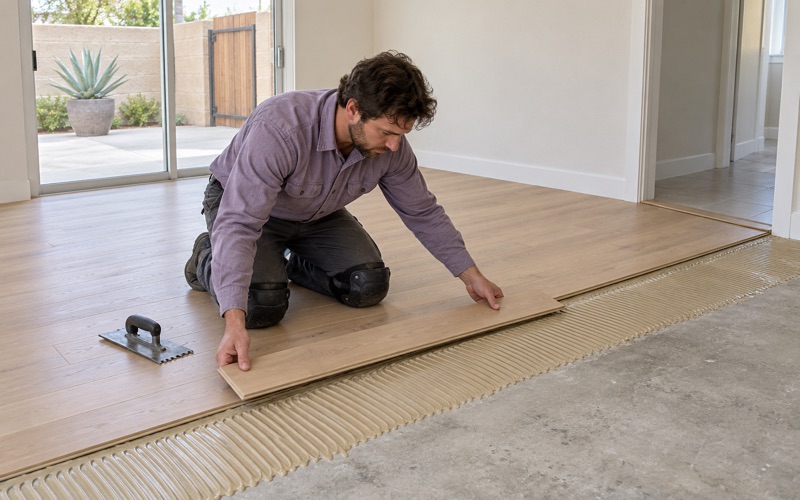
Some leaks start where nobody can see them. Where plumbing runs through a concrete slab, a slab leak can push moisture up into a glue-down or floating floor from below; where pipes run beneath a wood-framed floor, a drip can soak the plywood underlayment and floor decking for months. We do not assume which kind of house we are standing in until we have looked.
Finding the source matters for the floor and for any claim. We photograph the leak point, the wet area and the readings, and we note what we found in terms an insurance adjuster can follow. If the leak is still active, the plumbing repair comes first, because a new floor over a live leak is a second loss waiting to happen.
When the Water Comes From Outside the House
A break in a city main is a different event from a leak inside the walls, and the plan’s own wording shows the city takes that risk to private property seriously. When outside water does reach a floor, we assess it the same way we would any other leak: source, extent, readings and photos. Questions about who is responsible for the damage belong with the city and your insurer, and we will not guess at the answer.
Assessing a Wood Floor After a Leak
Readings Before Opinions
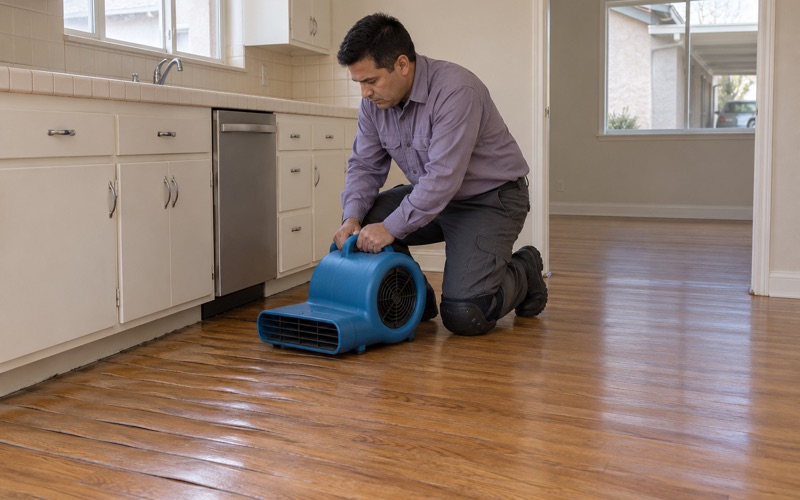
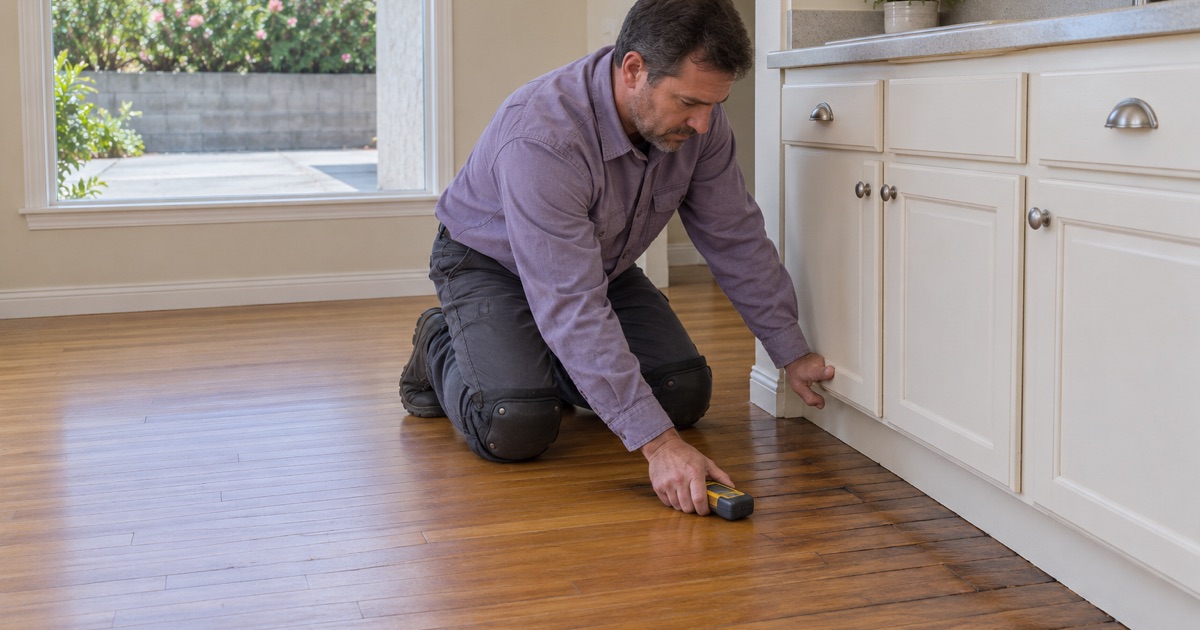
The first tool out of the truck is a wood moisture meter. We read the damaged boards, the boards around them and a dry area of the same floor, because moisture content only means something next to a baseline. Where a floor sits over concrete, we add a calcium chloride moisture test or an ASTM F2170 in-situ relative humidity test before new material goes down.
Every reading is written down with its location and date. That record shows whether the floor is drying on its own, whether fans and dehumidifiers are working, and when it is safe to sand. It also gives an adjuster numbers instead of a description.
What Cupping, Crowning and Buckling Tell Us
The shape of a wet floor is evidence. Cupping, where board edges rise above the centers, usually means moisture is coming from below. Crowning, where the centers rise, often shows up after a cupped floor was sanded before it dried. Buckling, where boards lift off the subfloor, means the wood took on enough water to push against itself and the walls.
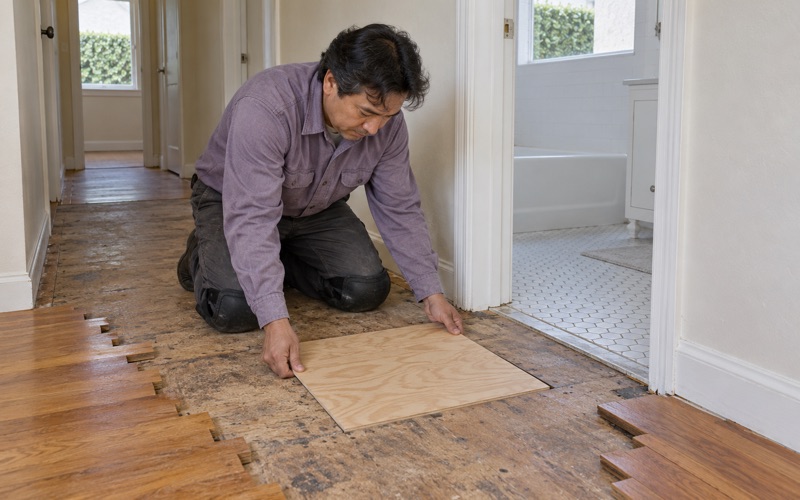
We also open the floor where it matters. Lifting a board near the source lets us check the floor decking and joists for swelling, soft spots or staining, and see whether a particleboard subfloor has lost its strength. A new finish floor over a failed subfloor will squeak, move and fail again.
Board Replacement Versus Full Refinish
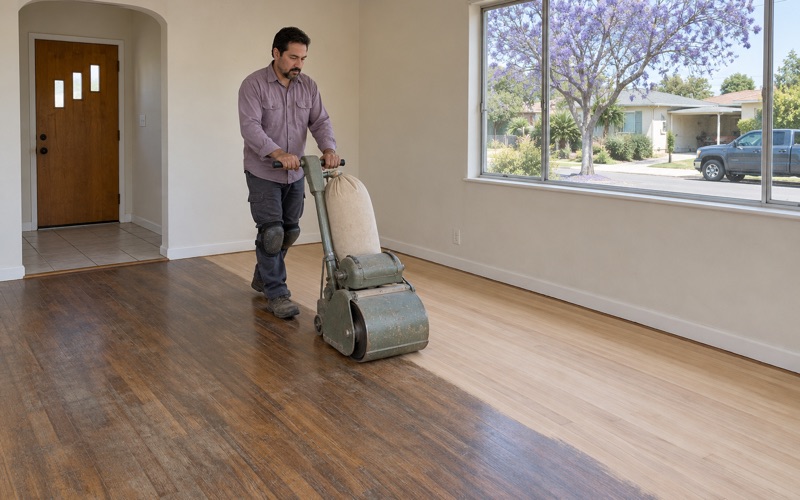
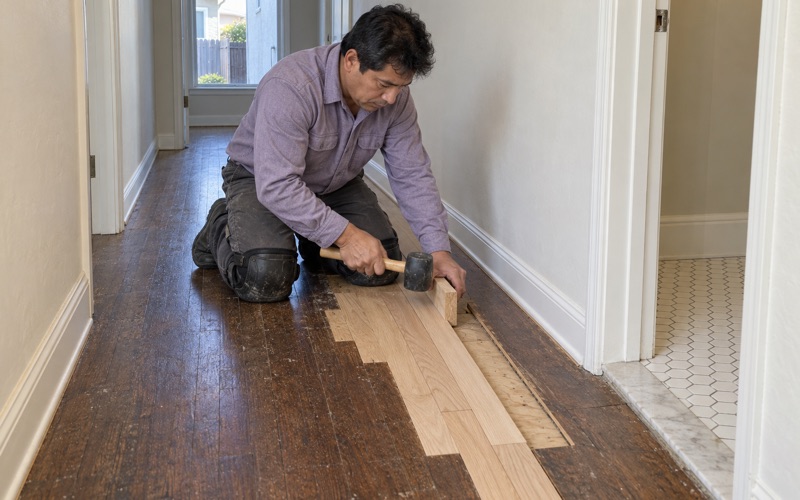
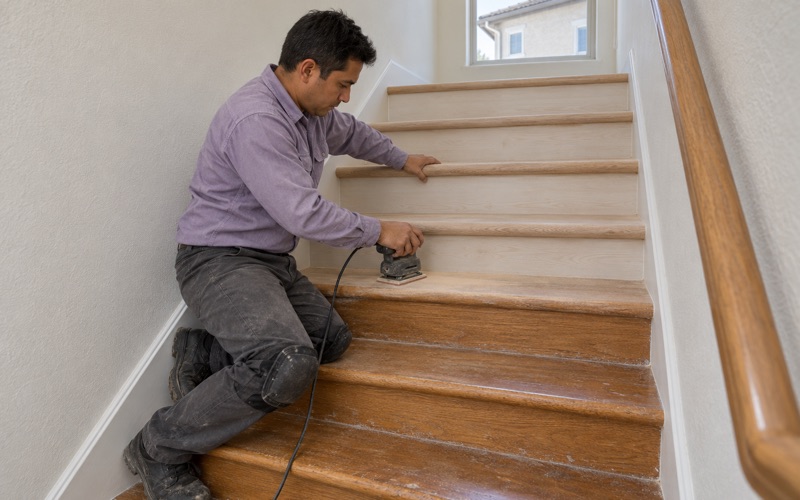
Many leaks do not need a new floor. When the damage is confined and the surrounding wood has dried back to normal, a weave-in repair removes the ruined boards and laces in new ones of the same species and width, staggered into the existing pattern so no straight seam shows. A screen and recoat or a full sanding then brings patch and floor to one color and sheen.
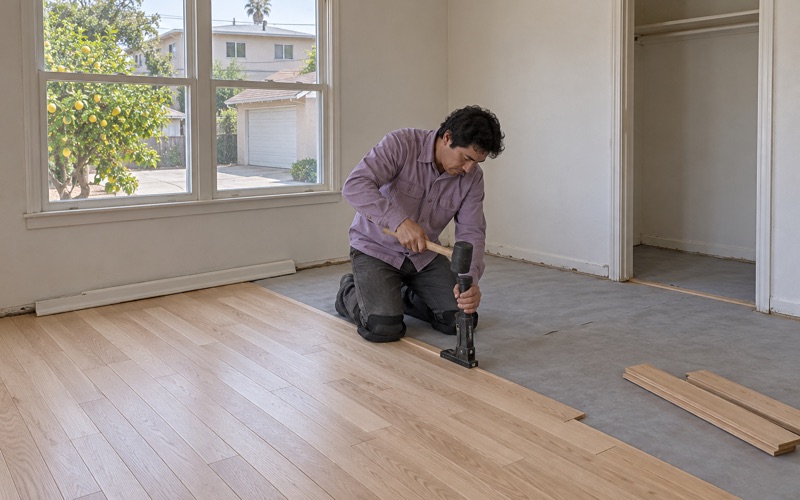
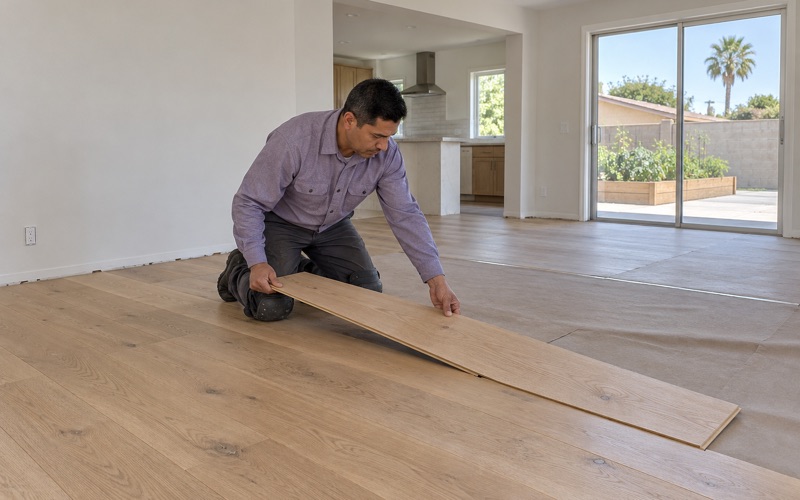
A full refinish makes sense when the patch would stand out against worn or discolored boards around it, or when mild cupping has settled after drying. Replacement is the answer when boards have split, delaminated or rotted, or when the subfloor has to come out. We put the recommendation and the reason in writing before any work is scheduled.
Planning Floor Work in Lomita
Owners, Landlords and Tenants
Lomita is a renter-majority city: of 7,326 occupied homes, 3,964, or 54.1 percent, are rented, and the most common kind of rental is a detached house. So a leak under a wood floor is often a landlord’s repair in a tenant’s living room. We give landlords itemized estimates and invoices that separate the floor from everything else, which suits an insurer and, at a turnover, the itemized statement California deposit law requires.
For tenants, the practical question is time. We contain dust around the work area and hand over a written cure schedule, so everyone knows when each room can take foot traffic and when the furniture can go back.
Older Houses and Old Materials
Most of Lomita’s homes were built before 1980, so we treat lead as a question on every older job. In pre-1978 housing we follow EPA Renovation, Repair and Painting rule practices, because lead dust from sanding painted trim and thresholds is a real risk. Old 9x9 floor tile and black mastic under a floor are treated as a possible asbestos question before anything is scraped or sanded.
Lomita also has 544 mobile homes, where the floor structure differs from a site-built house. We look at how the floor is framed before we price a repair in one, because the fix that suits a house may not suit a manufactured home.
Finishes and the Local Building Office
Every finish we apply is chosen from products legal in the South Coast air basin under SCAQMD Rule 1113 and its 275 g/L limit for wood coatings. Waterborne polyurethane dries faster and suits an occupied home; oil-modified polyurethane takes longer to cure and warms the color of the wood.
Building and safety services in Lomita, including plan check, permits and inspection, are provided by Los Angeles County Public Works under contract, from the Lomita-Lennox Building and Safety Office at 24320 S. Narbonne Ave. Whether the plumbing repair behind a leak needs review is a question for that office, and we leave the answer to them.
Once the plumbing is fixed and the wood has dried, the goal is a floor that shows no sign it was ever wet. Call us after the plumber leaves, and we will bring the meter.
- 20+ Years in Business
- Written Moisture Readings
- Lead-Safe Work Practices