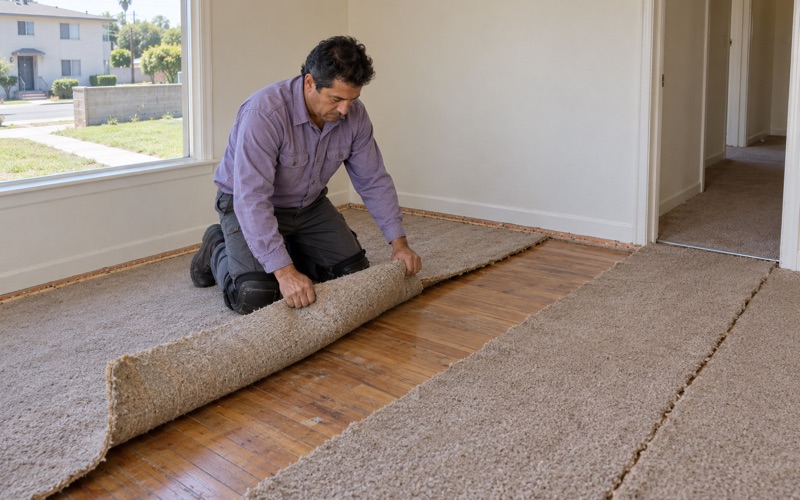
Gardena Wood Flooring has spent more than 20 years on wood-flooring in Lawndale and the surrounding South Bay, and a good share of that work lands in the weeks before a house goes on the market. Sellers call us with the same question in different words: does the floor have to be fixed before the sale, or is it simply a matter of what the house will fetch?
The honest answer depends on two things. The first is what the city actually requires of a seller, which is narrower than many people assume. The second is what the floor is really doing underneath the finish, and that is something we measure rather than guess at.
This page walks through both. We cover the city’s presale report, what its inspector is and is not there to look at, how we help a seller choose between repair, refinishing and leaving the floor alone, and how to schedule floor work so it does not collide with the report or with escrow.
Lawndale’s Residential Property Report and What It Covers
Lawndale Municipal Code Chapter 8.80 requires that, before a residential property is sold, the owner or an authorized agent apply to the city for a Residential Property Report. Knowing its scope is the first step in deciding what, if anything, to do with the floors.
Which Sales Need the Report
The requirement applies to properties with 10 residential units or less that have either shared parking or individual parking, meaning garages, carports or assigned spaces. That takes in a typical detached house as well as a duplex or small multi-unit lot with parking. Some transfers are exempt, including the first sale of a building nobody has lived in, transfers between co-owners, and commercial property.
The seller provides the finished report to the buyer, the buyer signs it, and the seller returns it to the city. The city’s own page states that failing to comply may constitute a misdemeanor by the seller, so this is not a step to leave to the last week. Questions about a specific property go to Community Development at (310) 973-3230.
Garages, Carports and Parking Areas
By default, a Code Enforcement Officer inspects any garages, carports and other assigned parking areas on the property. Violations the officer can see are noted on the report. That is the whole of the standard inspection, and it is built around parking, not around living space or finishes.
The floors inside the house are not named anywhere in that scope. The officer is not grading hardwood, checking for cupping or deciding whether a finish is worn. A seller who expects the report to tell them what the floors need will come away without an answer, because floor condition is simply not what the city is looking at.
The Optional Interior Inspection
The applicant can ask for a more thorough inspection, which can include the interior of any dwelling unit and other structures on the lot. The interior visit happens only when it is requested. If you do not ask for it, the city does not come inside by default.
Even with an interior inspection, the report records visible code violations. It is not a flooring assessment, and nothing in the city’s description ties it to floor finishes or board condition. When a seller wants a real read on the floors, that comes from someone with a moisture meter and the time to look under the rugs, which is where we come in.
Looking for wood-flooring closer to Hawthorne? See Wood-Flooring Services in Hawthorne.
Refinish, Repair or Leave the Floors Before Listing
The city states plainly that there are no property retrofit requirements when selling a residential unit or property in Lawndale. Whatever happens to the floors before a listing is the seller’s choice, made for the sale, not for the report.
Why the Decision Is Yours
Because nothing forces floor work, the useful question is whether a given repair or refinish returns more than it costs, in price or in time on the market. Our job is to answer that with measurements and a written estimate, and to say so when the right call is to leave a floor as it is and let the buyer decide.
That starts with a walk-through. We check moisture content in the boards with a wood moisture meter, look for cupping, crowning, board gaps and squeaks, and press on any spot that feels soft. If the decking gives, we open it and check the subfloor before pricing anything, so a buyer’s inspector does not find the problem first.
Repairs That Usually Earn Their Cost
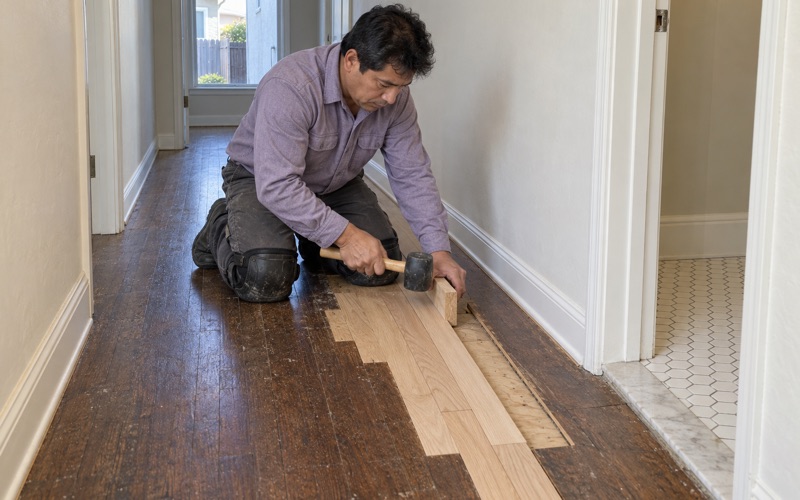
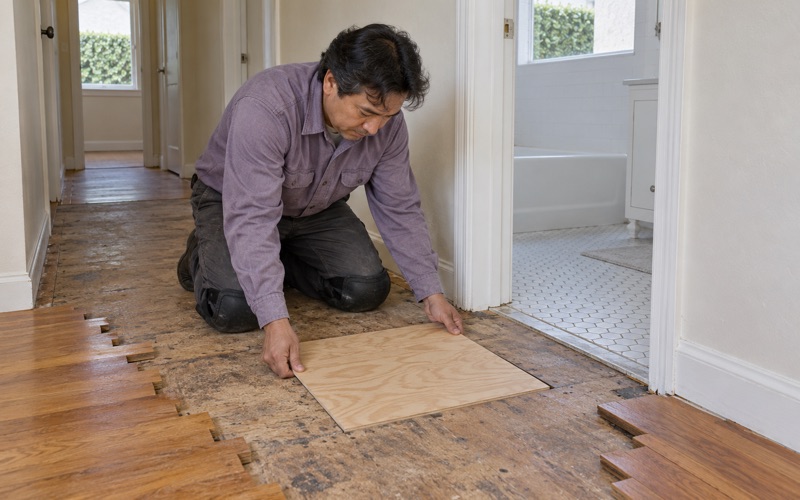
Small, visible damage tends to cost a seller more in a buyer’s imagination than it costs to fix. A water stain by the kitchen, a set of pet urine stains in a bedroom, or a few split boards at a doorway can often be handled with board replacement or a weave-in repair that ties the new wood into the existing field.
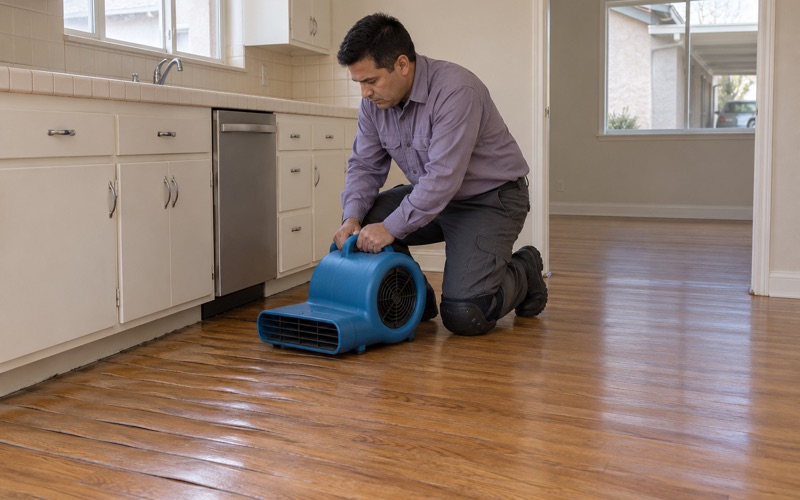
Where water was involved, we trace it back to the source before touching the wood, whether that is a dishwasher line or a water heater. Replacing boards over a leak that is still active only produces the same stain a few months later, often after the buyer has moved in and started asking questions.
When a Refinish or a Recoat Makes Sense
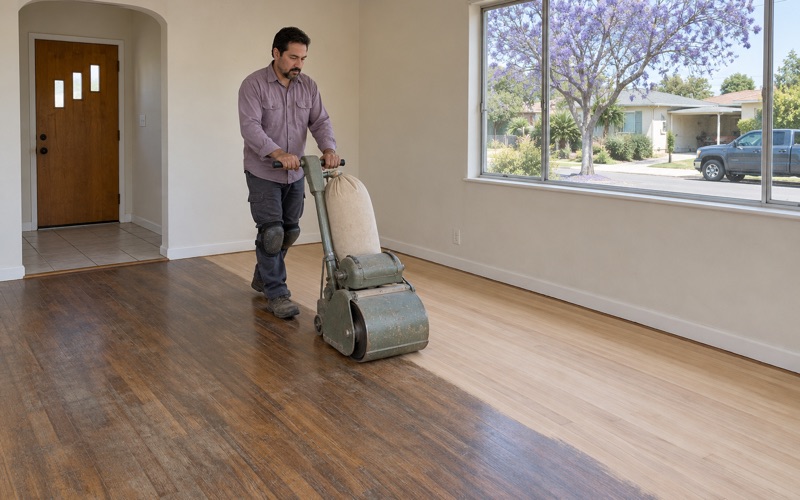
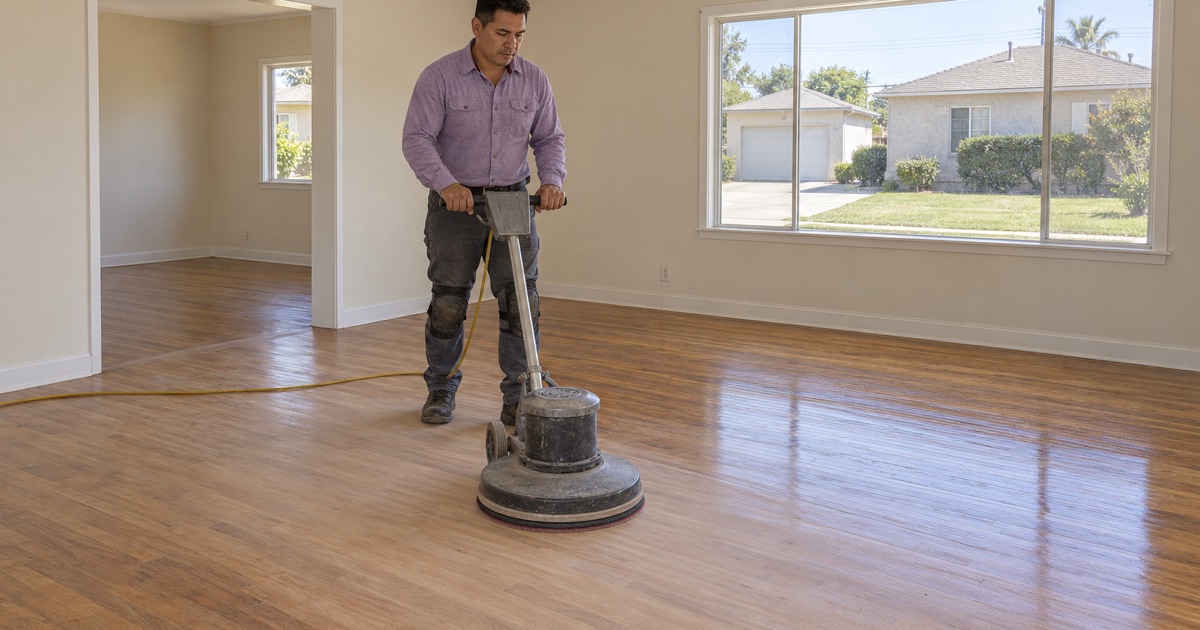
If the wood is sound but the finish is dull or lightly scratched, a screen and recoat can refresh the surface in less time and for less money than a full sanding. It works only when the existing finish is intact enough to bond to, and we test for that before recommending it.
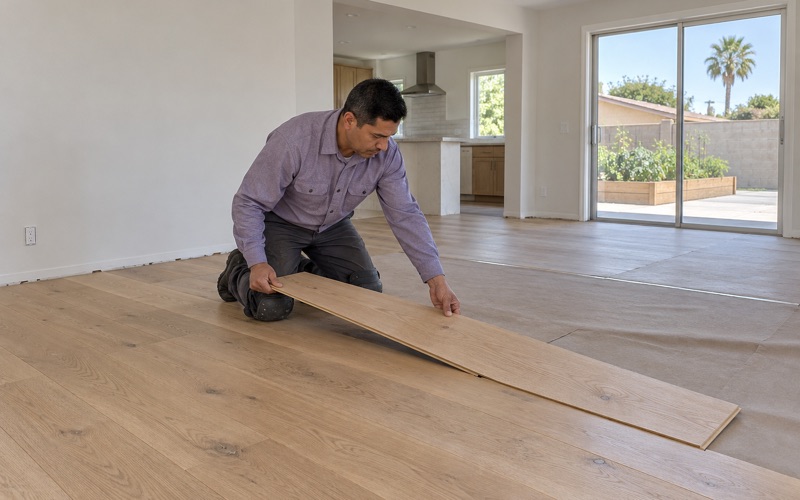
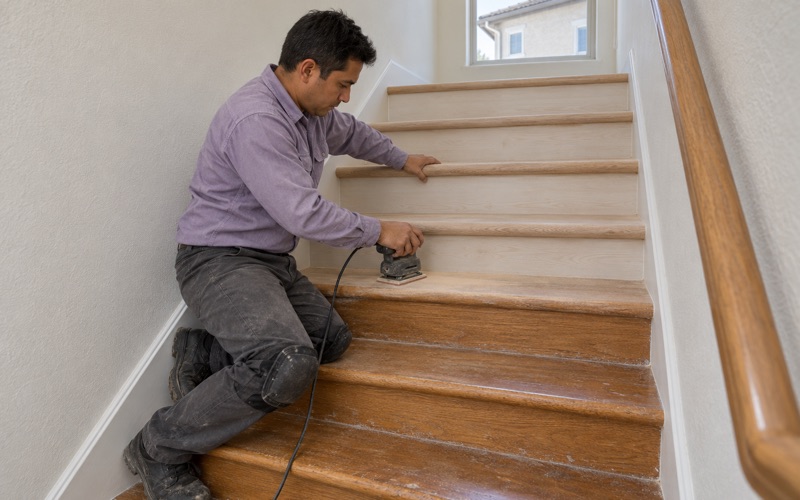
When the wear goes through to bare wood, or earlier work left sander marks and blotchy stain, a full refinish with a proper grit sequence is the better answer. We choose finishes that are legal to apply in the South Coast air basin under the 275 g/L wood-coating limit in SCAQMD Rule 1113, and a waterborne polyurethane often suits a quick listing schedule.
Floors in a House That Was Rented Before It Sold
A Lawndale house coming up for sale may well have spent years as a rental. Of the city’s renter households, 2,788 rent a detached house, 45.4 percent of all renters, so a detached house with a rental history is nothing unusual here.
What Years of Tenants Do to a Floor
A rented floor usually shows its wear in patterns. There are traffic lanes worn through the finish from the front door to the kitchen, furniture dents in the bedrooms, and sometimes pet damage that was covered by a rug and never reported. Previous turnover repairs may have been done quickly, with mismatched boards or a finish that never quite blended.
We look at the whole floor rather than only the obvious spots, because a seller who fixes one room and leaves a patchwork elsewhere often ends up with a floor that looks worse in listing photos. Where a full refinish is not warranted, we can bring the worst areas up to match and leave the rest honest.
Older Houses, Lead Dust and Old Tile
Of Lawndale’s 10,259 housing units, 71.7 percent were built before 1980, and the 1960s is the single largest building decade. On pre-1978 housing we follow lead-safe work practices under the EPA Renovation, Repair and Painting rule, because lead dust from sanding is a real risk when old paint meets baseboards and thresholds.
Older houses can hide layers. When we pull back carpet or vinyl and find old 9x9 floor tile or black mastic, we treat it as a possible asbestos question before anything is sanded or scraped, and we stop work until it has been tested. That protects the seller, the crew and whoever buys the house next.
Timing Floor Work Around the Report and Escrow
The city’s page gives a typical turnaround of about ten business days for the report and lists the application fee as $240. The city’s text also says a report is valid for no more than six months from the date it is issued, so timing matters on both ends.
Before or After You Apply
Since the standard inspection covers parking areas, floor work inside the house does not have to wait for the report or be finished before it. It is usually simplest to apply for the report early and let the floor project run in parallel, rather than stacking one after the other.
If you plan to request the optional interior inspection, it is worth deciding whether you want the officer to walk through before or after the work. We can schedule around that date so the house is not half-sanded, full of equipment and sealed off with plastic when someone from the city arrives.
Cure Times, Photos and Showings
A new finish needs time before it can take furniture and foot traffic, and listing photos are hard to reschedule once an agent has booked them. We leave a written cure schedule for every job, so the seller knows when each room can be walked on in socks, when shoes are fine and when rugs and furniture can go back.
Dust containment matters here too, especially if the house is being staged or still occupied. We work with a dustless sanding system where the job allows it, so the rest of the home stays clean enough for showings while the floors are being done.
Paperwork a Buyer Can Read
Every repair or refinish we do before a sale comes with a written invoice describing the work, the materials and the finish used. Where a floor had water damage, we keep photos and moisture readings from before and after the repair.
That record does not change what the city’s report says, and it is not a substitute for it. What it does is give a buyer, an agent or an inspector a clear answer when they ask what happened to the floors, which tends to keep a sale moving rather than stalling on a question nobody can answer.
- 20+ Years in Business
- Written Moisture Readings
- Lead-Safe Work Practices