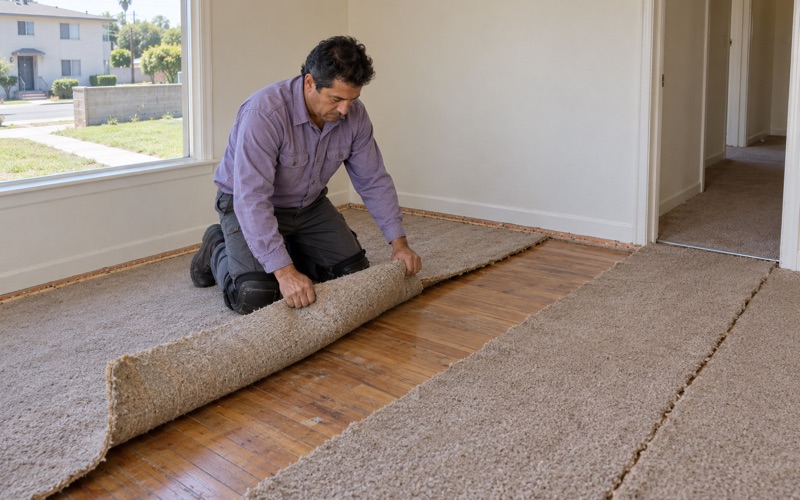
Gardena Wood Flooring has spent more than 20 years on wood-flooring in Inglewood and the neighboring South Bay, and much of that work happens inside houses that have outlasted several owners. We sand, refinish, repair and install hardwood, and we start every job by looking at what the existing floor can still give back before we price anything new.
An older floor rarely fails in one obvious way. Boards gap and cup, finish wears through at doorways, a pet stain turns black, or a room gets covered with carpet and forgotten for thirty years. Our job is to open it up, measure the moisture content, check the decking and joists underneath, and tell you honestly whether sanding, a weave-in repair or new boards makes sense.
Inglewood’s housing has a particular history, and it shapes the conversation we have in these homes. Below we explain how the city grew, what that means for the floors in its oldest houses, and why the decision about keeping an old floor here rests with the owner alone.
An Earthquake, a Boom and a Wartime City
The June 1920 Earthquake and the Visitors Who Stayed
On the evening of June 21, 1920, a large earthquake struck Inglewood. Buildings were damaged but no one died, and over the next few days a large number of tourists came to look. Many had never seen the town before, liked the climate, and settled there instead of going home.
A 2019 environmental impact report hosted by the City of Inglewood records the result. The city had 3,286 residents in 1920, and in the next two years that population doubled, making Inglewood the fastest growing city in the nation at that time. Growth kept accelerating through the 1920s, and houses from that decade still stand across the city.
From Farm Town to Defense-Industry City
Inglewood started as a land venture. The Centinela-Inglewood Land Company laid it out in 1887, excursion trains brought land buyers, and the place had 300 residents by 1888. It incorporated in February 1908 with roughly 1,200 people, and until World War II agriculture was what largely supported it.
The war changed that. Defense industries arrived, industrial work brought more people to live in the city, and Inglewood became an urban community. The Census Bureau’s survey data shows the result in the housing itself: of the city’s 40,072 units, 16.1 percent were built in 1939 or earlier and another 15.5 percent in the 1940s, so 31.5 percent of today’s homes predate 1950.
Why the History Matters on the Job
Knowing when a house went up tells us what to plan for before we arrive. A home from the 1920s or 1940s has usually been through several owners, several finishes and at least one round of somebody else’s repairs. We expect patched boards, mismatched thresholds, old carpet tack strip and layers of finish that do not always agree with each other.
None of that is a reason to give up on the floor. We judge each room by what we measure in it rather than by its age: moisture readings in the boards, a look at the decking and joists from below wherever we can reach them, and a test patch before anyone commits to a full sand.
Looking for wood-flooring closer to Carson? See Carson Wood-Flooring.
Floors in Inglewood’s 1920s and 1940s Houses
What Turns Up Under the Carpet
We never assume what species is under an old carpet until we have pulled a corner back and looked. Solid hardwood strip, later plank laid over it, particleboard in a remodeled room or an old tile floor can all turn up in the same house. Each one leads to a different plan, and we price only after we know which one we are dealing with.
When the wood is solid, we check how much sanding it has left. Tongue exposure, nail heads near the surface and thin spots at old sanding dips tell us whether a full refinish is safe or whether a lighter touch is the smarter move. We identify red oak, white oak, maple or another species by the grain and match repairs to it.
Lead Paint and Old Tile in Pre-1978 Homes
Inglewood has 78.1 percent of its housing built before 1980, and work in any house built before 1978 falls under the EPA Renovation, Repair and Painting rule. Sanding near painted baseboards, shoe molding and thresholds can raise lead dust, so in those homes we follow lead-safe work practices, contain the work area and clean up before anyone walks back in.
Old tile needs the same caution. A 9x9 asbestos floor tile or a layer of black mastic under carpet or vinyl is something we treat as a possible asbestos question before it is scraped, sanded or ground. If a test or an asbestos survey is needed, that happens first, and our flooring work waits for the result.
Moisture and the Structure Underneath
An old floor is only as sound as the decking and joists holding it. We open and check the subfloor before pricing a new finish floor, looking for soft spots, water-swollen decking and joists that need sistering, because those problems cost less found early than found as a callback.
Moisture comes next. We take readings with a wood moisture meter in the existing boards and the subfloor, and where new wood goes over concrete we run an ASTM F2170 in-situ relative humidity test or a calcium chloride test. Every reading is written down, and new material acclimates before it goes in.
Old Floors Without a Landmark Program
No Preservation Ordinance, No Mills Act
Some Southern California cities put older houses under a preservation ordinance, a historic commission or a Mills Act contract that trades a tax break for rules about upkeep. Inglewood does not currently have a historic preservation ordinance, and it has no Mills Act program. There is no city preservation commission weighing in on the floors inside an older Inglewood house.
The one historic resources survey on record, the Main Street Inglewood Survey of 1998, covered 112 potentially eligible properties downtown, bounded by La Brea Avenue, Locust Street, Florence Avenue and Hillcrest Boulevard. The Centinela Adobe, built in 1834 and listed on the National Register, belongs to a complex run by the Historical Society of Centinela Valley. An ordinary house outside those lists is simply private property.
The Owner Decides How an Old Floor Is Kept
That puts the decision squarely with you. No preservation rule requires you to keep a 1920s floor, and none stops you from covering it. With 77.2 percent of Inglewood’s owner households living in detached houses, most owners are making that call about a whole house of their own rather than a shared building.
We think that freedom deserves a careful answer. A floor that has been in a family for decades is worth saving when the wood allows it, so we give you a repair-or-refinish answer before replacement comes up at all. If the boards are too thin or too damaged, we say so plainly and show you why.
Keeping the Character Without a Rulebook
Without a design guideline to follow, we help you set your own. That can mean weaving in salvaged or matched boards where a wall was moved, keeping the original board width and direction, and choosing a sheen level and stain that suit the age of the house instead of fighting it.
Older houses are common here: 49.8 percent of Inglewood’s homes predate 1960. That means matching boards and trim profiles to an older house is a normal part of how we plan a job here, not an afterthought halfway through it.
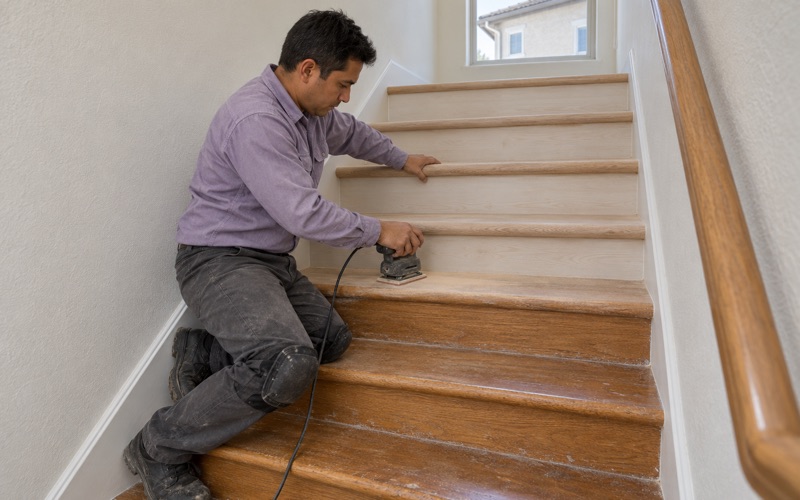
Thresholds and stairs get the same attention. We price stairs per tread and riser rather than hiding them in a square-foot figure, and we fit reducer strips, T-molding and stair nosing so the transitions between old and new rooms read as deliberate.
Refinish, Repair or Replace in an Older Inglewood Home
When Refinishing Is Enough
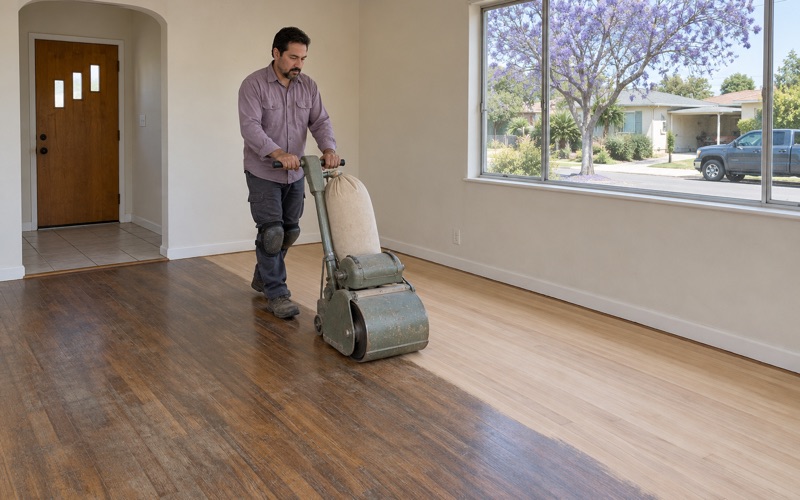
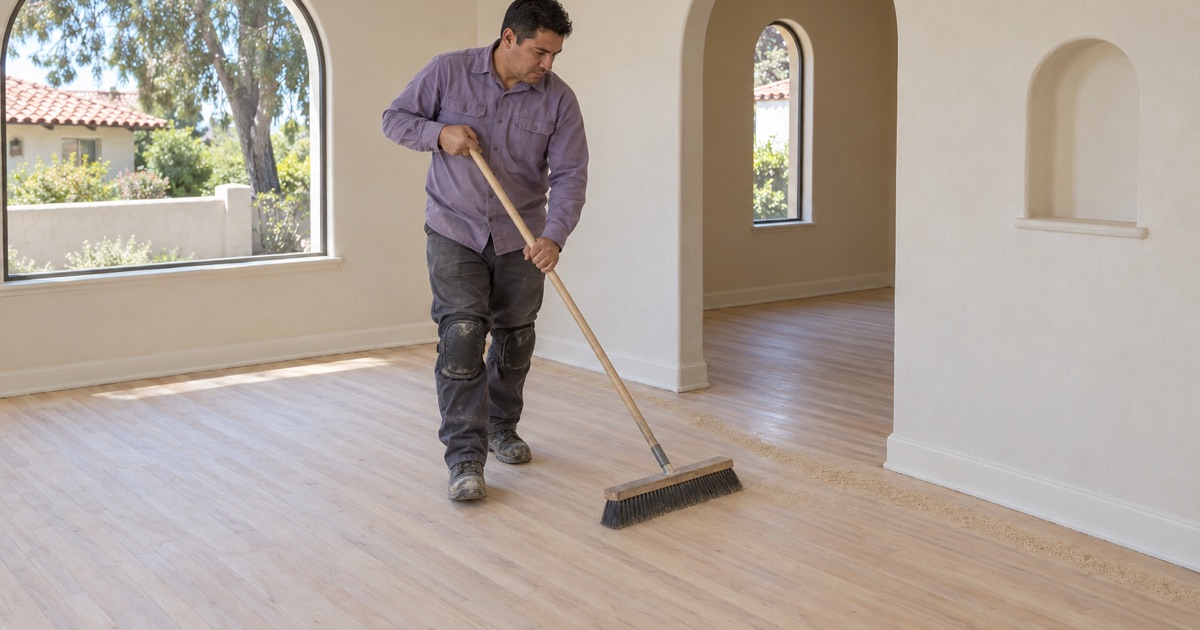
Many worn floors in older houses need only a sand and finish rather than new wood. We work through a grit sequence with a drum sander, an edger and an orbital sander, using a dustless sanding system and dust containment, then correct blotchy stain and sander marks before any coat goes down.
For a floor that is sound but dull, a screen and recoat can restore the sheen without taking the wood down at all. It is the least invasive option we offer, and on an older floor with limited sanding left, it is often the one that buys the most years.
Finishes are chosen from products that are legal to apply in the South Coast Air Quality Management District, which holds wood coatings to a 275 g/L VOC limit under SCAQMD Rule 1113. Waterborne polyurethane, oil-modified polyurethane and hardwax oil each behave differently, and we give you a written cure schedule so you know when each room can be walked on and furnished.
When Repair Makes More Sense
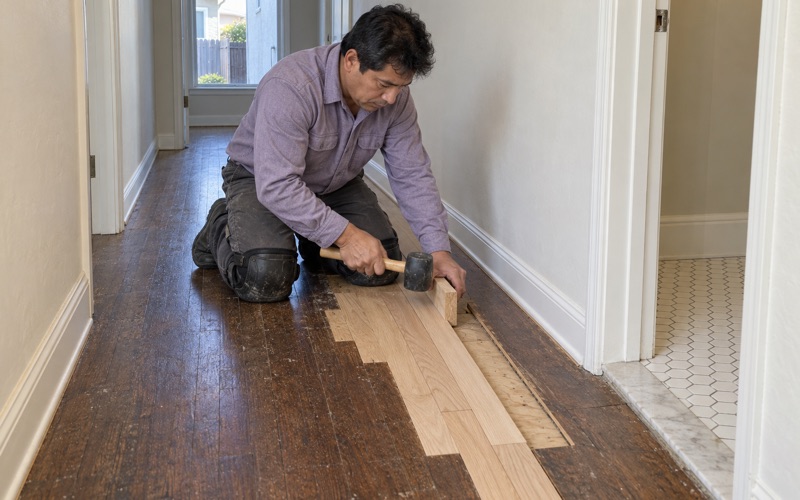
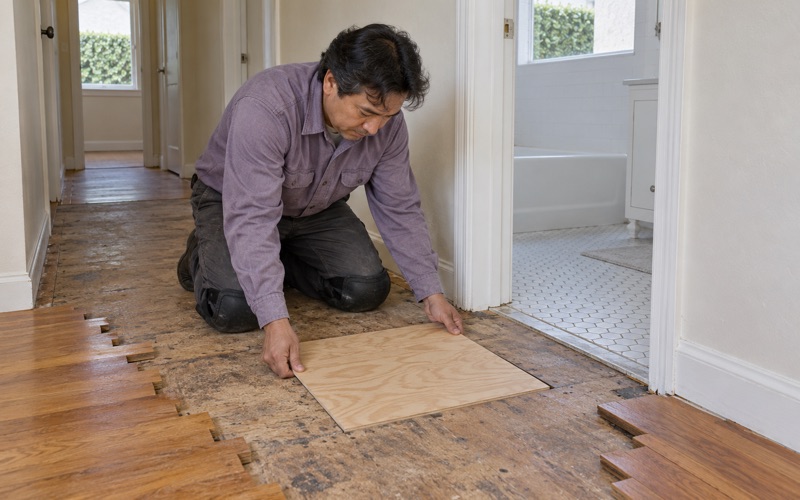
Damage in one area rarely justifies tearing out a whole room. Pet urine stains, a buckled strip by a leaking appliance or cupping near an exterior door can often be handled with board replacement and a weave-in repair, then sanded and finished so the new boards blend with the old ones.
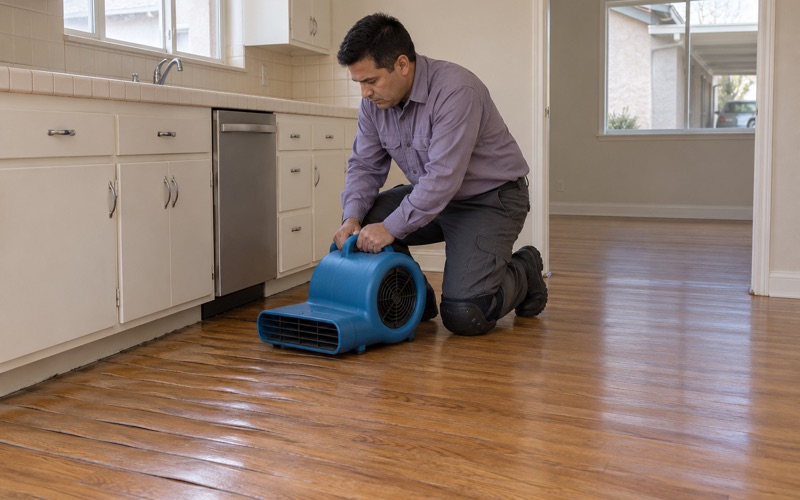
When water is involved, we trace it back to the source first, whether that is a dishwasher line, a water heater or a slab leak. We document the damage with photos and moisture readings an insurance adjuster can use, and we do not close up a repair until the readings say the wood and subfloor are dry.
When Replacement Is the Honest Answer
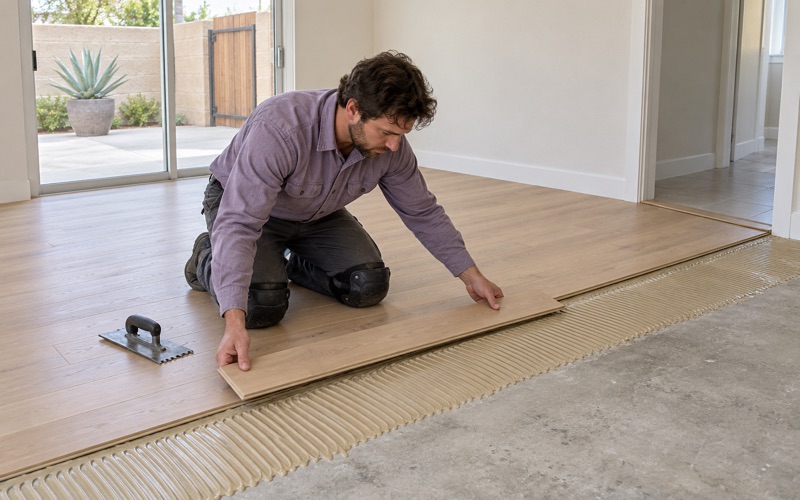
Sometimes the floor has been sanded too many times, termite frass points to drywood termite or powderpost beetle damage, or a past remodel left particleboard that has swollen. In those cases we plan new wood, whether solid strip or engineered plank, and we match the wear layer thickness and installation method to the subfloor we find.
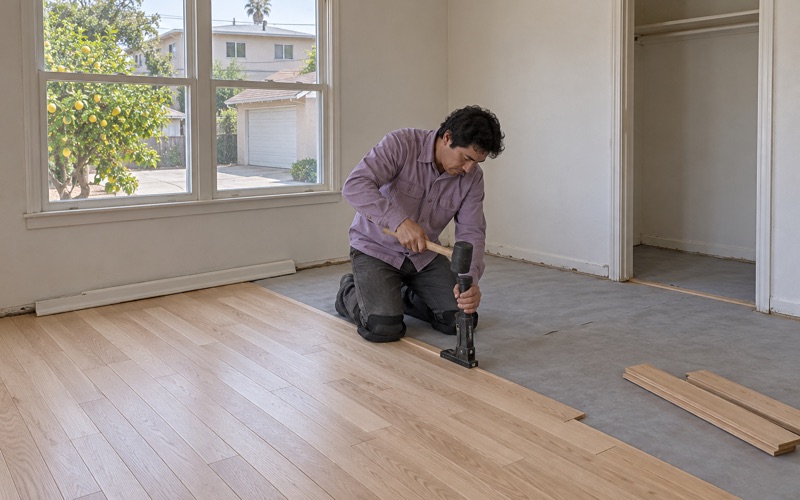
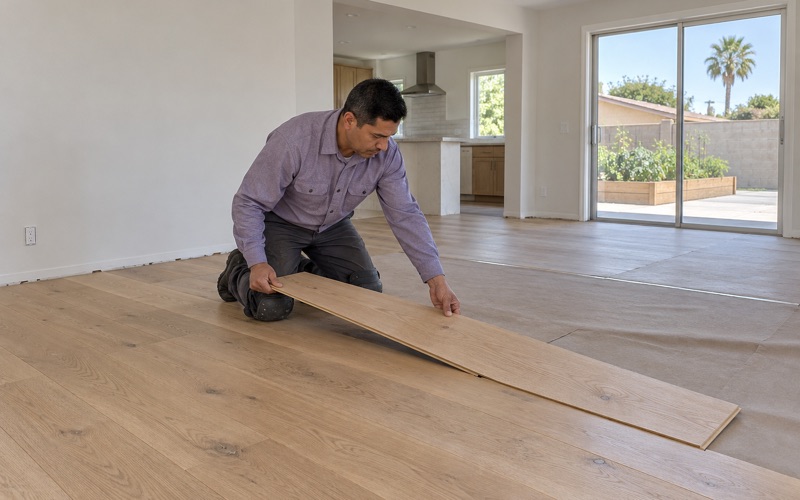
New boards go in according to NWFA installation guidelines, with the expansion gap left at the walls and cleat nails or staples set the way the product calls for. If the house deserves a pattern, herringbone and chevron are both possible, and wide plank white oak suits a room where the original strip could not be saved.
Whichever path fits, you get a written estimate that separates sanding, repairs, stairs and new material, so you can decide room by room how much of an old Inglewood floor to keep. That decision is yours to make here, and we would rather help you make it well than make it for you.
- 20+ Years in Business
- Written Moisture Readings
- Lead-Safe Work Practices