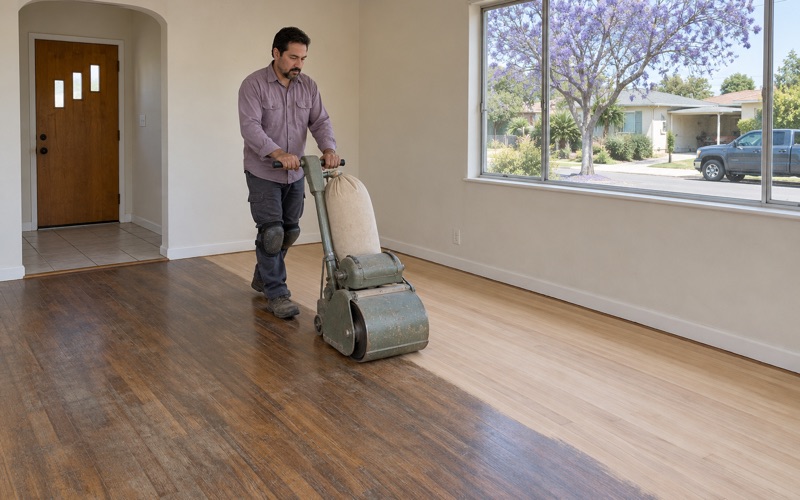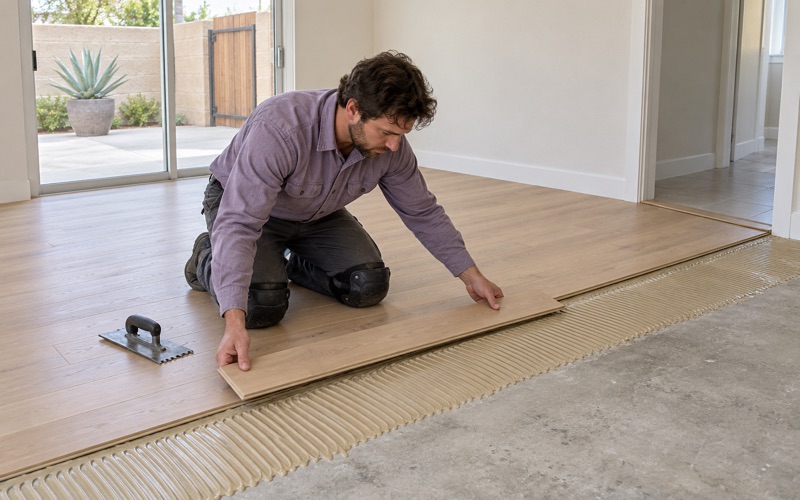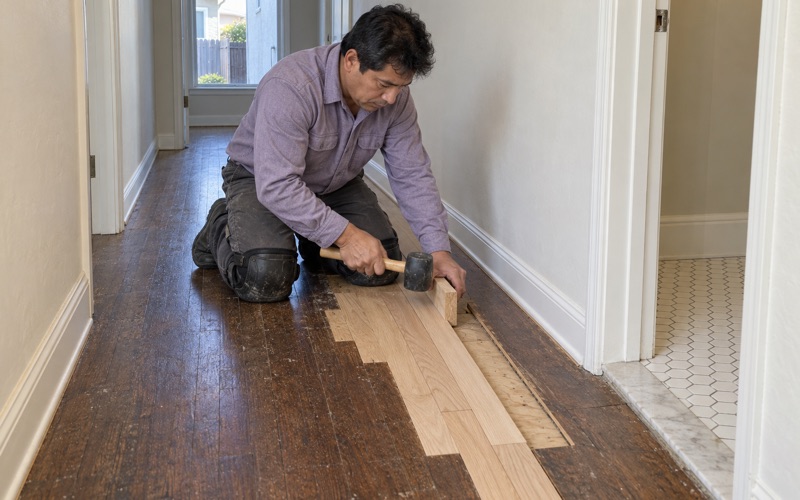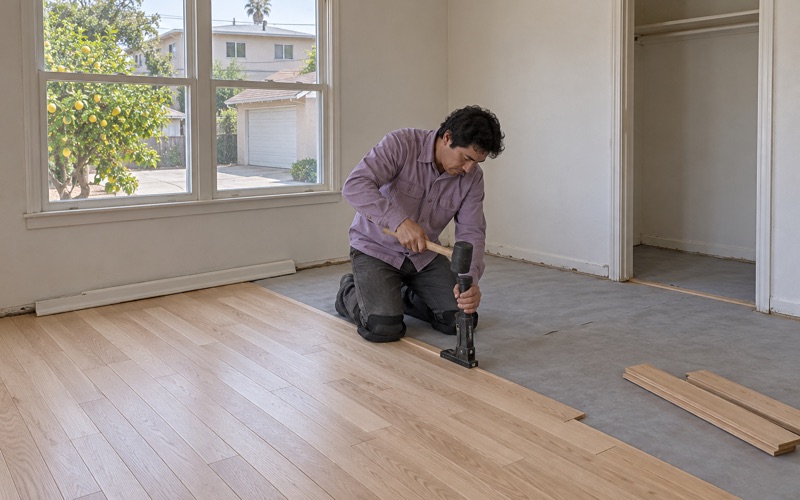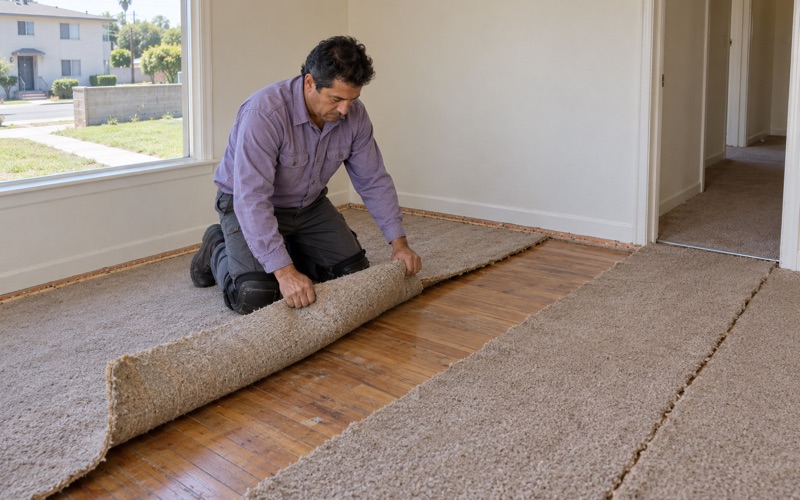
Gardena Wood Flooring brings more than 20 years of work to wood-flooring in Hermosa Beach, from refinishing a worn living room to replacing boards around a busy entry. Most of what we do here comes down to one question: how a floor holds up when the people who walk on it live close to the water all year. We answer that with a finish, a maintenance plan and repairs sized to the damage, not a pitch for new material.
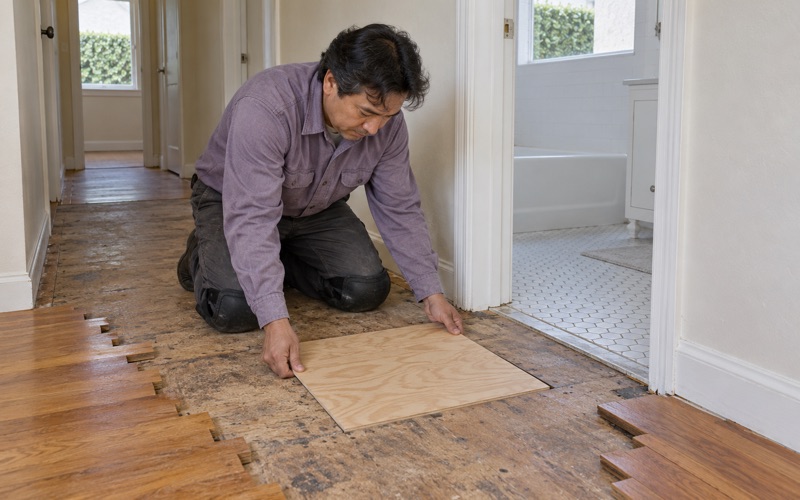
When a floor looks tired, our first move is to decide whether it can be repaired or refinished before anyone prices replacement. A family floor that has been sanded once or twice often has wear layer left, and a weave-in repair or a few replaced boards can bring a damaged patch back into line. We check the boards, measure moisture content with a wood moisture meter and write the readings down.
The finish is where most of the decisions sit. We apply only products legal in the South Coast air basin, within the 275 g/L limit that SCAQMD Rule 1113 sets for wood coatings, and every occupied home gets a written cure schedule showing when each room can take foot traffic and furniture again.
Hermosa’s Beach Season and the Houses Behind It
Hermosa Beach is one of the three Beach Cities of the South Bay, a small, built-out town with the pier at the end of Pier Avenue and The Strand running along the sand. The beach changes shape with the calendar, and so does what walks into the houses a few blocks inland.
What the County Builds Each November
Every year around mid-November, Los Angeles County Beaches and Harbors pushes sand into berms on the beach, and it lowers them in spring, before Memorial Day weekend. The California Coastal Commission’s 2020 permit report describes the berms as about 15 feet high and 20 feet wide, and it says the county had built them here for about 45 years.
The two Hermosa berms have one job in that report: protecting a multi-story lifeguard tower from winter storm inundation. They sit at least about 80 feet landward of the mean high tide line, and no berm work is allowed on the sand from Memorial Day through Labor Day. For us they mark the local calendar, splitting the year into a crowded summer beach and a winter of storm days.
The Homes a Few Blocks From the Sand
The houses we work on here range from prewar builds to recent rebuilds. Census counts put 39.4 percent of the city’s housing units as built before 1960, with the 1950s the largest single decade at 18.7 percent, and most of the stock predates 1980. In houses that age, a floor has often been sanded, patched or covered before, sometimes by several owners.
An older house tells us to slow down before we sand. Lead dust from sanding is a real concern in pre-1978 housing, so we follow the EPA Renovation, Repair and Painting rule on those jobs. Old 9x9 floor tile and black mastic found under carpet or a floating floor get treated as a possible asbestos question, and nothing gets scraped or sanded until that is answered.
Looking for wood-flooring closer to Florence-Graham? See Wood-Flooring Services in Florence-Graham.
Sand, Grit and the Finish Near the Door
Summer in Hermosa means sand in shoes, sand on towels and sand in the tread of every sandal that crosses a threshold. On a wood floor that sand behaves like loose sandpaper, and the damage shows first where people come in from the beach.
How Grit Wears a Finish
Beach sand is hard, and every grain dragged under a shoe cuts a fine scratch into the top coat. One trip does little, but a summer of beach days concentrates those scratches into a dull, gray lane from the door to the kitchen. The finish film wears through there long before it thins anywhere else in the room.
Caught early, that lane is a screen and recoat job: we abrade the existing finish and lay fresh coats without sanding into the wood. Left too long, the wear reaches bare wood, the boards take on dirt and moisture, and the fix becomes a full sand with a proper grit sequence. Watching the traffic lane is the cheapest maintenance a beach-side floor gets.
Choosing a Finish and Sheen for Sand Traffic
Finish choice matters more than species choice on a floor that sees grit. A harder species helps, and the Janka hardness rating is a fair guide, so hickory or white oak resists dents better than a softer wood. Still, the coating takes the first hit, which is why we talk through waterborne polyurethane, oil-modified polyurethane and hardwax oil finish before we open a can.
Sheen level is the other quiet decision. A satin or matte finish hides the fine scratches that sand leaves, while a high gloss shows every one of them in afternoon light. Hardwax oil can be spot-repaired at the door without redoing the whole room, and a film finish gives a tougher barrier, so we match the choice to how the household uses its entry.
Thresholds, Reducers and Mats
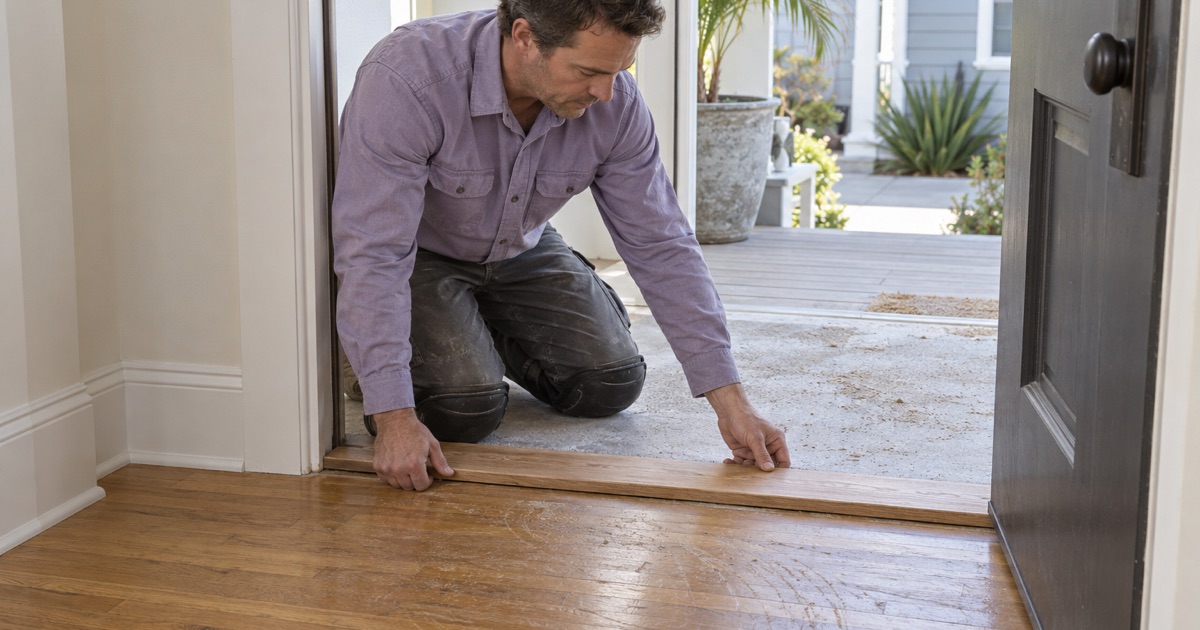
The first few feet inside a beach-side door carry the most abuse, so we pay close attention to how the floor ends there. A worn threshold, a lifted reducer strip or a gapped T-molding lets grit collect in the joint and chips the board edges beside it. We refit or replace those pieces so each transition sits tight and flush.
Beyond the finish work, the best protection is simple. A coarse mat outside the door and a washable one inside catch much of the sand before it reaches the wood, and felt pads on chairs near the entry stop grit from grinding under furniture. We point these out on every job here because they cost little and add years between refinishes.
Wet Winter Days and Beach-Side Entries
The berms go up because winter brings storms to the coast, and the National Weather Service places Hermosa Beach in its Los Angeles County Beaches forecast zone. Storm days change what comes through the front door, even in homes set well back from the sand.
Wet Shoes and Puddles at the Door
In winter the trouble at the entry is less grit and more water. Wet shoes, dripping umbrellas and dogs back from a rainy walk leave puddles on the finish, and water left standing works into board seams and around the threshold. Over time that shows as dark edges, raised grain and boards that begin to cup near the door.
A finish is only a barrier while it is intact, so the winter risk climbs on a floor already worn by summer sand. A shoe tray, a mat that actually absorbs and wiping puddles up rather than letting them dry are the habits that count. Where the entry finish has worn through, we recommend recoating before the storm months rather than after them.
Telling a Wet Entry From a Water Problem
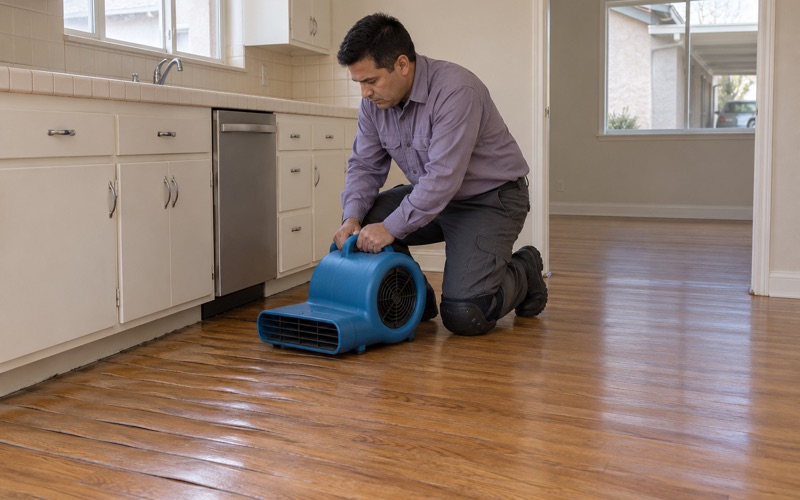
Not every dark board at the door is a mat problem. When staining spreads, boards crown or buckle, or the floor feels soft underfoot, we trace the water to its source, whether a leaking door sill, a dishwasher line or a water heater. We record moisture readings and photos that an insurance adjuster can use if a claim follows.
The repair follows the diagnosis. Surface staining from a wet entry may sand out, while boards that took on water from below need replacing and the decking under them checked. We fix the cause first, then replace boards and blend the new wood into the surrounding finish so the patch does not read as a patch.
Refinishing During the Storm Months
Winter is a workable season for floor projects here, with a little planning around wet weather. Waterborne finishes cure on a schedule, and damp, cool days can stretch the time before a room is ready for furniture. We build that into the cure schedule rather than promising a date the weather may not keep.
Sanding days are the other piece. We run a dustless sanding system with containment at doorways, so the rest of the house stays usable, and we keep entry doors closed during coating so wind-blown sand does not land in a wet finish. Where the entry is the only way in and out, we sequence the job so the household still has a path through the house.
Planning Floor Work in Hermosa Beach
A little planning keeps a floor project on a schedule that fits the beach year and the household living around it. These are the two parts we settle with every Hermosa Beach client before work starts.
A Maintenance Rhythm for the Beach Year
We suggest a simple cycle for floors near the beach. Late spring, around the time the county lowers the berms, is a good time for a screen and recoat on the entry lanes, and early fall, before the berms return, is the moment to look at what summer wore away and fix it before winter storms. A full sand and refinish is needed far less often when those two checks happen.
Between visits, the routine is dry first and damp second. Sweep or vacuum grit often, especially near the door, and clean with a barely damp microfiber mop and a cleaner made for your finish. Skip steam mops and wet mopping, which push water into seams and shorten the life of any coating.
What We Check Before We Price
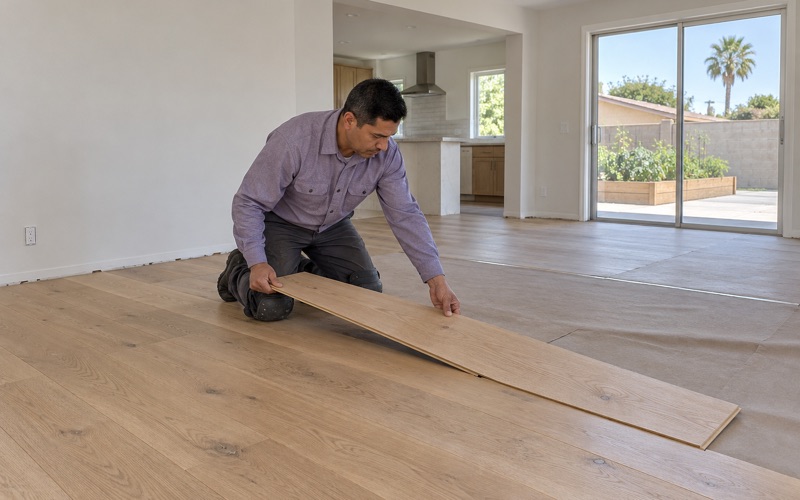
We open and check the subfloor before pricing any new finish floor, so soft spots, water-swollen decking or weak joists turn up before installation rather than after it. For new wood we measure moisture in the boards and, where concrete is involved, in the concrete with an ASTM F2170 in-situ test or a calcium chloride test, then allow proper acclimation before anything goes down.
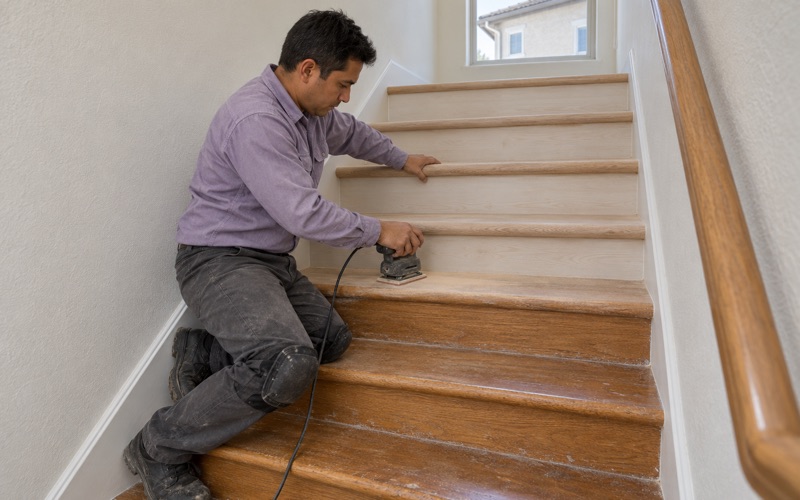
Stairs get their own line on the estimate, priced per tread and riser rather than buried in a square-foot number. Landlords turning over several units get each one estimated and invoiced separately, with the itemized costs California deposit law expects. Every estimate ends with a plain answer on what the floor needs and what can wait.
- 20+ Years in Business
- Written Moisture Readings
- Lead-Safe Work Practices