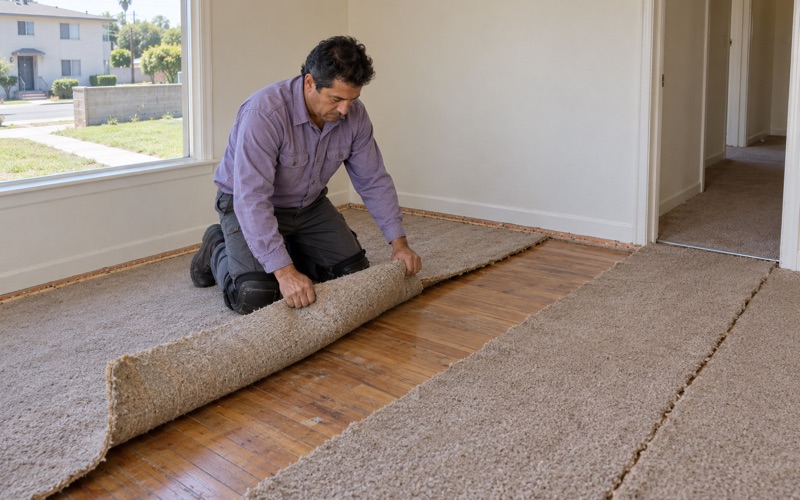
Gardena Wood Flooring brings more than 20 years of hands-on work to wood-flooring in Del Aire, where a floor job often has to fit around something else happening to the house. Many homes here sit under the flight path into LAX, and owners may be weighing, waiting on or just finishing the County’s residential sound insulation work. We plan refinishing, repair and new installation so the floors land in the right place in that order.
Our approach starts below the finish. We open and check the subfloor before pricing any new floor, and give a repair-or-refinish answer before replacement comes up. Floors that have carried a family for decades usually deserve that look first.
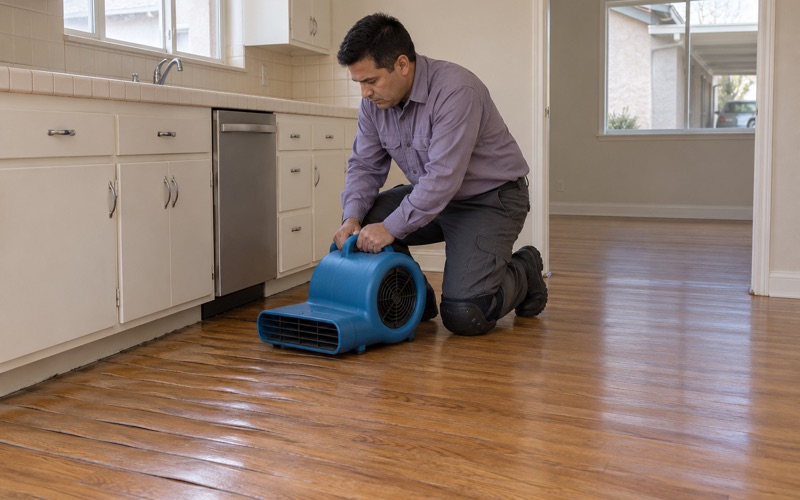
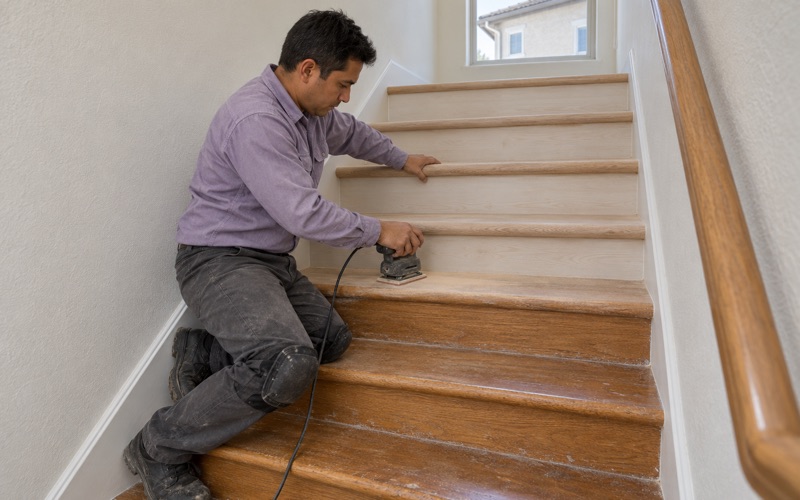
Stairs are priced per tread and riser rather than folded into a square-foot number. Dust containment is part of every sanding job, which matters in houses where people keep living through the work. When water damage is part of the story, we trace it to its source and document it with photos and readings an adjuster can use.
Wood Floors in Del Aire’s Older Owner Houses
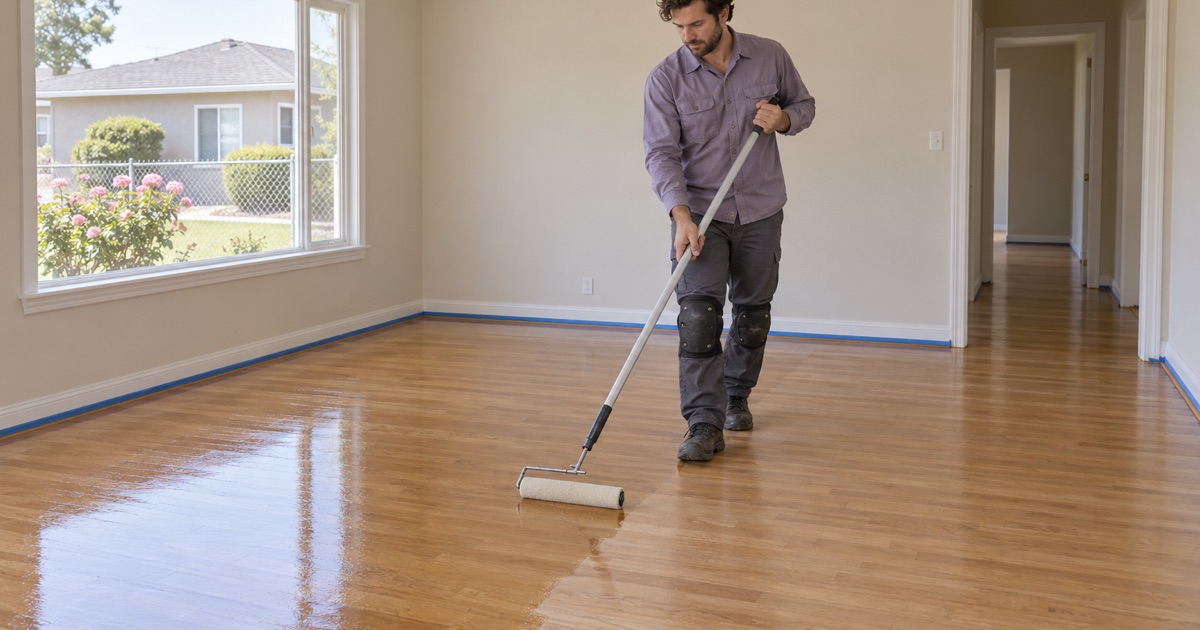
Del Aire is an unincorporated community in the inland South Bay, and its housing is older and more owner-held than many people expect so close to an airport. The community sits directly southwest of the I-405/I-105 freeway interchange. That profile shapes what we find when we pull up carpet or look at a worn floor.
A Neighborhood of Detached Houses
Census figures date 63.3 percent of Del Aire’s housing units to before 1960, with the 1940s and 1950s together accounting for more than 2,100 of the roughly 3,700 units. About two-thirds of occupied units are owner-occupied. Many of those owners have been in place for decades, with close to 940 moving in before 2000.
Among owner households, 97.2 percent live in detached houses rather than condos or apartments. That shapes floor work. The owner of a detached house usually sets the schedule, the material and the finish without an association vote, and can line up a floor job with other projects on the same property, including sound insulation.
What Older Floors Usually Need
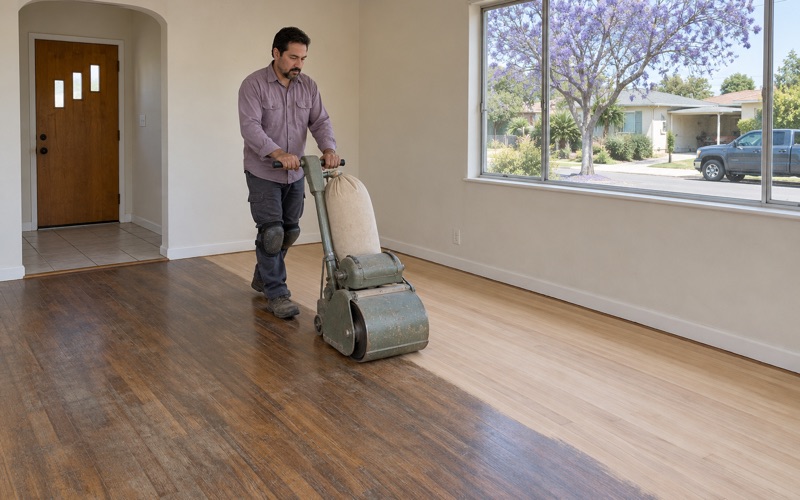
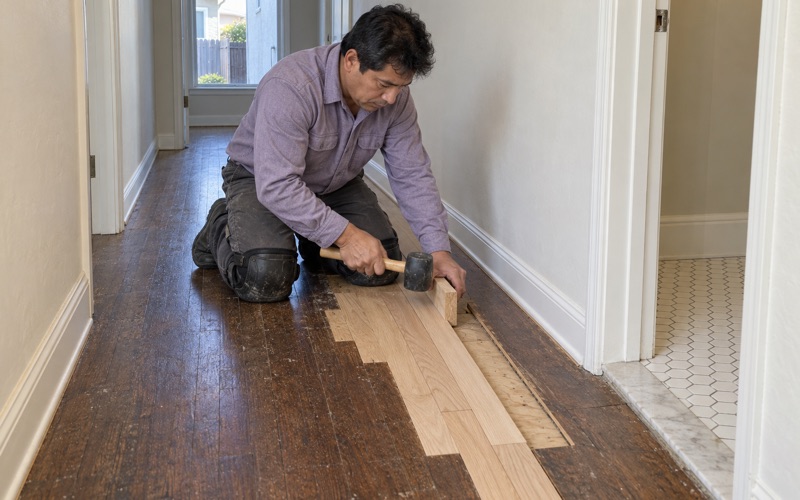
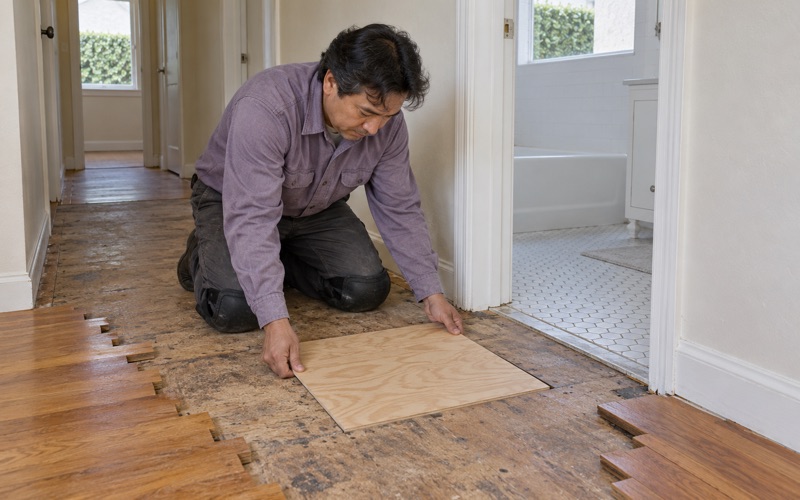
In houses of this age, floors have often been sanded, carpeted, patched or covered more than once. We look at the remaining wood above the tongue, board gaps, cupping, squeaks and any earlier face nailing before recommending anything. A floor with enough solid wood left can often be sanded and refinished; one that has been sanded thin may call for board replacement or a weave-in repair.
We do not assume a species until we have looked at a lifted board or an exposed edge. Pet urine stains, water marks and old termite frass all change the answer, and so does a patch someone laid decades ago in a different wood. The goal is the smallest repair that leaves a sound, even floor.
Lead Dust and Old Tile
With 71.1 percent of Del Aire’s housing built before 1980, most houses here are old enough that we treat them as pre-1978 housing until shown otherwise. We follow lead-safe work practices under the EPA Renovation, Repair and Painting rule, because lead dust from sanding near painted baseboards, thresholds and trim is a real exposure, especially with children in the house.
Older layers sometimes include 9x9 floor tile and black mastic under carpet or vinyl. We treat either as a possible asbestos question and recommend an asbestos survey before anything is scraped, ground or sanded, so the job does not spread a problem through the rest of the house. Neither is something to discover halfway through a sanding pass.
Looking for wood-flooring closer to Lennox? See Wood-Flooring Services in Lennox.
The County’s Sound Insulation Program in Del Aire
Del Aire has stayed unincorporated through repeated annexation attempts by a neighboring city, so the programs that reach it are County programs. Sound insulation is the one most likely to overlap with floor work.
Who Runs It and Who Pays
Los Angeles World Airports administers and monitors funding for residential sound insulation programs that include three unincorporated County areas: Lennox, Del Aire and Athens. Its stated goal is making homes adversely affected by aircraft noise compatible with California noise standards.
In July 2021, a $9.9 million FAA grant went to the Los Angeles County Development Authority for about 680 homes across Lennox, Athens and Del Aire. That number covers the three communities together. We do not know how many of those homes are in Del Aire, and the County is the right place to ask.
Eligibility Is the County’s Call
The program is for homes inside a 65 dB noise area designated by the FAA and LAWA, with eligibility confirmed by acoustical testing of the home or of similar properties. Which addresses fall inside that area is not something we can answer, and a floor contractor should not guess at it.
If you think your house may be eligible, check with the County’s program before scheduling major interior work. Knowing whether a crew will be replacing your windows and doors in the coming year changes when it makes sense to refinish a floor. Tell us where the program stands when we come out, and we will build the floor plan around it.
What the Program Installs and What It Leaves Alone
The County’s description of the work lists new windows, exterior doors, attic insulation, vents, electrical panel upgrades, and heating, ventilation and air conditioning systems, free to the homeowner. A 2013 County contract for the same program in Lennox and Athens described nearly the same scope, plus miscellaneous code compliance work.
Floors appear on neither list. The program treats the shell of the house, where aircraft noise gets in, and leaves interior surfaces to the owner. Any floor work, including touch-ups where a new door meets an old floor, is a separate decision with a separate budget.
Sequencing Floor Work Around New Windows and Doors
When sound insulation and floor work land in the same year, order matters more than speed. We generally recommend letting the shell work finish before a final floor coat goes down.
Let the Heavy Trades Go First
Window and door replacement brings crews, ladders, debris and tools across the same rooms for days. Attic insulation and HVAC work add traffic through hallways and closets. A freshly finished floor under that traffic picks up scratches, dents and grit in the finish, and the fix is a screen and recoat you did not plan to pay for.
Some floor work can happen first. Subfloor fixes, board replacement and squeak repair hold up fine under later foot traffic. We save the sanding and final finish coats until the other trades are done, then protect the floor once it has cured.
Thresholds and Transitions
New exterior doors usually come with new thresholds, and their height has to meet the finished floor cleanly. A refinished floor barely changes height. If new solid wood or a thicker engineered product is going down, door and threshold heights need to be settled before flooring is ordered.
We check each exterior opening for how the new floor will meet it, including any reducer strip or T-molding at transitions to tile. Where an installer has already set a new door, we work to that threshold rather than asking anyone to reset it. Stair nosing and shoe molding get the same attention wherever the floor meets another surface.
Moisture and Acclimation After the House Is Sealed
New windows, doors and HVAC change how a house holds air and humidity. A tighter house with new heating and cooling can settle at a different indoor moisture level than the one the old floor lived with for decades, and that affects acclimation and later board gaps or cupping. We would rather wait a few weeks than lay boards that shrink apart by the next dry season.
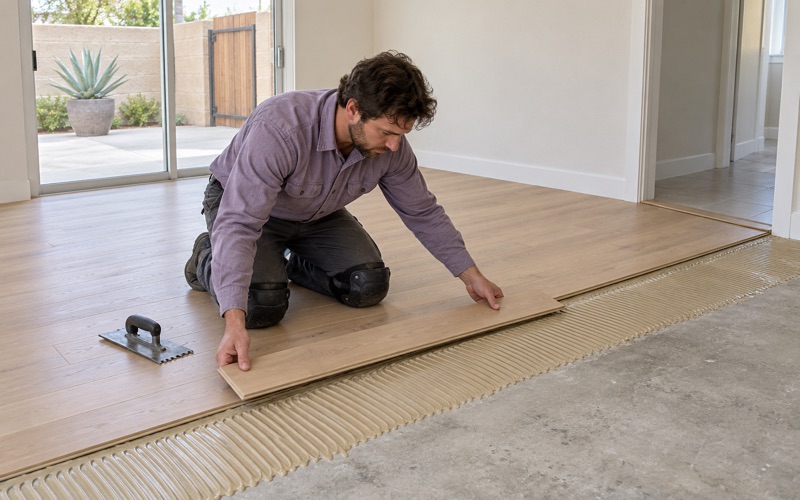
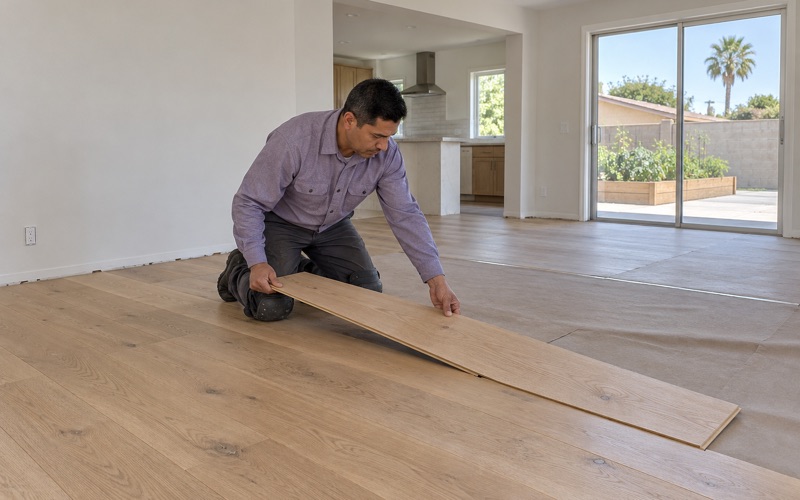
So we take moisture content readings in the wood with a wood moisture meter and write them down before ordering material. Where concrete is involved, we test it with an ASTM F2170 in-situ relative humidity test or a calcium chloride test. New flooring then acclimates in the conditions the house will actually run in, after the new system is working.
Quiet Underfoot Is a Choice Made Inside the House
The sound insulation program deals with noise coming from outside. Noise made inside, such as footsteps, chair legs and a dropped toy, is a different problem, and flooring is where owners have some say over it. Unlike the program, that side of it is paid for and decided entirely by the owner.
Hard Floors and Indoor Sound
Wood is a hard surface, so it reflects sound instead of soaking it up the way carpet does. Swapping old carpet for wood can make a room sound livelier, and footfall carries more clearly into the next room. That is no reason to avoid wood, but it is worth knowing before the carpet comes out.
We make no claim that any floor changes how much aircraft noise reaches a room. What a floor can change is how the house sounds when people move through it. Area rugs, felt pads under furniture and a firmly fastened floor that does not squeak all make a noticeable difference.
Squeaks and Loose Boards
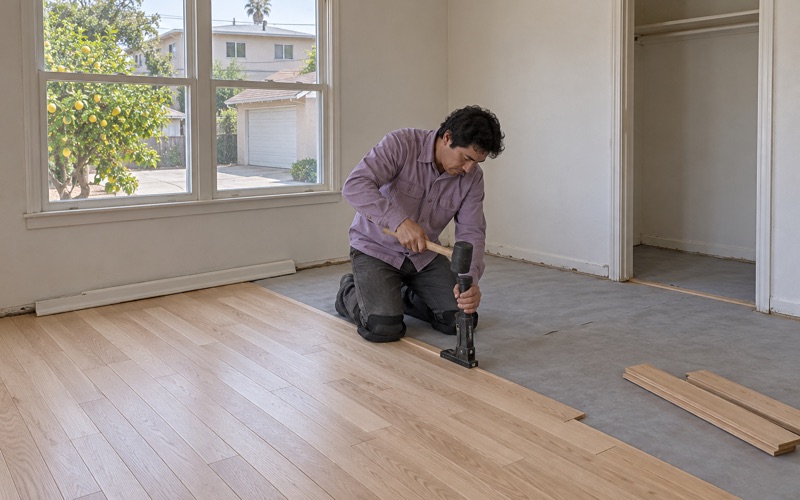
In a house from the 1940s or 1950s, some of the indoor noise can be the floor itself. Squeaks and nail pops usually trace back to loose decking, dried-out fasteners or a joist that has moved. We find the cause, refasten the decking, add support where it is needed and sister a joist when one has failed.
Fixing that before refinishing costs less than chasing squeaks through a new finish. It is also one of the few changes that makes a house quieter without adding anything to it.
Planning Floor Work in Del Aire
Start by finding out whether sound insulation is coming, underway or finished at your address, then set the floor scope around it. If the program is not part of the picture, floor work can go ahead on its own schedule. Our written estimates separate repair, refinishing and replacement, so each piece can be timed separately.
Finishes come from products that meet SCAQMD Rule 1113 and its 275 g/L limit for wood coatings, and each room gets a written cure schedule. For an occupied house, that means knowing which rooms are usable each evening, when the dog can walk on the floor, and when the couch can come back in.
- 20+ Years in Business
- Written Moisture Readings
- Lead-Safe Work Practices