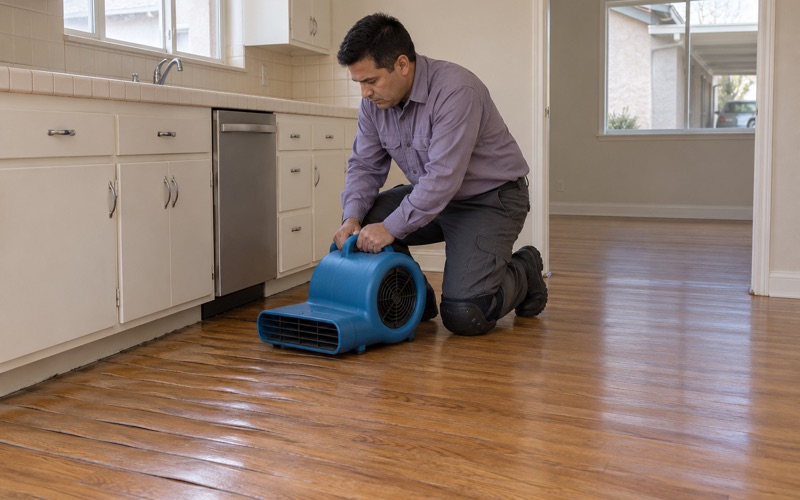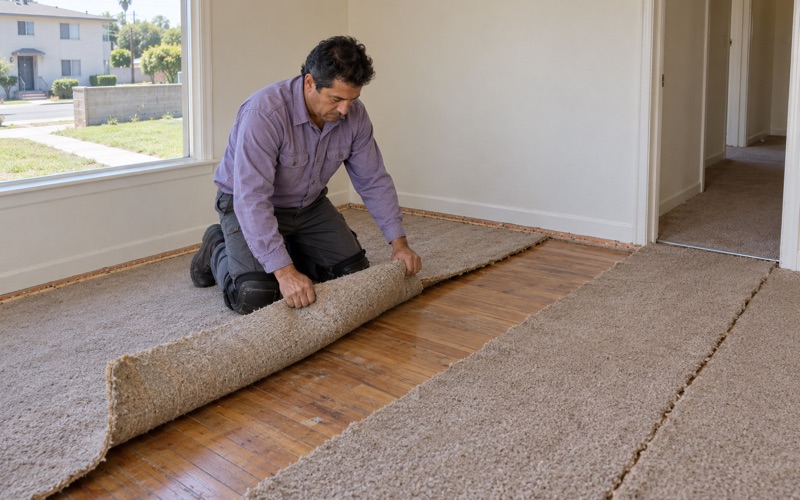
Gardena Wood Flooring brings more than 20 years of wood flooring experience to Compton, where much of the work happens in houses built several generations ago. We refinish, repair and install hardwood in homes that stay occupied while we work, so the plan has to account for the people living there. In an older house, that plan starts with the paint on the walls and trim rather than with the boards underfoot.
Sanding a floor means running an edger along the baseboards, and in a house painted before 1978 those baseboards may carry lead paint under newer coats. That is why we treat testing and dust control as the first steps of a floor job in an older home, not as extras added at the end. A floor that looks finished is not finished if the dust left behind is a hazard to a toddler crawling across it.
This page covers how we approach floor work in older Compton houses, how the County’s lead remediation program fits into the timeline, and what a household with young children should expect from us. We also cover the refinishing itself, because once the lead questions are settled, an older hardwood floor that has been cared for is usually worth saving.
Compton’s Older Homes and the County Lead Program
How Old Compton’s Housing Really Is
Compton is one of the oldest cities in Los Angeles County, incorporated in May 1888, and its housing reflects that long history. The Census Bureau’s latest five-year estimates count 25,039 housing units in the city, and 77.4 percent of them were built before 1980. More than half, 58.6 percent, went up before 1960, which puts most Compton homes squarely in the era when lead paint was common on interior and exterior surfaces.
The 1950s were the city’s biggest building decade, accounting for 28.5 percent of all units, and 90.7 percent of owner households live in detached houses. For a flooring contractor, that means the typical Compton job is a mid-century house with painted baseboards and window trim that may have been recoated several times. What sits under the top layer of paint is usually unknown until someone tests it.
What Live Lead-Free Covers
Compton is one of the named eligible cities for Live Lead-Free, a lead remediation program run by the Los Angeles County Development Authority with the County Department of Public Health and the U.S. Department of Housing and Urban Development. The program is County-run, not a City of Compton program. It is aimed at properties built before 1978 that have old, peeling or chipping paint on the interior, the exterior or both.
Testing and remediation of lead-paint hazards are free to eligible households, and the program offers up to $105,000 per unit. That figure splits into $75,000 for lead remediation and $30,000 for health and safety improvements. The program’s published materials do not list which surfaces it treats, and it is not a floor program, so we never describe it as a way to pay for refinishing.
Who the Program Is Written For
For an owner-occupied home, the household must earn below 80 percent of area median income and have a child under 6 living there or spending at least 3 hours a day in the home. Rental properties can take part when half of the units are occupied by low-income households. Those are the program’s rules as published, and only the program decides whether a particular household or building qualifies.
We are not part of Live Lead-Free and have no say in its decisions. When a Compton family mentions peeling paint and a young child during a flooring estimate, we point them to the program directly at (626) 586-1790 and suggest they ask before any sanding is scheduled. Finding out first costs a phone call; finding out after the floor is sanded can cost far more.
Looking for wood-flooring closer to Inglewood? See Wood-Flooring Services in Inglewood.
Sanding Near Old Paint: Testing and Dust Control First
Why the Baseboards Matter More Than the Floor
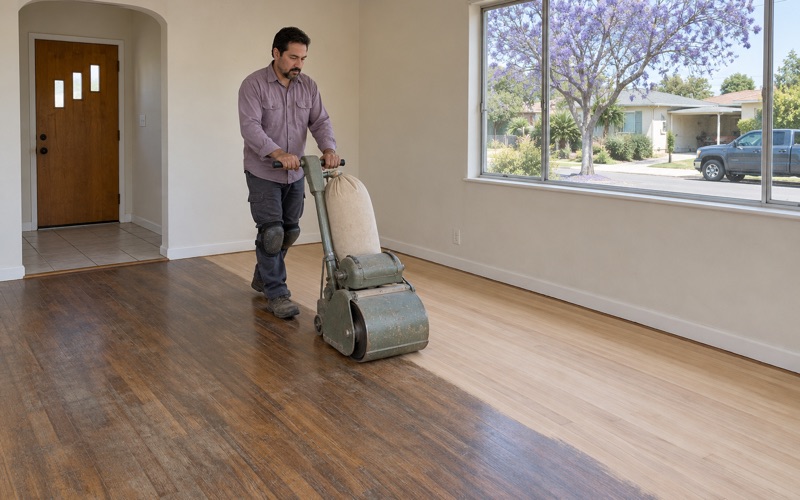
A drum sander covers the open floor, but an edger has to work right up against the baseboards and shoe molding, and that is where old paint gets disturbed. Pulling shoe molding, cutting the paint seal along the trim and sanding into the corners can all put lead dust from sanding into the air if the trim carries lead paint. The floor itself is not the concern here; the painted wood around it is.
Older houses tend to have baseboards, door casings and sometimes built-in cabinetry painted many times over. A floor refinish touches all of those edges, even when nobody plans to repaint them. That is why we look at the trim before we quote the floor, and why the estimate spells out what we will do if testing shows lead in the paint.
Testing Before the First Pass
The federal EPA Renovation, Repair and Painting rule applies to renovation work in pre-1978 homes, which describes much of Compton’s housing. We use lead-safe work practices on those houses rather than assuming the trim is clean. When a homeowner already has test results, whether from the County program or from their own inspector, we read them before setting a schedule.
Testing also shapes the price, which is why it comes before the quote rather than after. A room with confirmed lead paint on the trim takes more setup, more careful edge work and a longer cleanup than a room where the paint tested clean. Knowing that up front means the number on the estimate is far less likely to change by the invoice.
Containing the Dust
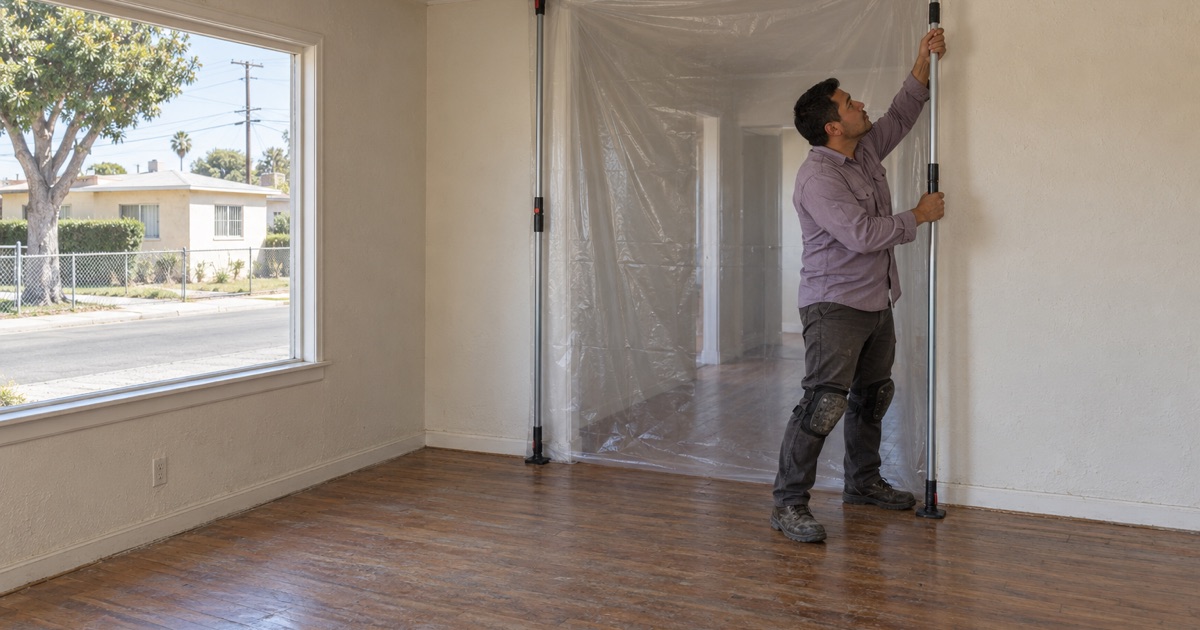
Our containment starts before the sander does. Doorways are sealed with plastic sheeting, HVAC registers in the work area are covered, and a dustless sanding system with HEPA extraction runs on every pass. Furniture and belongings leave the room, and whatever cannot be moved is wrapped and taped.
Cleanup is part of the job, not an afterthought. We use HEPA vacuuming and wet wiping on the floor, sills and nearby surfaces before the finish goes down, because dust left in corners and on sills is what a small child reaches first. That final pass is the step we check most carefully before calling a room done.
Scheduling Floor Work Around Lead Remediation
Let the Lead Work Finish First
If a Compton household is working with Live Lead-Free, the sensible order is to let the lead remediation finish before any floor work begins. Remediation can mean stripping, replacing or enclosing painted parts of a house, and a freshly refinished floor is the last thing anyone wants under that activity. Sanding and coating afterward keeps the new finish out of the way of that work.
We ask when the remediation wraps up and for any paperwork the household received, then schedule our walkthrough after that date. If the remediation changed anything along the floor line, we measure again rather than relying on an earlier quote. A floor job that follows lead work is often simpler to plan, because the paint in the house has already been tested.
What We Check When We Arrive
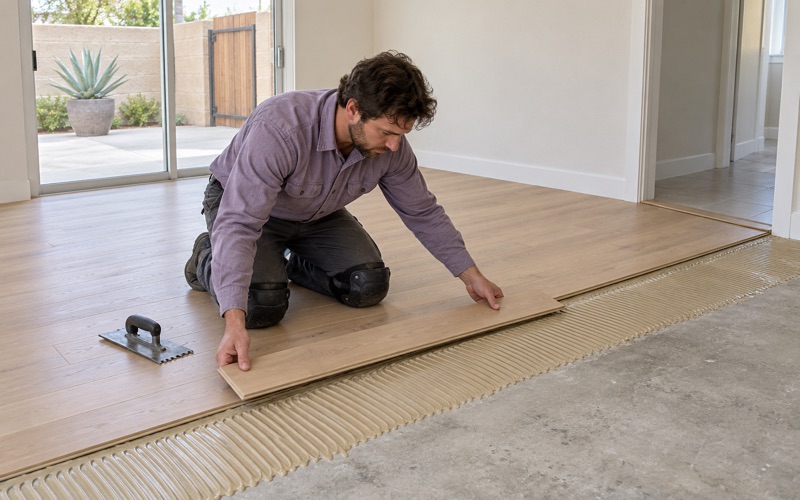
After the lead work is done, the floor gets the same inspection we give any older house. We check moisture content in the boards with a wood moisture meter and write the readings down, and if any flooring sits over a concrete slab we test the slab before ordering material. New wood also needs time to acclimate to the house before it goes down, and we build that into the schedule.
Old floor coverings get the same caution as old paint. If a room has 9x9 tile or black mastic under carpet or vinyl, we treat it as a possible asbestos question and stop until it is tested, because sanding or scraping those materials is not something to guess about. Answering that before work starts protects the household and keeps the schedule honest.
Planning Around Young Children
Families with children under 6 usually want to know one thing: when can the kids be back in the room. We answer that in writing. Every job gets a cure schedule that lists when each room can take socks, when it can take shoes, and when furniture and rugs can return, so nobody has to guess from the smell of the finish.
We can also phase the work so part of the house stays usable. Bedrooms can be done in one stretch and living areas in another, with containment moved between them, which lets a family keep a sleeping space or a play area clean and closed off while we work elsewhere. The plan is agreed on before we start, not improvised on the day.
Refinishing Compton’s Mid-Century Floors
Repair or Refinish Before Replacing
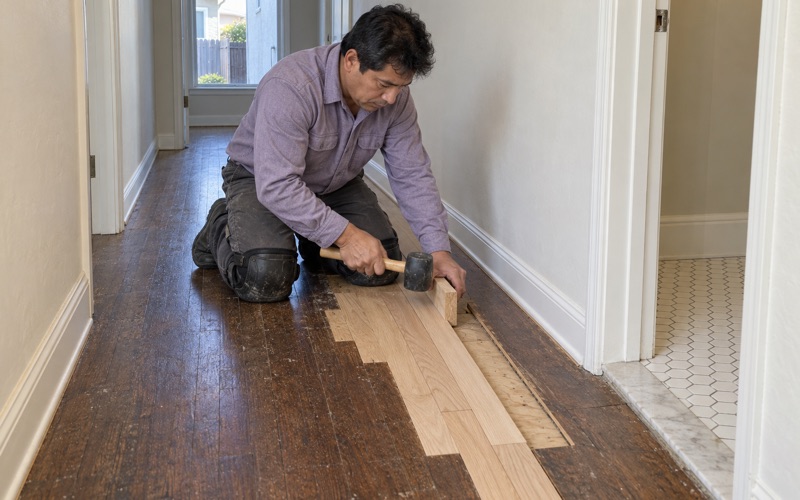
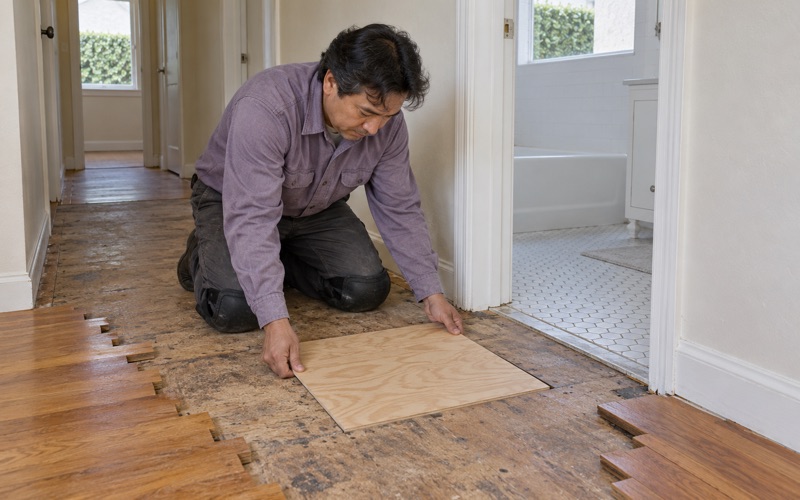
In houses from the 1940s and 1950s, a worn hardwood floor is often a candidate for refinishing rather than tear-out. We look at how much sandable wood remains, board gaps, cupping and any damaged boards, then give a repair-or-refinish answer before anyone talks about new flooring. Individual boards can be replaced with a weave-in repair so the patch follows the original layout.
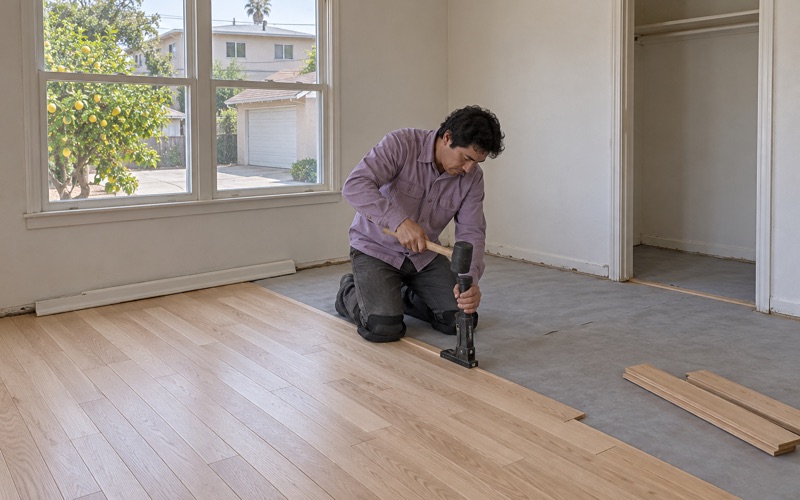
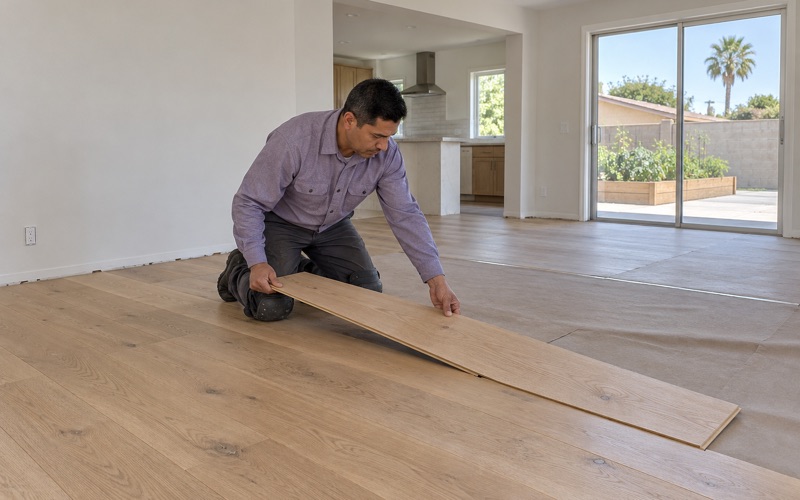
Where a floor has already been sanded too many times, or water has done more than surface damage, we say so plainly. Replacement is sometimes the right call, but it should be a conclusion drawn from the floor in front of us, not the starting assumption. When the boards do go, we match the new material to the rooms around them as closely as we can.
Finishes Suited to the South Coast Air Basin
Compton sits within the South Coast Air Quality Management District, and every wood finish we apply meets the district’s 275 g/L VOC limit for wood coatings under SCAQMD Rule 1113. Waterborne polyurethane is a common choice in occupied homes because it has less odor and dries faster between coats. Oil-modified polyurethane and hardwax oil finishes remain options when a homeowner wants a different look or feel.
Sheen level is worth deciding early. A satin or matte finish hides everyday scuffs and the small imperfections of an older floor better than gloss does, which matters in a busy house with young children. We show samples on your own boards when we can, so the color and sheen you approve are the ones you actually get.
Stairs and Transitions
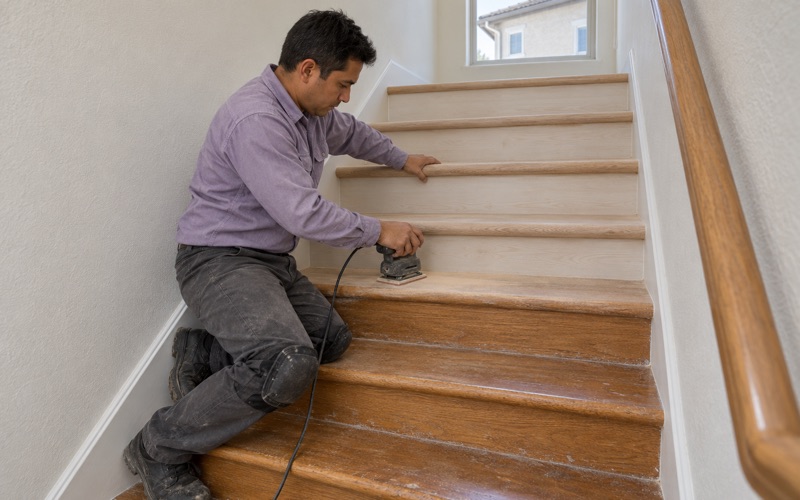
Many older houses mix hardwood with tile or vinyl in kitchens and baths, so transitions need attention after a refinish. We replace worn reducer strips and T-molding where needed and reinstall shoe molding once the finish has cured. Where a house has stairs, they are priced per tread and riser rather than folded into a square-foot number, so the estimate shows exactly what the staircase costs.
- 20+ Years in Business
- Written Moisture Readings
- Lead-Safe Work Practices