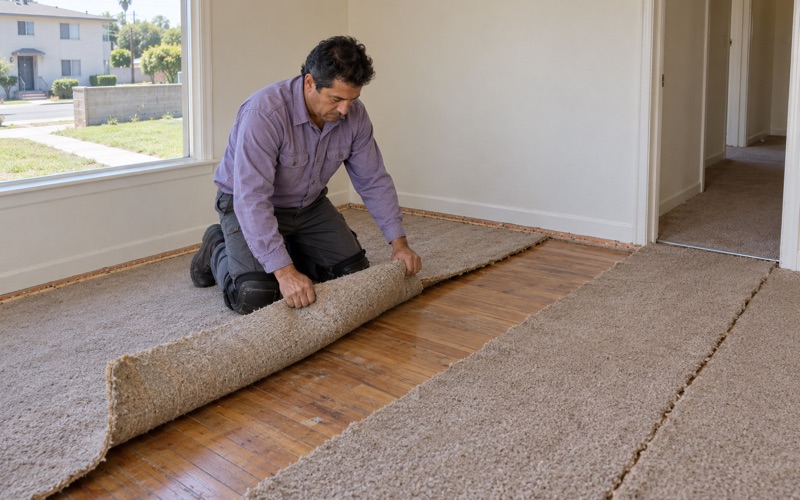
Gardena Wood Flooring brings more than 20 years of work to wood-flooring in Carson, sanding, repairing and installing floors in houses that have already lived a few lives. Most of the calls we take here start with something that happened to the house rather than the floor: a pipe replaced, a wall opened, a heater swapped out. The floor is usually the last thing standing between an owner and a finished room.
That order matters because a floor rarely gets attention on its own schedule. A plumber opens a hallway, a roofer finishes and the ceiling stain is gone, and suddenly the boards underneath look worse than anyone remembered. We come in to answer a narrow question first: can this floor be repaired and refinished, or has it reached the point where replacement is the honest answer?
This page walks through how floor work fits beside the repair money some Carson owners use for the rest of the house, and what we look for after a funded repair. It also covers how we plan the floor as a separate job, with written moisture readings, dust control and a cure schedule you can plan around.
Carson’s Repair Grants, Loans and the Floor
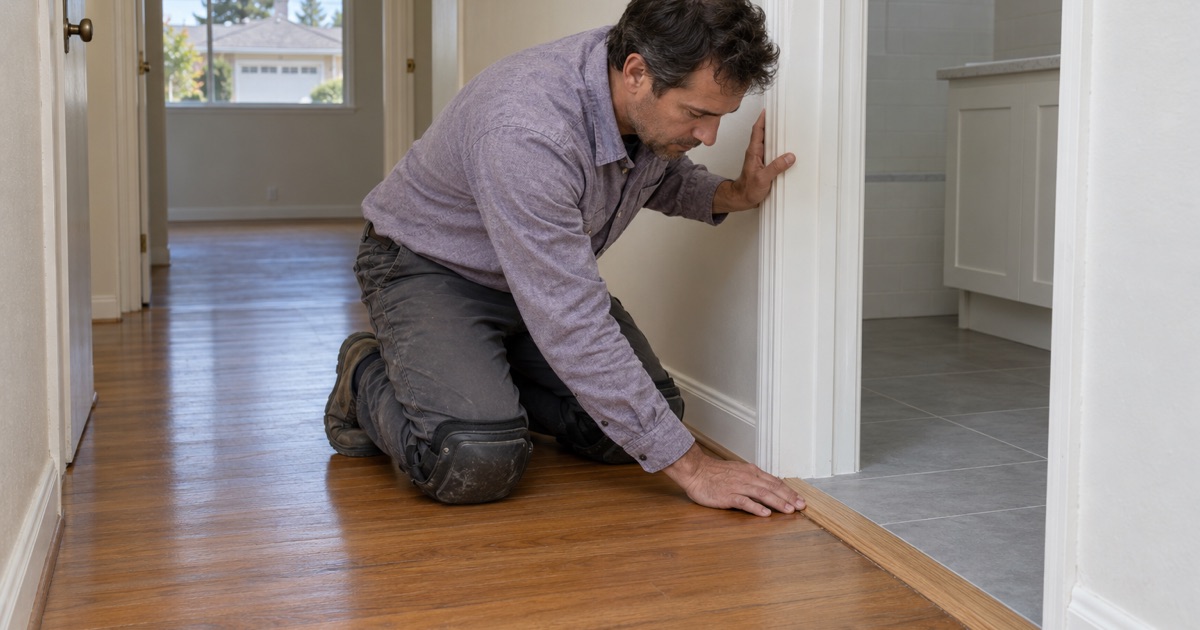
The City of Carson runs two home repair programs through its Housing Division, and owners of older houses ask us about both. Neither one is a flooring program, and we say that plainly before any estimate is written. Knowing what each covers helps an owner decide which part of the job the city money can reach and which part stays on their own budget.
Neighborhood Pride Program Grants
The Neighborhood Pride Program is funded with CDBG money and offers grants of up to $30,000 for owner-occupied single-family homes and up to $20,000 for mobile homes. It is aimed at low- and moderate-income owners and targets hazardous structural conditions and building, health and safety, and code violations. A grant is one-time per property and cannot be combined with the deferred loan.
Eligibility has limits beyond income. The dwelling has to be over 25 years old, the owner has to live in it and must have owned it for at least a year, and household income has to fall within HUD limits. The city’s program page notes new HUD guidelines as of June 1, 2026, so owners should check current figures with the Housing Division at 801 E. Carson Street, (310) 830-7600.
PLHA Deferred Loans
The second program uses Permanent Local Housing Allocation funds to offer deferred payment loans to low- to moderate-income owner-occupants of single-family homes inside city limits. The loans carry zero interest and go up to $50,000. Payments are deferred, and payment in full comes due when title is transferred or the property changes ownership.
That due-on-transfer rule is worth thinking through before signing. An owner planning to stay for years may find it an easy trade, while one who expects to sell or pass the house on soon should know the full balance comes due at that point. We are not part of either program, and we point owners to the Housing Division for anything about applications or funding status.
What the Lists Name
The loan’s eligible items are roofing, a new driveway, exterior painting, stucco, faulty plumbing, heating, hazardous wiring repairs and security lighting. Flooring is not on that list, and it is not named in the grant’s description either. In practice that makes the floor the owner’s own project, even when the repair right beside it was paid for by the city.
Where the programs do touch the floor is indirectly. A faulty plumbing repair or a structural fix can mean boards pulled up, a subfloor cut open or a room left with a patch that no longer matches. That is the point where we usually get the call.
Looking for wood-flooring closer to West Carson? See Wood-Flooring in West Carson.
Floors After a Plumbing or Structural Repair
What a Pipe Repair Leaves Behind
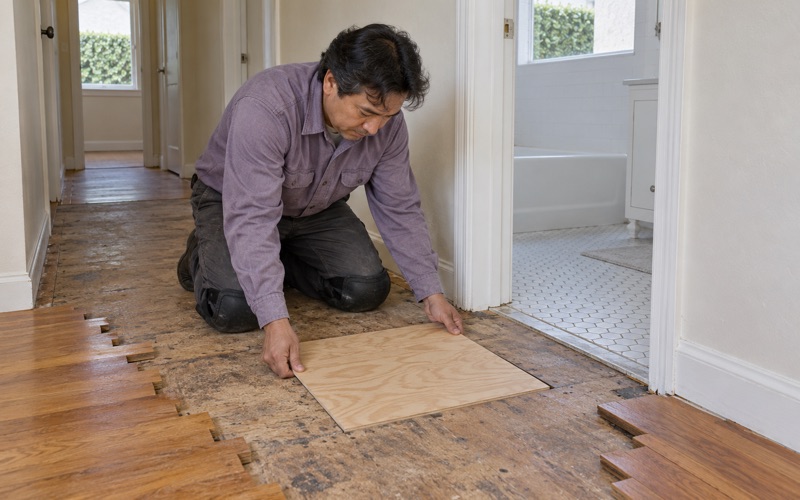
When a plumber reroutes a line or replaces a leaking section, the floor over it tends to come back in pieces. Boards get cut short to open an access hole, a patch of plywood goes down where the old decking was, and sometimes the patch sits a little higher or lower than the surrounding floor. We start by mapping exactly what was removed and what was replaced.
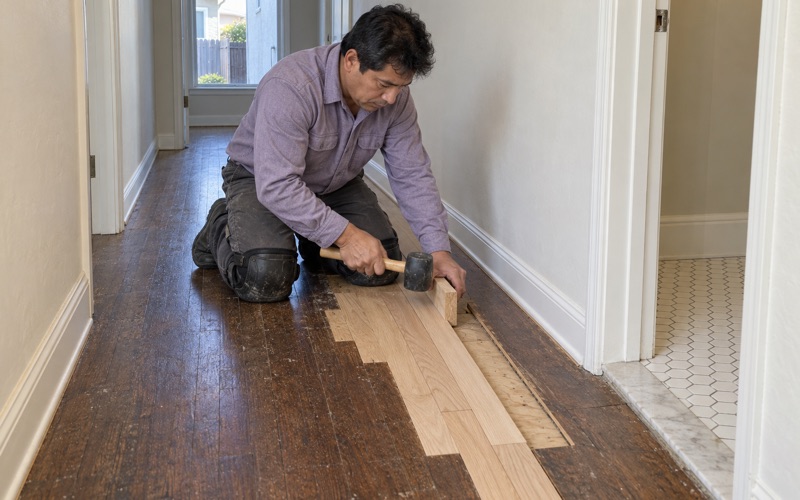
If the wood around the repair stayed dry, a weave-in repair is usually possible. We pull boards back to staggered joints, lace in new stock of matching width and species, and sand the whole room so the new and old boards take finish together. A straight patch line across a room is what people notice, and staggering the ends is how it disappears.
Moisture Before Anything Is Ordered
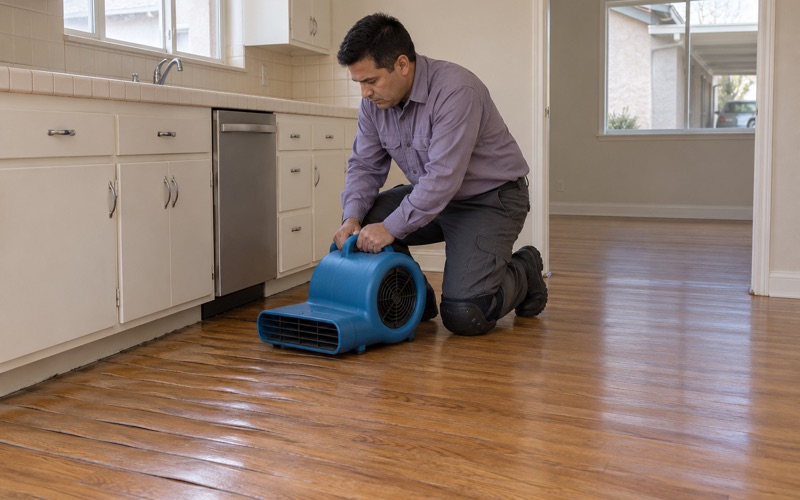
A leak that ran for weeks before anyone noticed leaves water in places a quick look misses. Cupping, where board edges rise above the centers, and crowning after an earlier sanding both tell us moisture moved through the floor. We take wood moisture meter readings across the room and beyond the visible damage, and we write every number down.
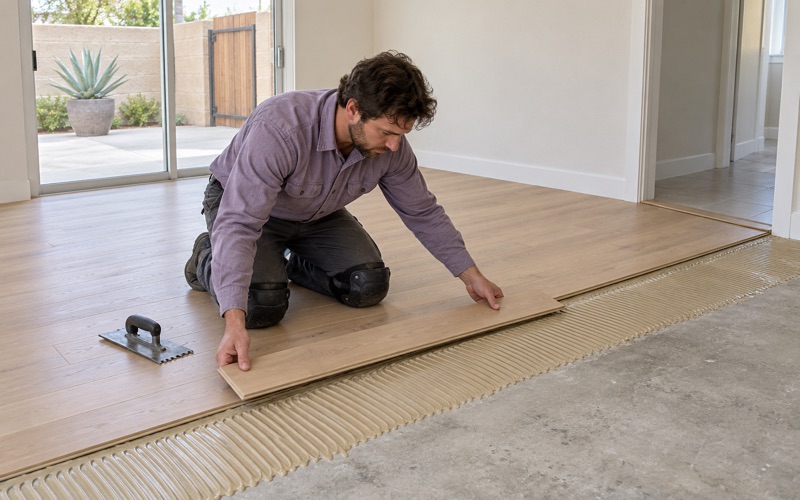
If any part of the house has concrete under the finish floor, we test that too, using an ASTM F2170 in-situ relative humidity test or a calcium chloride test depending on the job. New boards go down only after readings settle and the material has acclimated. If insurance is involved, the photos and readings are organized so an adjuster can follow them.
Structural Repairs and the Framing
A structural repair funded through the grant can leave the floor sitting on framing that has changed. Sistered joists, new blocking or replaced decking can shift the plane of the floor slightly, which shows up later as squeaks, nail pops or gaps at the old boards. Before we price a finish floor, we open and check the subfloor so soft spots and swollen decking are found now rather than on a callback.
Where the framing work is still going on, we would rather wait. Laying or refinishing a floor while another trade is still coming through the room invites dents, dust in the finish and a second visit nobody wants.
Planning the Floor as Your Own Project
Sequencing Around the Funded Work
The best time to plan floor work is before the city-funded contractor arrives, even if the floor happens last. Knowing which rooms will be opened for plumbing or wiring lets us hold off on refinishing until the access holes are closed. It also keeps an owner from paying twice to sand a hallway that is about to be cut.
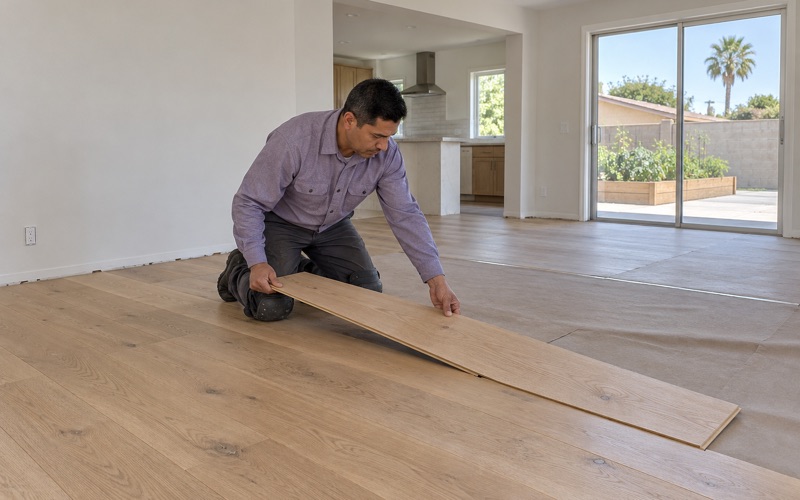
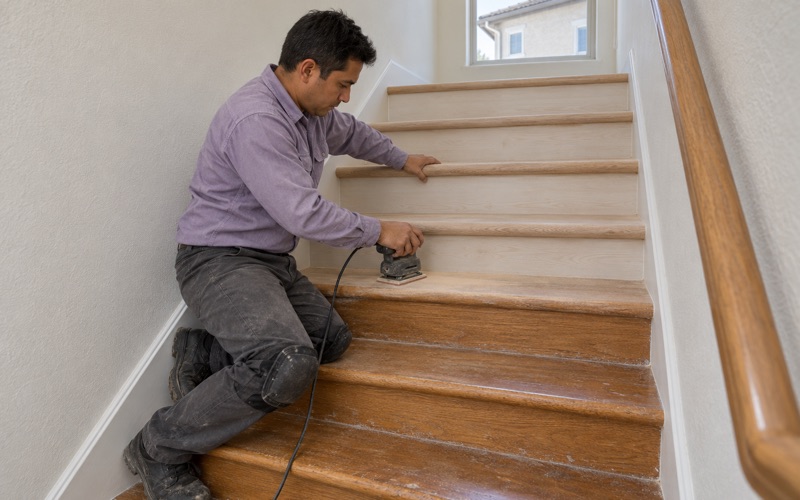
Our usual order is simple. The funded repairs finish first, the subfloor is inspected and any patches are brought flush, and then the floor is repaired and refinished as one continuous job. Stairs, if the house has them, are priced by tread and riser rather than folded into a square-foot number.
Pricing the Floor Separately
Because the programs do not name flooring, we write the floor estimate as its own document. That keeps the owner’s share clear and avoids any suggestion that the floor is part of a city-funded scope. Each line shows the rooms, the repair method, the finish and the cure time.
A repair-first answer often keeps the number manageable. Many floors that look worn out after a leak and a patch still have enough wood above the tongue for a full sanding, and a screen and recoat can refresh a floor that is only dull. We give that answer before anyone talks about tearing boards out.
Living in the House During the Work
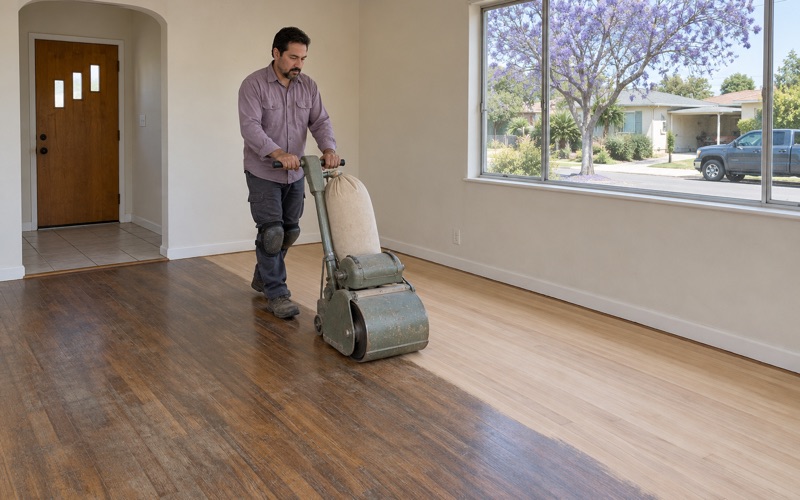
Owners usually stay home through a floor job, and Carson is a city of owners: 74.0 percent of households own the home they live in. We set up dust containment around the work area and run a dustless sanding system with the drum sander and edger. Each room gets a written cure schedule so the family knows when it can be walked on in socks and when furniture can go back.
Owners who used city money for a wiring or heating repair often want the rest of the house settled quickly. We can schedule the floor in sections, finishing bedrooms first so the family has somewhere clean to sleep while the main rooms cure.
Refinishing Floors in Carson’s 1960s Houses
What the Build Decades Mean for the Floor
Carson’s housing stock leans heavily on one decade. Census estimates put 9,195 of the city’s 28,178 housing units in the 1960s, or 32.6 percent, the largest share of any decade, and 77.5 percent of units were built before 1980. Carson incorporated on February 20, 1968, while that building decade was still underway.
For a floor, a house of that age has usually been through decades of changes. A floor can carry layers of carpet, vinyl, tile and earlier refinishing, sometimes in the same room, and we do not assume what is underneath until we have lifted a corner and looked. Whatever we find, the plan is written before sanding starts.
Lead and Old Tile Come First
Every house from that 1960s peak predates 1978, which brings the EPA Renovation, Repair and Painting rule into the plan. Old finishes and paint on baseboards can release lead dust from sanding, so we contain the work area and clean up using lead-safe work practices. We follow that routine on every pre-1978 house, not only when paint is peeling.
Old 9x9 floor tile and black mastic are a separate question. We treat them as a possible asbestos issue and recommend an asbestos survey before anything is sanded or scraped, since SCAQMD Rule 1403 governs how that material is handled. Nothing gets ground up until the answer is known.
Finishes, Sheen and Cure
Finish choices here are limited to products legal in the South Coast air basin. SCAQMD Rule 1113 caps wood coatings at 275 g/L of VOC, and we choose among waterborne polyurethane, oil-modified polyurethane and hardwax oil finishes within that limit. Waterborne coats dry clearer and faster, while oil-modified finishes deepen color and need longer before furniture returns.
Sheen level matters as much as the product. A satin or matte finish hides the fine scratches of daily use better than gloss, which suits floors in busy family homes. Once the last coat is down, the written cure schedule tells you which rooms open first and when rugs can go back.
- 20+ Years in Business
- Written Moisture Readings
- Lead-Safe Work Practices