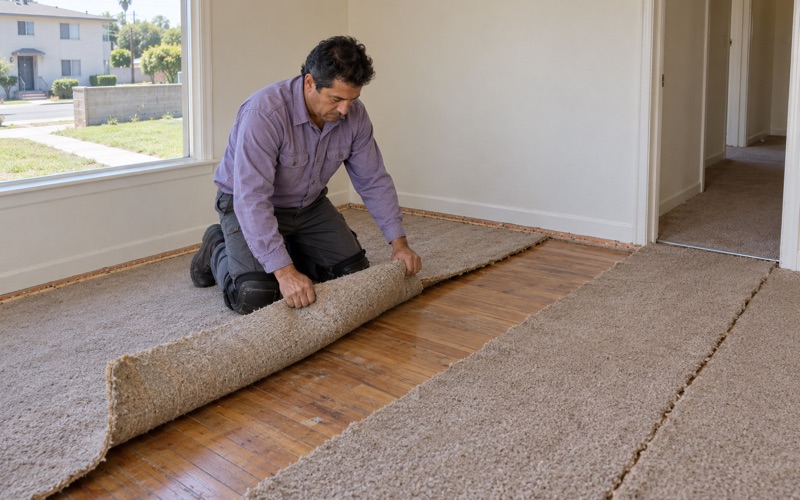
Gardena Wood Flooring brings more than 20 years of wood flooring work to Artesia, including the jobs that start in a house nobody is living in yet. The sale has closed, the tenant has moved out, or an estate is still being sorted, and the floors are waiting on a decision. We look at the boards, the subfloor and the finish, then tell you what the house needs before anyone moves in.
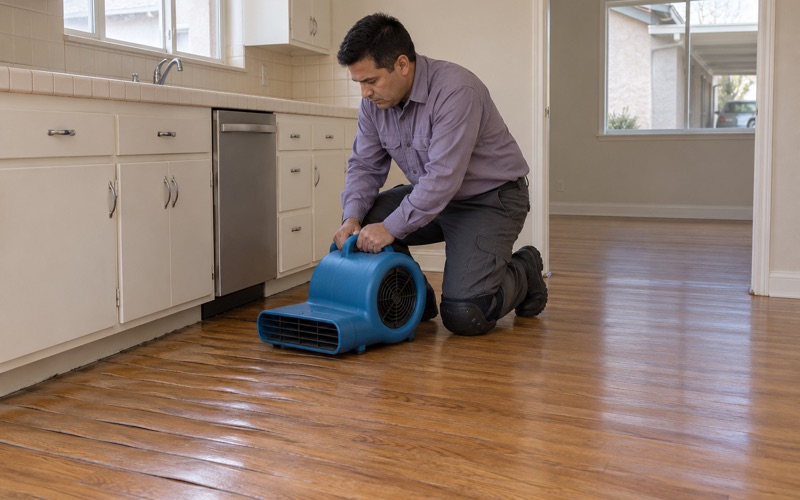
An empty house changes how floor damage happens and how long it goes unnoticed. A supply line that drips for three weeks with no one home does more harm to a wood floor than a spill someone wipes up the same evening. We trace water back to where it started, measure moisture content in the wood before quoting anything, and write the readings down so the next person has them.
Our answer starts with repair or refinishing, not replacement. Many water-marked or tired floors can be saved with board replacement, a weave-in repair or a fresh sanding, and we say so when that is true.
Artesia’s Vacant Property Rules and What They Ask Inside
What Ordinance No. 25-966 Changed
On April 14, 2025, the Artesia City Council adopted Ordinance No. 25-966, which rewrote the city’s chapter on vacant properties. Under it, a house that has sat unoccupied for more than 30 days counts as vacant, and the owner must register it with the city within 30 days of it becoming vacant. Registration is not a one-time filing: it renews every year and expires December 31.
The city runs registration through an online portal, and questions go to Code Enforcement Supervisor Melissa Hamilton. The rule reaches all improved property in Artesia, so it applies to a single house left empty between tenants as much as to a foreclosure.
The Interior Clause
The section that matters most to a floor contractor is the interior maintenance rule. The owner “must preserve the interior of any building on the property from damage by the elements or plumbing leaks,” and keep it clear of debris and pests. The city also inspects each registered vacant property every quarter.
Read that carefully, because it is easy to overstate. The ordinance does not mention floors, does not grade them and does not order any floor work. What it does is make a leak inside an empty house the owner’s problem to prevent, and a warped hallway or a stained bedroom is often the first visible sign that one got through.
For an owner, that makes the floor worth checking on every visit. A soft spot near the sink, a baseboard pulling away or a musty smell by the water heater are all worth a look before the city’s next quarterly inspection, not after.
Longer Vacancies and the Exemptions
A property left empty more than 45 consecutive days needs a mitigation plan, with weekly documented inspections by the owner reported to the city within 48 hours. The ordinance also calls for turning off utilities that are not needed for upkeep, and violations are misdemeanors carrying fines of up to $1,000 per violation per day.
Two kinds of property are exempt. One has a valid building permit for repair or rehabilitation, with the owner progressing diligently toward finishing within a year of the permit. The other complies with all codes, is ready for occupancy and is actively offered for sale, lease or rent. Whether a house fits either one is the city’s call, not ours.
Looking for wood-flooring closer to Hawaiian Gardens? See Hawaiian Gardens Wood-Flooring.
Water and Wood Floors in a House Standing Empty
How Leaks Spread With No One Home
In an occupied house, someone notices the damp spot under the sink or the wet floor by the water heater within a day or two. In an empty one, a failed dishwasher line or a weeping toilet supply can run for weeks between visits. Wood takes that water up from the bottom, and by the time anyone walks in the damage has moved well past the fixture.
Quarterly city inspections and weekly owner checks on longer vacancies shorten that window but do not close it. Turning off utilities not needed for upkeep, as the ordinance directs, also helps, since a shut valve cannot leak into the kitchen.
Reading the Damage: Cupping, Crowning and Buckling
Boards that took on water from below usually cup first, with the edges standing higher than the centers. If someone sands a cupped floor flat before it dries, the boards can crown later as the moisture leaves. Buckling, where boards lift off the subfloor entirely, means the water sat long enough to swell the whole assembly.
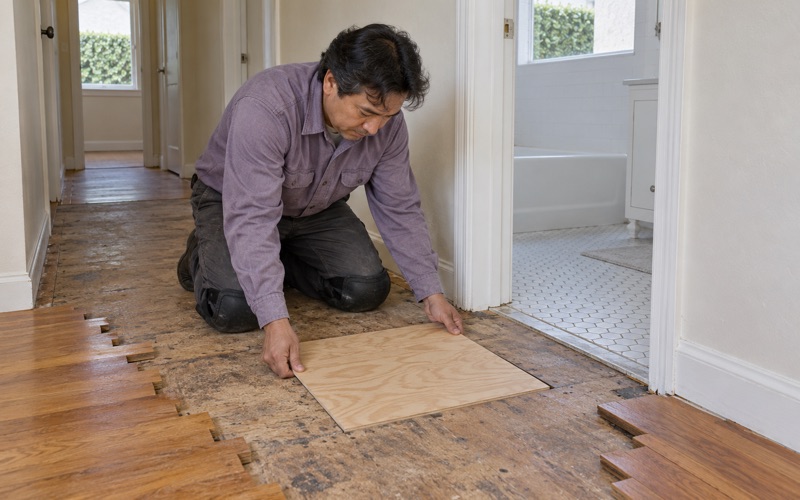
We take readings with a wood moisture meter across the wet area and into dry rooms for comparison, then open the floor where the numbers call for it. Water-swollen decking, soft spots and a compromised floor joist all get found before a finish floor is priced, because pricing over them is how a job turns into a callback.
Wet wood cannot be judged, repaired or finished until it comes back toward the moisture content of the dry rooms around it. We set the drying plan around those readings rather than a fixed number of days, and we do not sand until the wet boards and the dry ones agree.
Records an Owner Can Use
An owner managing an empty house from across town, or an estate trustee handling one from another state, needs to see what we saw. We photograph the damage, note where the water came from and record every moisture reading with the date it was taken.
That file serves more than one purpose. An insurance adjuster can work from it, and it gives the owner a written account of what was found inside the house and when, alongside the maintenance plan the city already asks for at registration.
Getting Floors Ready for the Next Owner or Tenant
Repair, Refinish or Recoat
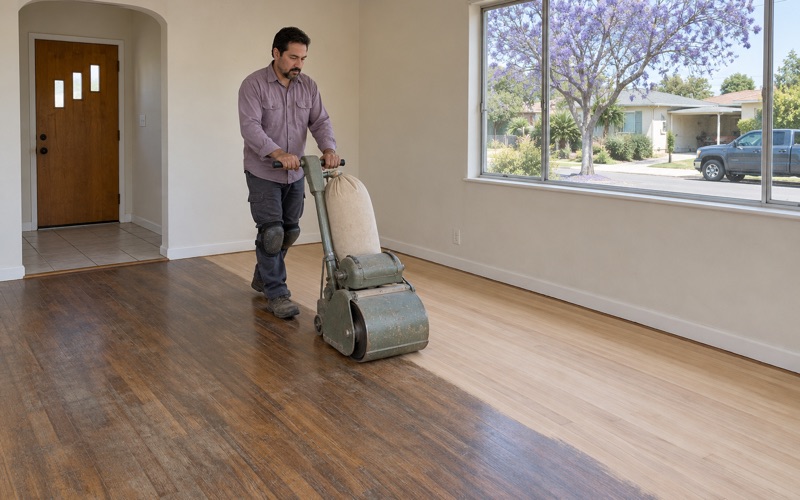
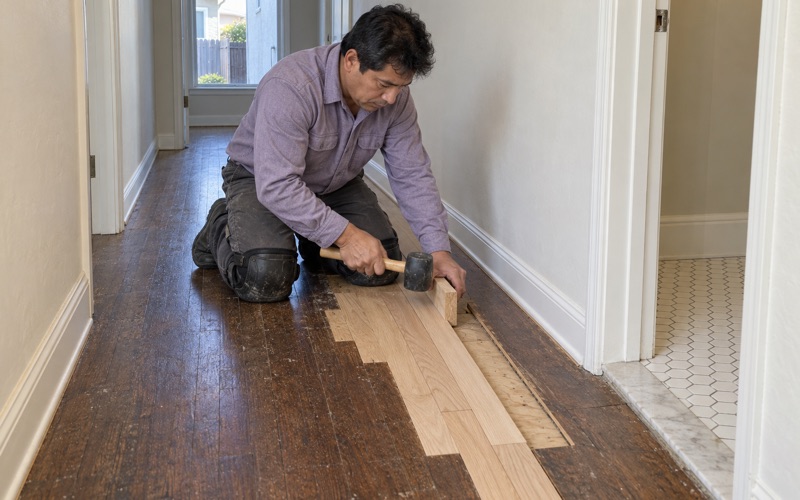
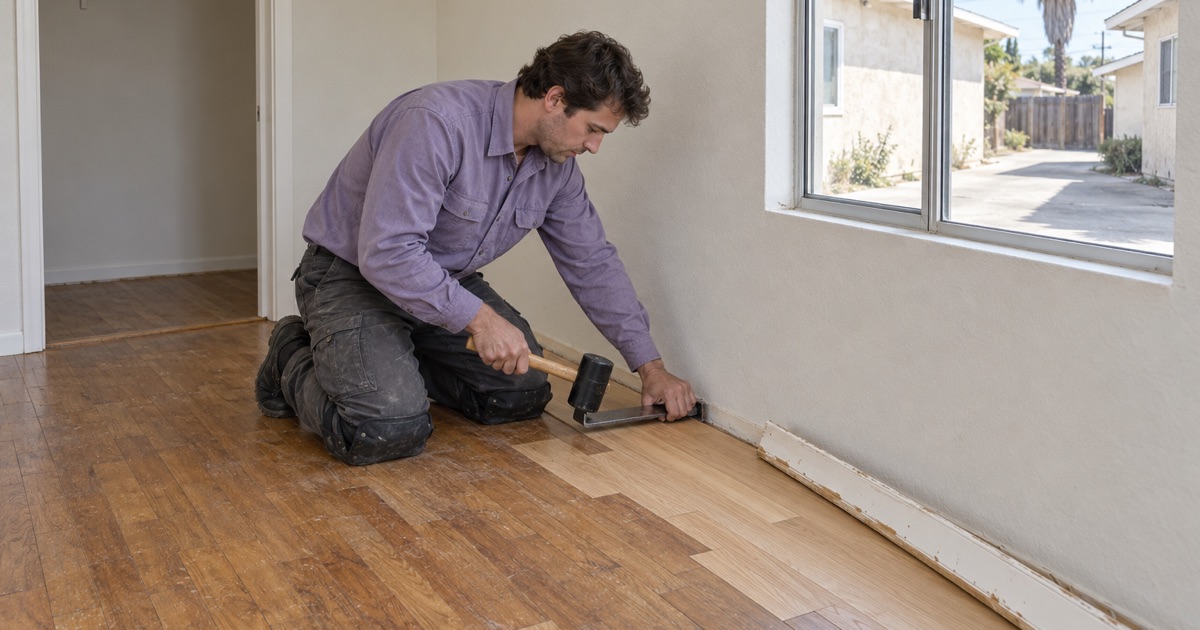
Once the source is fixed and the wood has dried, most vacant-house floors fall into one of three jobs. A screen and recoat freshens a finish that is dull but intact. A full sanding through a proper grit sequence takes out deep scratches and old sander marks and shows which pet urine stains go deeper than the surface, and board replacement or a weave-in repair handles the sections water or pets ruined.
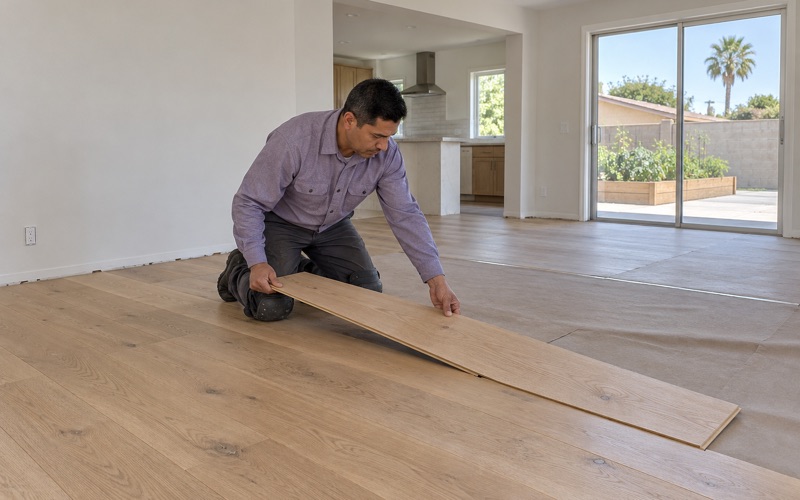
We match species and board width for any replacement so the patch blends in after finishing. If the house is headed to market, we will tell you plainly which work a buyer will notice and which work only adds cost.
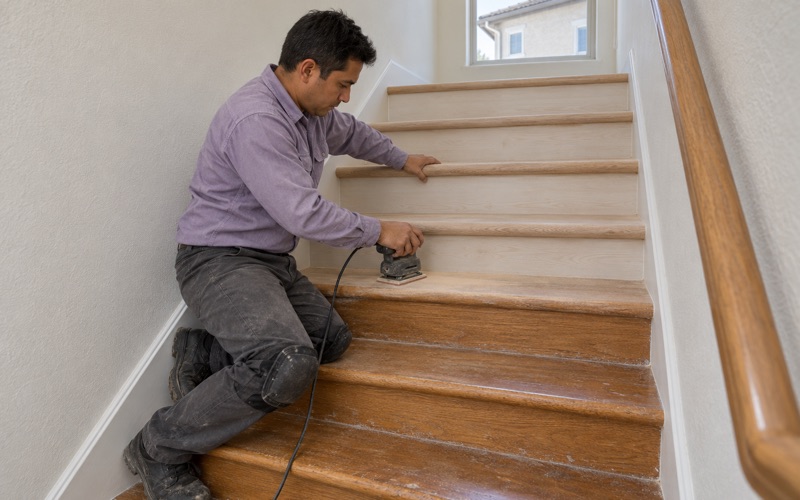
Where a house has a staircase, we price it per tread and riser rather than burying it in a square-foot figure. Worn stair nosing and a loose tread are worth fixing before listing photos are taken, since the stair is often one of the first things a visitor sees.
Turnovers Between Tenants
Artesia’s housing is close to evenly split between owners and renters, so a house standing empty here may simply be between leases. For a landlord, the goal is a floor that holds up to the next tenancy and a bill that stands up if the old tenant’s deposit is in question.
We write estimates and invoices that separate each repair by room and cause, which is what a landlord needs when Civil Code 1950.5 calls for itemized deductions. Normal wear and tenant damage look different on a floor, and we describe each one as what it is.
Artesia also counts 431 units in three- and four-unit buildings, and we handle those turnovers one unit at a time. A single vacancy can be refinished without displacing the tenants on the other side of the wall.
Scheduling Around a Listing or Move-In
An empty house is the easiest place to refinish, since there is no furniture to move and no family to route around. We still run dust containment and hand over a written cure schedule, so an agent staging the house or a new tenant moving in knows exactly when each room can take foot traffic and furniture.
Finishes come from products legal to apply in the South Coast air basin, where SCAQMD Rule 1113 caps wood coatings at 275 grams per liter of VOC. A waterborne polyurethane usually dries fastest for a tight listing date, while an oil-modified finish or a hardwax oil suits an owner who plans to stay.
Floor Work in Artesia’s 1950s and 1960s Houses
A Housing Stock From Two Decades
Dairymen settled around Artesia in the 1920s, and after World War II, developers pressed for residential tracts while the dairies relocated to Chino and the Central Valley. The city incorporated on May 29, 1959. Census figures show the result: 48.0 percent of its housing units were built in the 1950s and 1960s, and 68.0 percent are detached houses.
That means an empty house here very often dates from those two decades, with years of refinishing, patching and flooring changes layered into it. We do not assume what is under a floor covering until we have pulled back a corner and looked.
Lead and Asbestos Questions Before Sanding
Every house from those decades predates 1978, which brings the EPA Renovation, Repair and Painting rule into play wherever painted trim, baseboards or stair parts get disturbed. We follow lead-safe work practices and keep lead dust from sanding inside the containment instead of letting it settle into an empty house the next family will occupy.
Old 9x9 floor tile and black mastic turn up in houses of this age, sometimes under a later floor. We treat them as a possible asbestos question and recommend an asbestos survey before anything is scraped or sanded, since SCAQMD Rule 1403 governs how that material is handled in this air basin.
An asbestos survey is simpler to wait on in an empty house, since nobody has to move out while results come back. We schedule it first so the floor work runs without a pause.
Checking the Subfloor Before Pricing
In a house from that era, the layer beneath the finish floor has its own history: nail pops, squeaks, patched sections and, in a house that sat through an unnoticed leak, decking that swelled and never fully recovered. We check it by walking the floor, taking readings and opening it where something feels wrong.
Whatever we find goes into the written estimate up front, whether that is joist sistering, new plywood underlayment or a few replaced sheets. An owner readying a house for the next occupant gets one number that covers what is actually there.
- 20+ Years in Business
- Written Moisture Readings
- Lead-Safe Work Practices