Gardena Wood Flooring has spent more than 20 years doing wood-flooring in Alondra Park, and the work here begins with a question most owners never think to ask: who actually governs the house? We refinish, repair and install hardwood on these blocks, and we plan each job around that answer before a single board is sanded.
The short version is that no city does. These streets sit under Los Angeles County, so the housing rules, rental rules and offices that touch a floor project are County ones. Owners who assume the rules of the city next door apply tend to schedule the wrong conversations, and that costs days.
Below we walk through how the neighborhood came to be governed this way, which County offices a floor job can run into, what the 1950s ranch houses and the apartment buildings usually need, and how we keep the paperwork side of a project as clean as the finish. None of it slows a well-planned job; it only slows one that guesses.
A Neighborhood That Stayed Unincorporated
Two Names for One Place
Alondra Park, also known as El Camino Village, is an unincorporated community in the South Bay part of Los Angeles County. It sits north of Alondra Community Regional Park and El Camino College, with Crenshaw Boulevard as its main commercial corridor. The 2020 census counted 8,569 residents, and its official post office sits in nearby Gardena.
The two names are not a quirk. According to a County historic context statement for the South Bay, the community long struggled to settle on an identity and was referred to interchangeably as the Village at El Camino, El Camino Village and Alondra Park, among other labels.
The Annexation Fight of the Early 1990s
By the early 1990s the community was densely built and divided on how well the County was serving it. The southeastern quadrant, unhappy with its unincorporated status and what residents saw as a lack of County attention, rallied for annexation into the City of Gardena. The west half lobbied to stay unincorporated.
In 1993 the west half received permission to formally name the neighborhood El Camino Village. When the annexation question finally went to a vote, it failed to gather enough support, and the community remains an unincorporated census designated place today.
Why the Vote Still Matters Inside Your House
A failed annexation sounds like old civic history, but it decides whose rules apply when you open up a floor. Gardena’s city codes stop at the city line, and so do its housing programs. In El Camino Village the governing body is the Los Angeles County Board of Supervisors, and the local seat is Supervisorial District 2, represented by Holly J. Mitchell.
For a homeowner, that mostly means knowing which door to knock on. For a landlord, it can mean a different rent ordinance entirely. We raise both points at the first walkthrough so nobody plans a project around a rulebook that does not apply to their address.
Looking for wood-flooring closer to West Athens? See Wood-Flooring Services in West Athens.
Which County Offices a Floor Job Runs Into
Public Works Building and Safety
Construction oversight in unincorporated areas runs through Los Angeles County Public Works Building and Safety rather than a city building department. Whether a particular floor project involves that office depends on its scope, and we will not guess on your behalf. When a job reaches beyond the finish floor, into joists or framing, we point the owner to Public Works to confirm before work begins.
What we can control is the record. We open and check the subfloor before pricing any finish floor, note soft decking, water-swollen panels and questionable joists, and put it in writing. If a County question does come up, the owner has a clear description of the existing conditions to bring to it.
DCBA and the County Rent Ordinance
The Department of Consumer and Business Affairs administers the County’s Rent Stabilization and Tenant Protections Ordinance, found in County Code Chapter 8.52. It is the rental rulebook for unincorporated areas like this one, and it is the reason a landlord here should not lean on advice written for a neighboring city.
DCBA also offers free, one-on-one foreclosure-prevention counseling to homeowners and landlords with 15 or fewer units in Los Angeles County, by phone or in person by appointment. It is not a flooring program, but it is a County resource an El Camino Village owner can call at 800-593-8222.
The Regional Air District
Not every agency in the picture is a County one. Floor finishes are regulated by the South Coast Air Quality Management District, which covers this whole basin. Under SCAQMD Rule 1113, wood coatings are held to a VOC limit of 275 g/L, and we only choose finishes that are legal to apply here.
That affects both the look and the schedule. Waterborne polyurethane dries faster and keeps odor down in an occupied house, while compliant oil-modified products take longer to cure between coats. We explain the tradeoff before the owner picks a sheen level.
Ranch Houses and Apartment Floors in El Camino Village
The 1950s Ranch-Style Tracts
The 1950s were the biggest building decade here, accounting for 38.5 percent of the community’s housing units. One subdivision of that era is El Camino Manor, developed by Kauffman Construction Corporation in the early 1950s. Its 1952 marketing materials promoted 318 Ranch-style tract houses with attached garages and their closeness to Alondra Park and El Camino College.
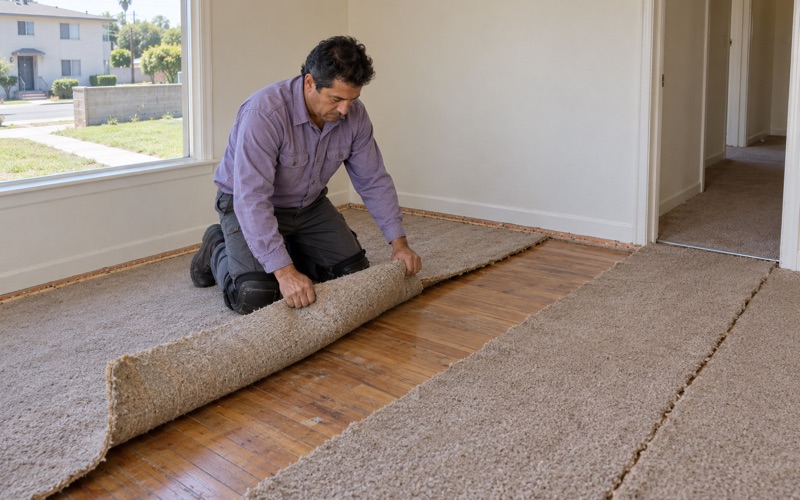
After Milton Kauffman died in 1956, the Irvine Company bought El Camino Manor and renamed it the Village at El Camino. For flooring, what matters is that these houses have been lived in for more than seventy years, and any of them may have been through more than one round of floor coverings. We never assume what is underneath until we lift a corner and look.
Floors that have been in a family for decades get treated as floors worth saving. If the boards under old carpet are sound, our estimate gives a repair-or-refinish answer first, with a screen and recoat or a full sanding and grit sequence quoted before anyone mentions replacement.
Lead Dust and Old Tile Under the Carpet
About 83.9 percent of the housing here was built before 1980, and houses from before 1978 are where lead paint becomes a real possibility. Sanding near painted baseboards, door casings and shoe molding can raise lead dust, so we follow EPA Renovation, Repair and Painting rule practices, contain the work area and clean to that standard.
The other thing to watch for in houses of this age is old floor tile. A 9x9 tile or a layer of black mastic under carpet is treated as a possible asbestos question before anything is scraped or sanded. If testing is warranted, it happens first, and the schedule is built around the result. Asbestos removal in this basin also falls under SCAQMD Rule 1403, another regional rule rather than a County one.
Rental Units Under County Rules
Close to half of the occupied homes in Alondra Park are rented, 1,276 of 2,760 in the latest five-year census estimates, and many of those rentals are in apartment buildings of five units or more. The County rent ordinance fully covers properties with two or more rental units and a certificate of occupancy on or before February 1, 1995, and most of the housing here was built well before that date.
For a landlord, the paperwork matters as much as the floor. We handle triplex and fourplex turnovers one unit at a time, with a written estimate and an itemized invoice for each, so costs can be documented when California’s security deposit law, Civil Code 1950.5, calls for itemized repair charges.
Timing matters just as much. A refinish needs the unit empty and the finish cured, so we plan the sanding, coats and cure days inside the vacancy window the landlord gives us, and we note the dates on the invoice.
Planning the Work Around County Paperwork
Measure First, Order Second
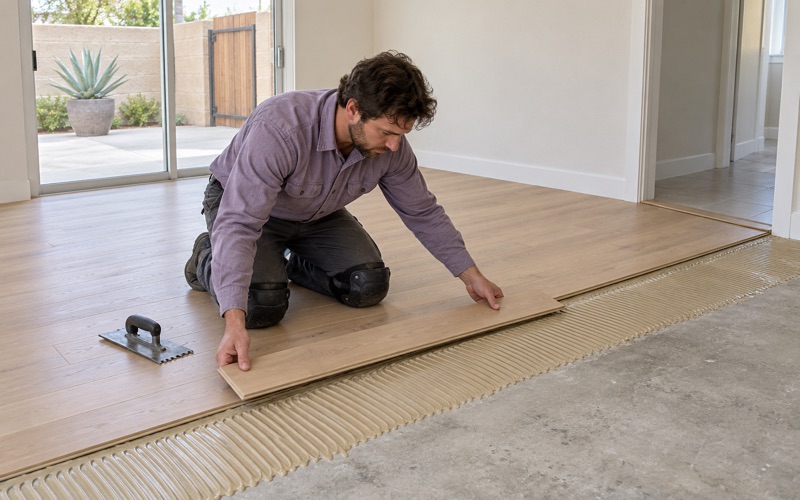
Before any material is ordered, we measure moisture content in the existing wood with a wood moisture meter, and test any concrete with the ASTM F2170 in-situ relative humidity method or a calcium chloride test where appropriate. The readings go into the written estimate.
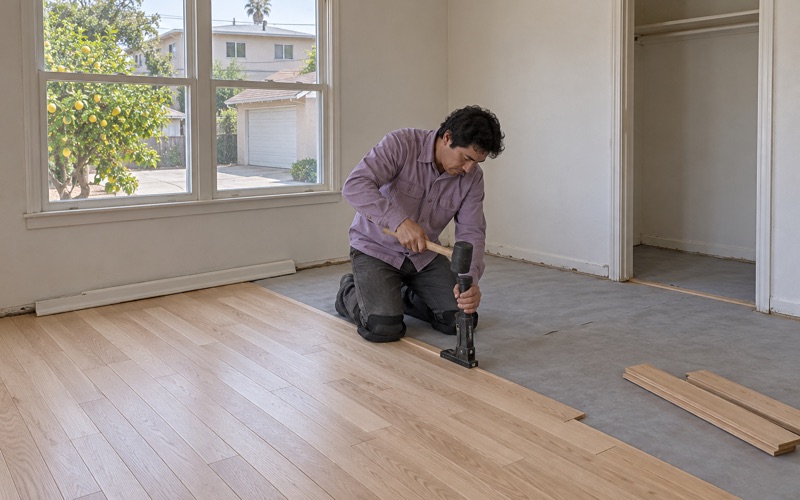
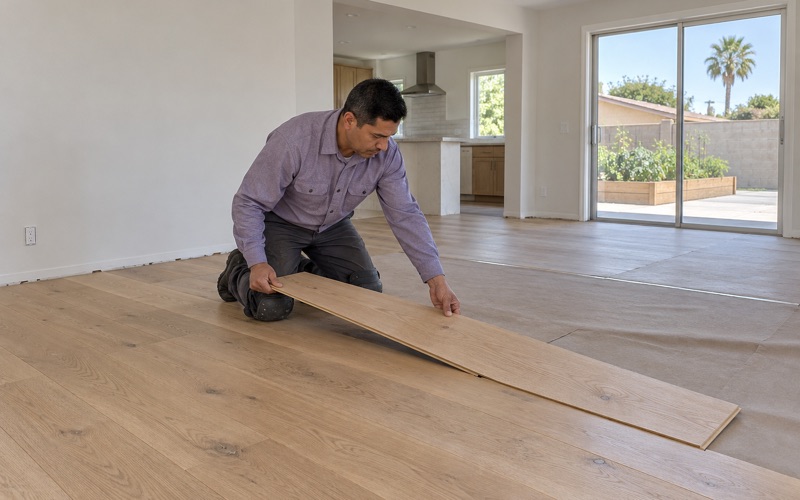
New boards then acclimate in the house according to NWFA installation guidelines. Skipping that step in an older ranch house is how cupping, crowning and board gaps show up months later, and a written moisture record is the first thing anyone asks for if they do. Species choice comes into it too: white oak, red oak and hickory differ on the Janka hardness rating, which matters in a busy hallway or a rental unit that turns over often.
Water Damage and Insurance Records
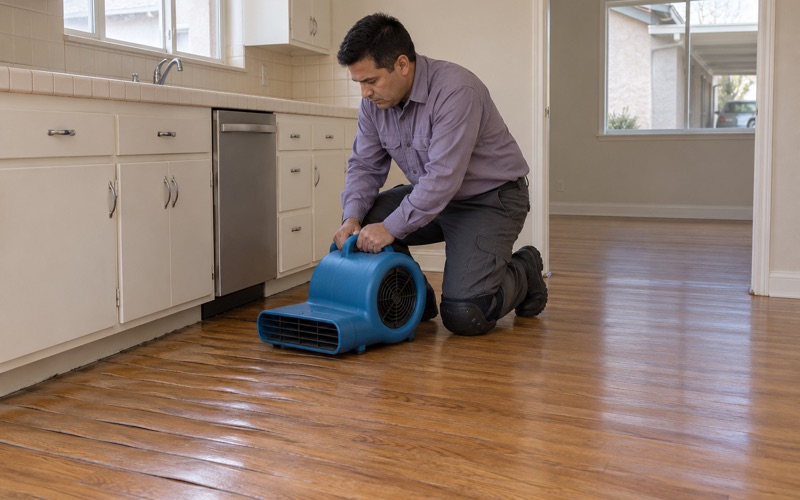
Water is a frequent reason a floor fails early. When it happens, we trace the source first, whether a dishwasher line, a water heater or a failed supply line, before any boards come up. We document the damage with photos and meter readings an insurance adjuster can use.
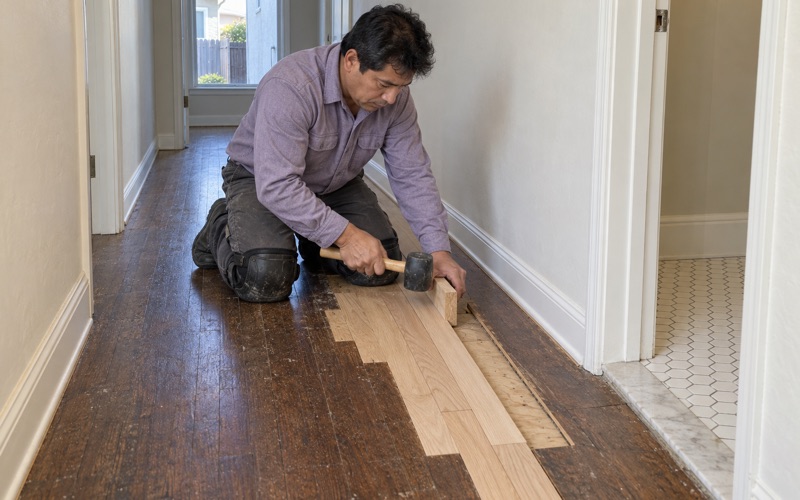
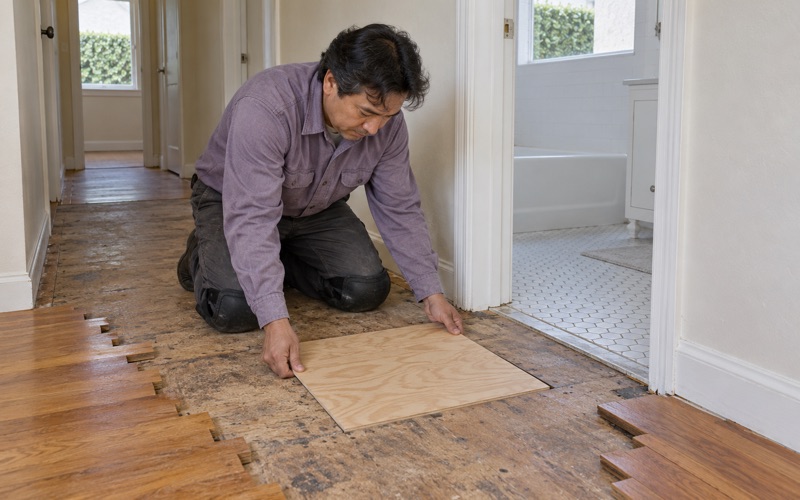
When a claim is open, the adjuster works from what was documented at the start. Our readings and photos record the moisture levels before drying, the extent of cupping or buckling, and which boards can be saved, so the scope the owner receives matches what we actually found. Where only part of a room is damaged, board replacement and a weave-in repair can blend new boards into the surrounding floor, which keeps more of the house’s existing flooring in service.
A Schedule an Occupied House Can Live With
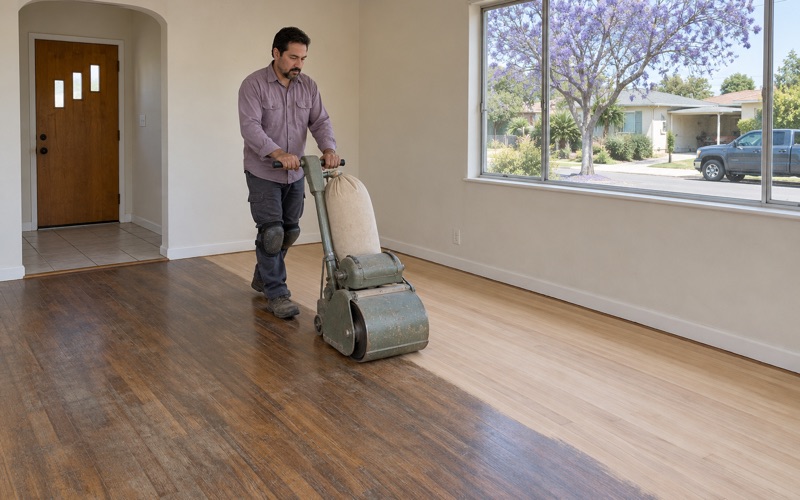
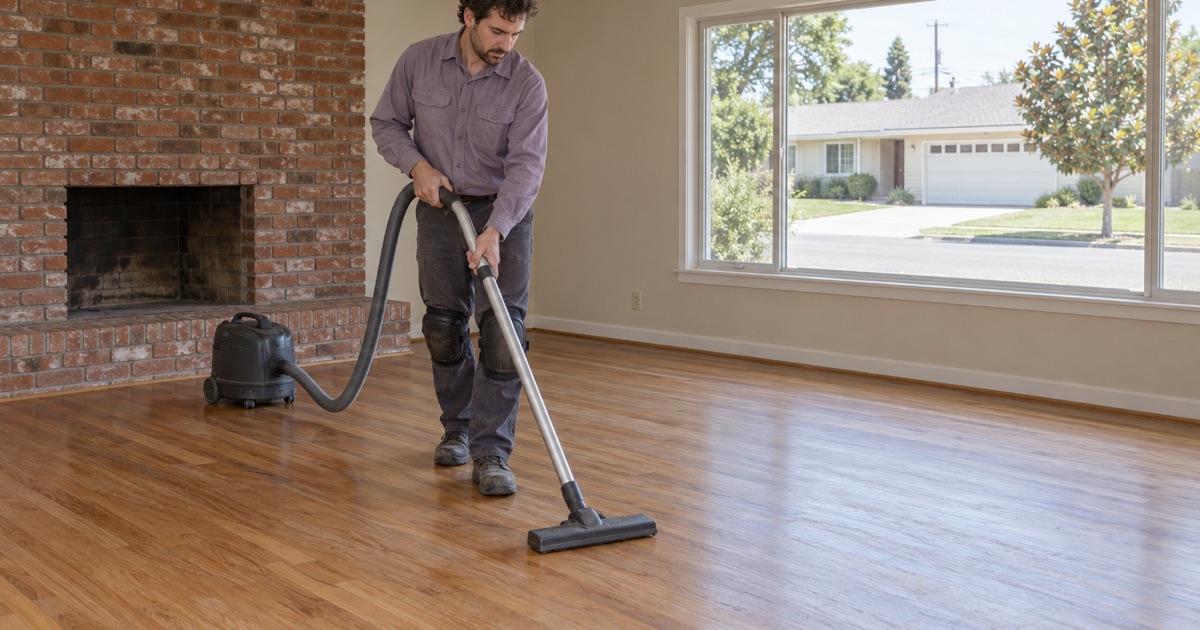
Many owners live in the house while the work happens, and in an apartment building the neighbors stay home too. We set up dust containment, run a dustless sanding system with the drum sander and edger, and hand over a written cure schedule showing when each room can be walked on and when furniture can go back.
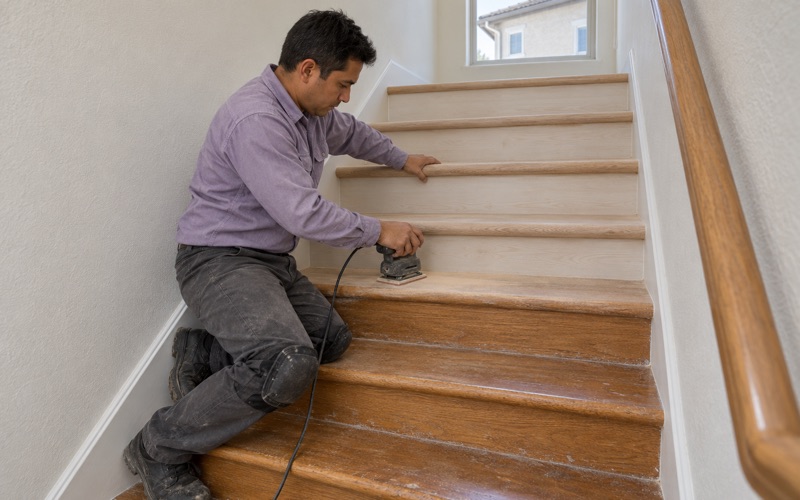
Stairs are priced per tread and riser, not folded into a square-foot number, so the estimate matches the job. With the County questions sorted early and the conditions written down, the floor work itself becomes the predictable part of the project.
- 20+ Years in Business
- Written Moisture Readings
- Lead-Safe Work Practices